
The social media world has been blowing up with discussions about YouTuber Jesse Ridgway and his wife Ashley’s decision to terminate the life of their precious preborn baby, simply because he or she may have had Down Syndrome. While we still don’t know for sure if this story is legitimate or created for social media engagement, pro-lifers are rightly outraged at the idea, with many sharing their own stories about those with Down Syndrome in their lives.
Pro-lifers, including myself, are justifiably angry at the thought that any couple could so callously snuff out the life of their child based on a diagnosis that he or she would be “less than perfect.” Yet many pro-lifers still find excuses to justify in vitro fertilization (IVF), a procedure that sometimes discards embryos that look like they’re not developing properly, based solely on visual inspection. This procedure is often justified because, unlike abortion, it doesn’t take the lives of human beings in a direct, obvious manner. After all, it brings about life, and if every embryo created is transferred, or donated for another couple to transfer, then what’s the problem?
Preimplantation Screenings
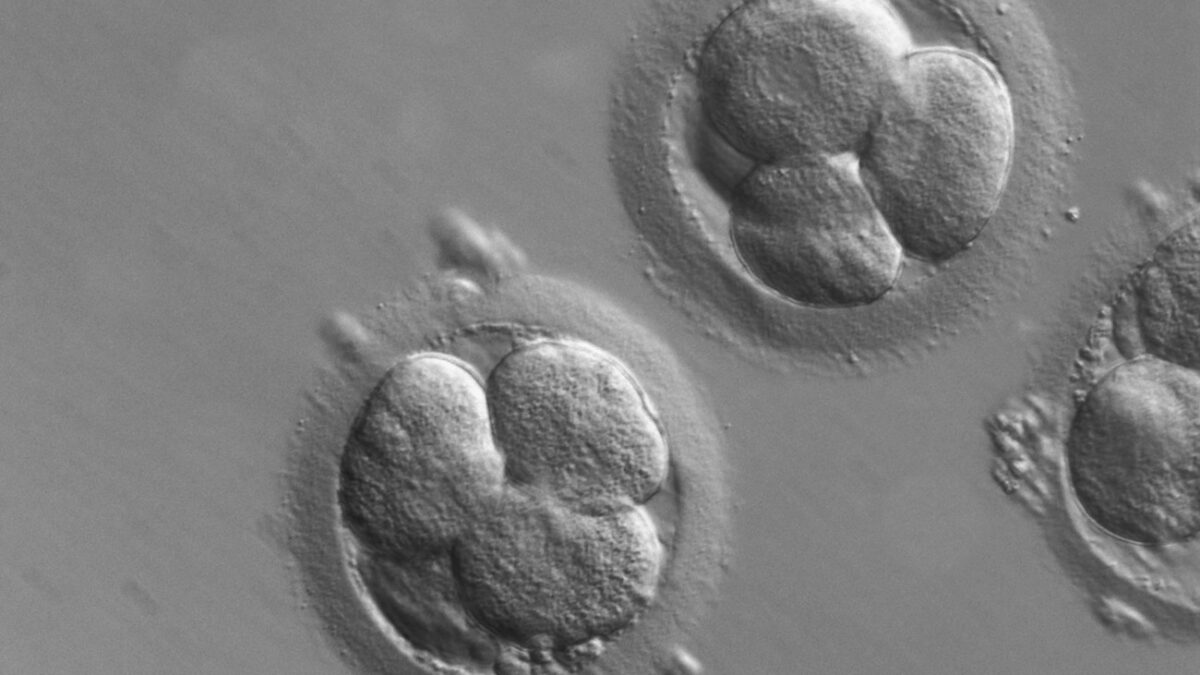
While not every couple opts to have their embryos undergo preimplantation genetic screenings or preimplantation genetic testing (PGT) upon fertilization, embryos are still visually graded and chosen for transfer based on their likelihood of successful implantation in the womb after a screening process that picks the “best” blastocysts (day 5 or 6 after fertilization) to implant.
After these blastocysts are screened, only the ones determined to be “genetically healthy and normal” are transferred — with meager hope of implantation. The embryologist checks embryos under the microscope for 5 days and observes embryo development such as the embryonic membranes and the inner cell mass. The embryos are then graded and selected and the ones that appear healthiest are chosen for transfer.
Dr. Craig Turczynski, a reproductive physiologist, revealed that embryos that had been deemed “non-viable” or “imperfect” and were then discarded could have been perfectly viable, given the opportunity to implant. “The current method of evaluating viability is based on visual inspection and we have some ideas of what makes a viable embryo, but it is imperfect,” according to Turczynski.
Preimplantation Genetic Testing and Diagnosis
PGT is the procedure that analyzes chromosomes to determine conditions such as Down Syndrome. Reproductive endocrinologist Dr. Lauren Rubal stated that if an IVF cycle yields 12 embryos, about half of the embryos will continue to mature, and about half of those will be considered “chromosomally normal” after they undergo PGT, leaving the other three to be outright discarded.
PGT and Preimplantation Genetic Diagnosis (PGD) both involve conducting an embryo biopsy that removes three to 10 cells from the section that will form the placenta, followed by laboratory genetic testing of DNA. Rubal stated that it’s possible to biopsy the wrong area of chromosomes in an embryo and be incorrect about a diagnosis. However, even diagnoses that are indeed not “incompatible with life,” such as those with Down syndrome, are automatically deemed “non-transferrable.” Rubal further stated that PGT is not always accurate, and that chromosomally “normal” babies have been born from embryos deemed “abnormal,” or from “aneuploid” cells as opposed to “euploid” cells (having the normal number of chromosomes).
These tests can show blastocysts as having abnormalities when they are indeed normal, resulting annually in thousands of healthy embryos’ destruction. Embryologists at the Center for Human Reproduction also witnessed failed IVF attempts with embryos initially declared “normal,” and observed thousands of babies born from embryos that were deemed “abnormal.” How many innocent human beings’ lives could have been saved if they had not been subjected to the judgment of whether they were “good quality” humans?
PGD is a popular “add-on” feature to determine the likelihood of implantation success and test for inherited genetic anomalies, such as cystic fibrosis and spinal muscular atrophy. Preimplantation diagnosis also allows couples to choose which embryos to transfer based on preferred sex. Even if couples are motivated by wanting to eliminate suffering due to a disability, couples are still performing an inherently eugenic and immoral act by eliminating imperfections through the taking of innocent human life.
Lethal Language
Physicians will often use phrases such as “fatal fetal anomaly,” “lethal or terminal prenatal diagnosis,” and “incompatible with life.” This language can influence parental decisions on abortion, as it often makes parents feel like termination is the best decision, even though physicians can’t actually determine with 100 percent accuracy whether a baby will live.
This lethal language gives the false impression of certainty, contrary to the fact that this is not true and several studies have indeed found otherwise. A study from 2017, for example, found that if babies with trisomy 18 underwent heart surgery, their survival rate almost doubled.
A lot of commenters on posts about the Ridgways made the argument that the tests for Down syndrome are often wrong, and they may have killed a perfectly healthy child. While this is true, this argument should make no difference when it comes to providing preborn and embryonic human persons with the right to life. If children are indeed born with developmental disabilities, does that suddenly make them less worthy of life?
The Bottom Line
Abortion and the IVF process ask that children be involuntarily sacrificed to satisfy the desires of those who should be their greatest protectors — their parents. But, while many pro-lifers are quick to acknowledge that abortion is an inherently immoral act, we must face the reality that playing trial and error with the lives of embryonic human persons is inherent within the IVF process. Grading these persons based on quality and screening for imperfections is part and parcel of this industry and should give pro-lifers pause about creating human beings in laboratories, even if they think they are doing it in an “ethical” manner.