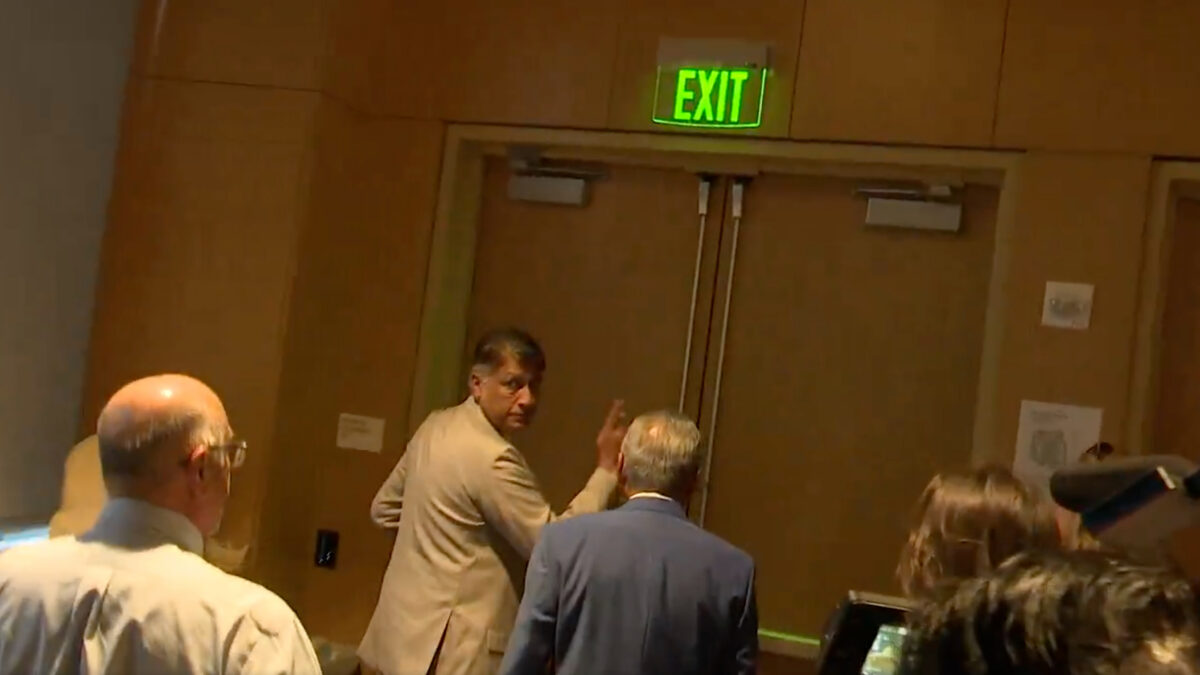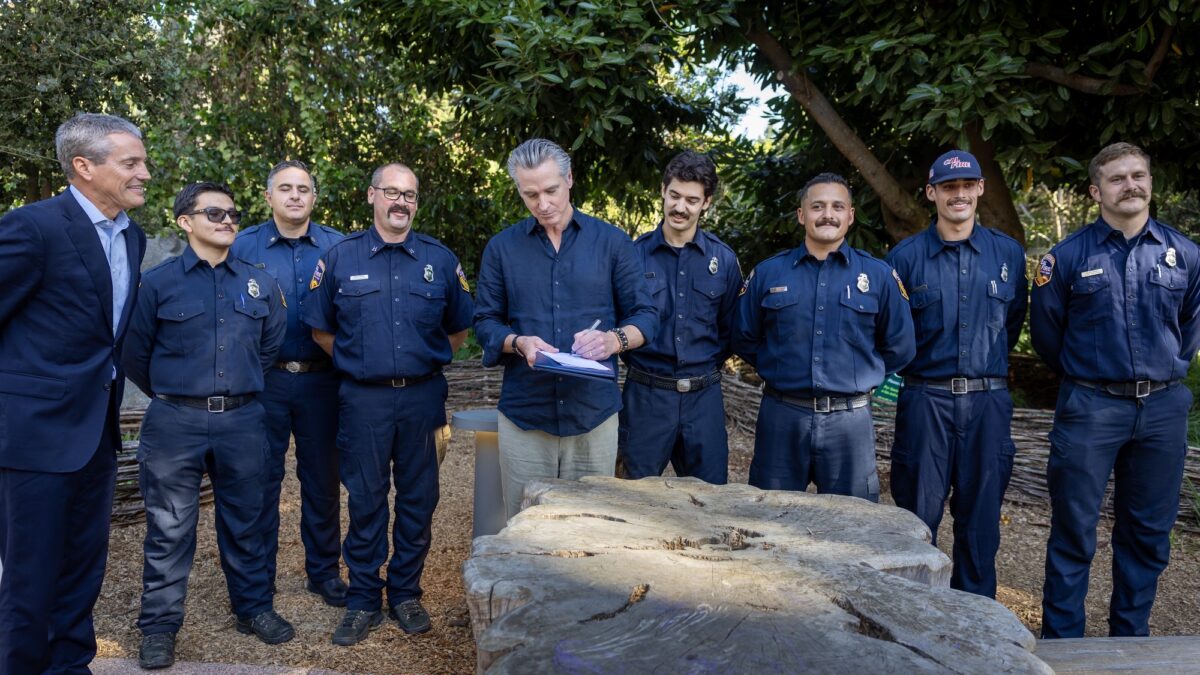
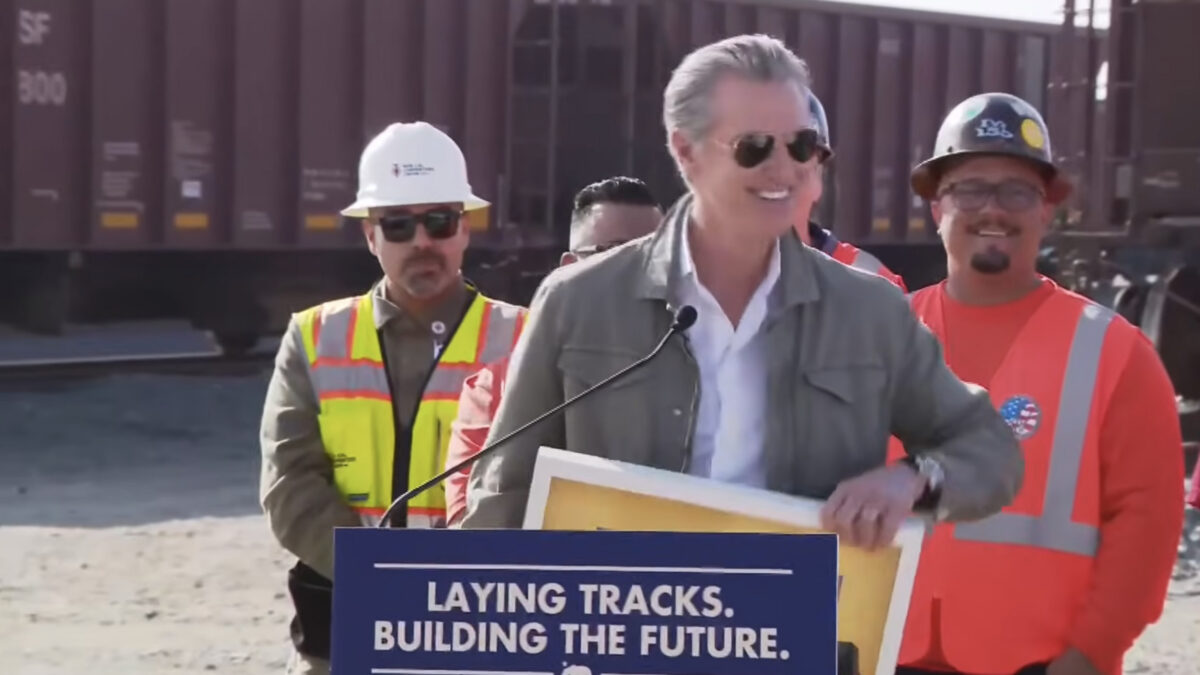

It was an induced hallucination, happily shared by a crowd of professional journalists, and a useful reminder of Gavin Newsom’s tendency to swagger like a winner on the lightest of pretexts.
Back in February, the California governor spoke to the media in a crowded railyard, posing in front of a long line of freight cars and the piles of construction materials they had just delivered while he bragged about the extraordinary new progress the state was making toward a functioning high-speed rail system.
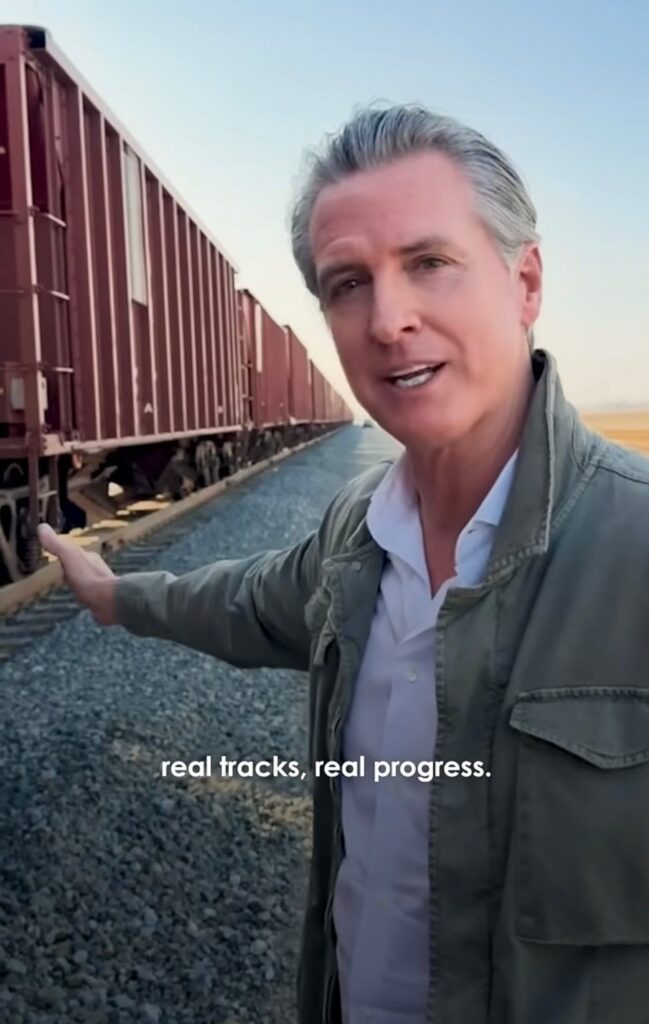
He had company.
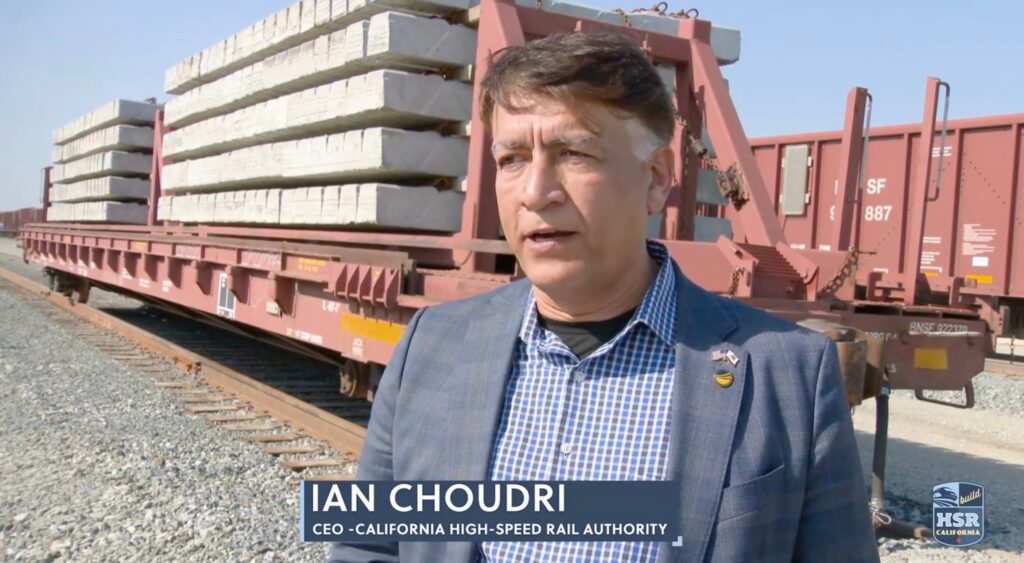
You see what they were showing off: freight trains everywhere, rushing giant piles of construction materials to a bustling new railyard to support active, urgent work. A video posted by the California High-Speed Rail Authority spoke in present tense about all the buildings on the site, though an alert viewer would have noticed that the images were all generated with computer animation. You can maybe begin to see where this is going.
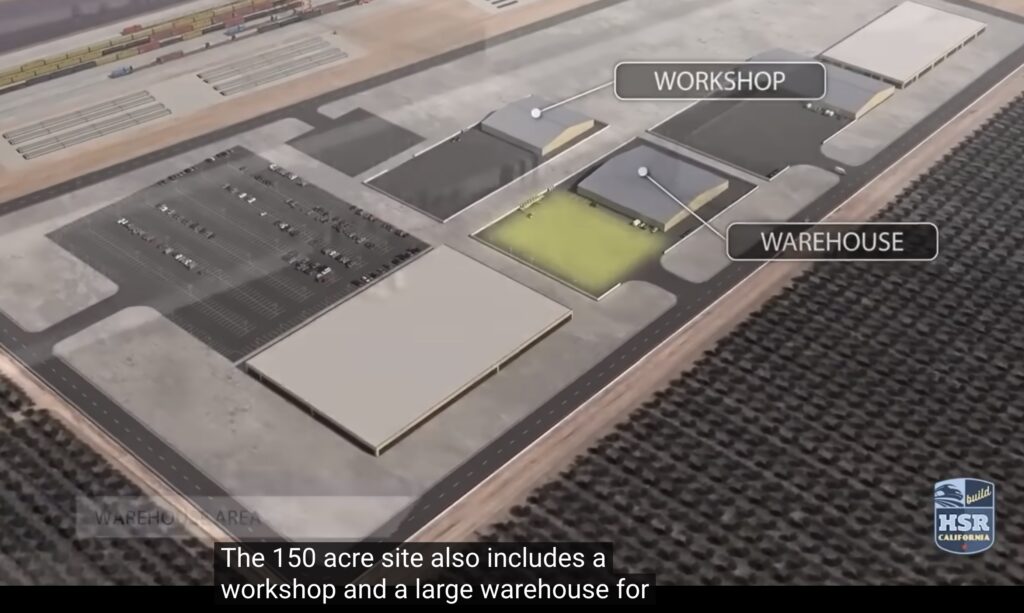
The site includes a workshop and warehouse, the video said, also describing offices and a substantial electric power system. It did not suggest that the site would one day include buildings.
Boldly proclaiming the scope of the success, Newsom’s office sent out a press release: “Governor Newsom announces major high-speed rail milestone, track installation to begin.” Again, the press release described what the site “includes,” not what the site would eventually include: “The site includes temporary freight lines and storage tracks, material storage and warehouse facilities, maintenance and operations space, and infrastructure to safely coordinate trains, equipment, and personnel.”
An ecstatic media declared the completion of a major new railhead facility, a place full of construction materials and busy workers that would allow the project to start laying track for high-speed trains. “California high-spe[e]d rail track installation set to begin in Kern County,” reported Fox 11 in Los Angeles. That was the story: facility completed, open, working, starting to lay track for high-speed rail.
A few months later, the site looks like this, and it will only take you 17 seconds to watch the video:
A reporter from The Federalist walked into the partially fenced site this week, not passing any signs that declared the place to be off-limits, and stood on the train tracks at the railhead.
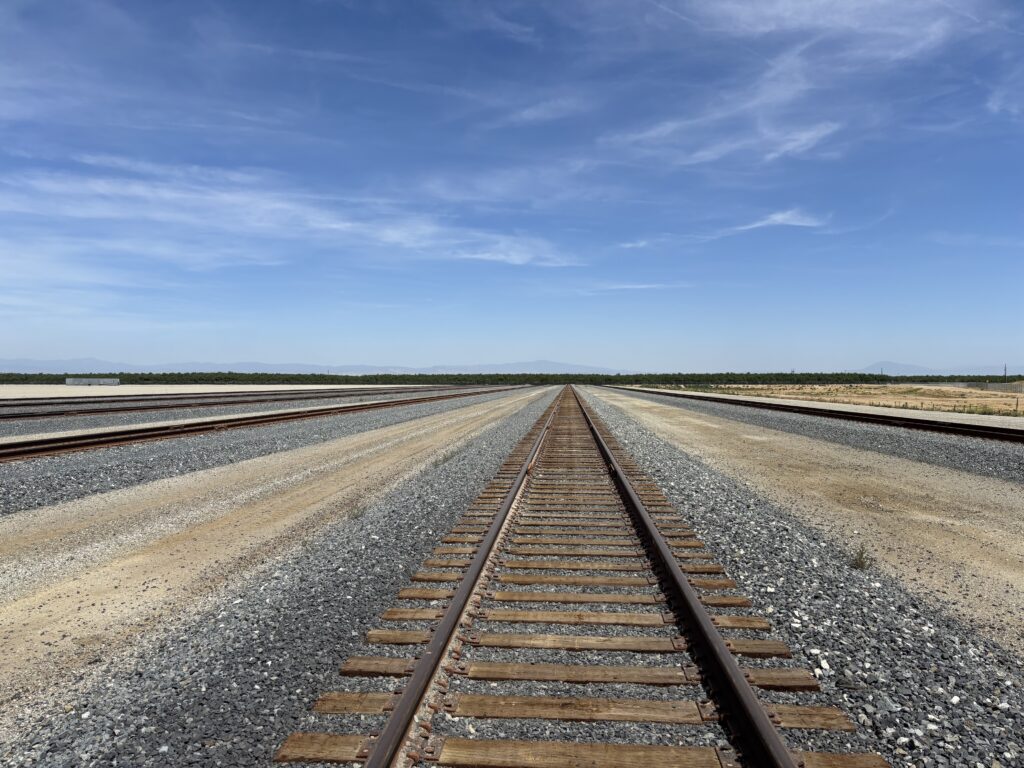
It was safe to stand there, because there was no activity of any kind. No trains were present. No workers were on the site. No construction materials were stored there. No buildings exist, though a single trailer sits toward the back of the otherwise unused land. It’s 150 acres of dirt. There are no “material storage and warehouse facilities, maintenance and operations space, and infrastructure to safely coordinate trains, equipment, and personnel.” There are six sets of track, but they run into an unused and unpopulated railyard.
Asked for an explanation, the governor’s press office referred The Federalist to the state Department of Transportation.
Late Thursday evening, The Federalist got a long response to our questions from Micah Flores, a public relations manager at the California High-Speed Rail Authority. The February event, Flores wrote, “did not mark the opening of a fully built‑out materials lay-down yard, nor completion of the permanent workshop, warehouse, or operations buildings shown in long‑term conceptual animations. Those will be constructed after the track and systems contractor is selected, mobilizes, and rail material deliveries begin, which is anticipated to occur in Q3 this year.”
A contract for track and systems construction, he added, “is in the final procurement stage,” and the railhead will probably be used later this year: “Once that contract is approved and the builder mobilizes, the railhead will shift into active daily use, with track installation anticipated to begin in Q4 this year. … Because the track and systems contractor has not yet been mobilized, the site is not currently operating as a full construction yard.”
We’ll put the full response from the High-Speed Rail Authority in the comment thread for this story, so you can read their whole answer for yourself.
Early this month, Newsom told Bill Maher that “we’re actually laying the track” for high-speed rail. You can watch him say it:
Twenty days after the governor said that California is laying track for high-speed rail, the High-Speed Rail Authority says that they’re finalizing the first contracts that will allow them to start procuring rail. If you believe the governor of California, the state is laying track that it hasn’t bought yet.
The people who run California’s high-speed rail project have been carefully dialing back expectations for months, speaking in noticeably restrained language about what the project will eventually be able to accomplish: shared track and single-tracked sections that will lead to slower trains, servicing less convenient stations. You can read a detailed description of those sharply reduced expectations here, in recent reporting from The Federalist, or read the High-Speed Rail Authority’s 2026 Draft Business Plan here. The builders are dialing back their language.
As the practical discussion about the future of the project becomes significantly more restrained, Gavin Newsom is becoming significantly louder and more aggressive. The old joke about playing chess with a pigeon comes to mind: He’s knocking over the pieces, pooping on the board, and swaggering around like he won the game.
But Newsom’s description of the project is increasingly disconnected from the project. If you doubt that, the site of his stunning victory in February sits at the intersection of Highway 43 and Merced Avenue, just south of the small Central Valley town of Wasco, and you can go look at the empty railyard with your own eyes.