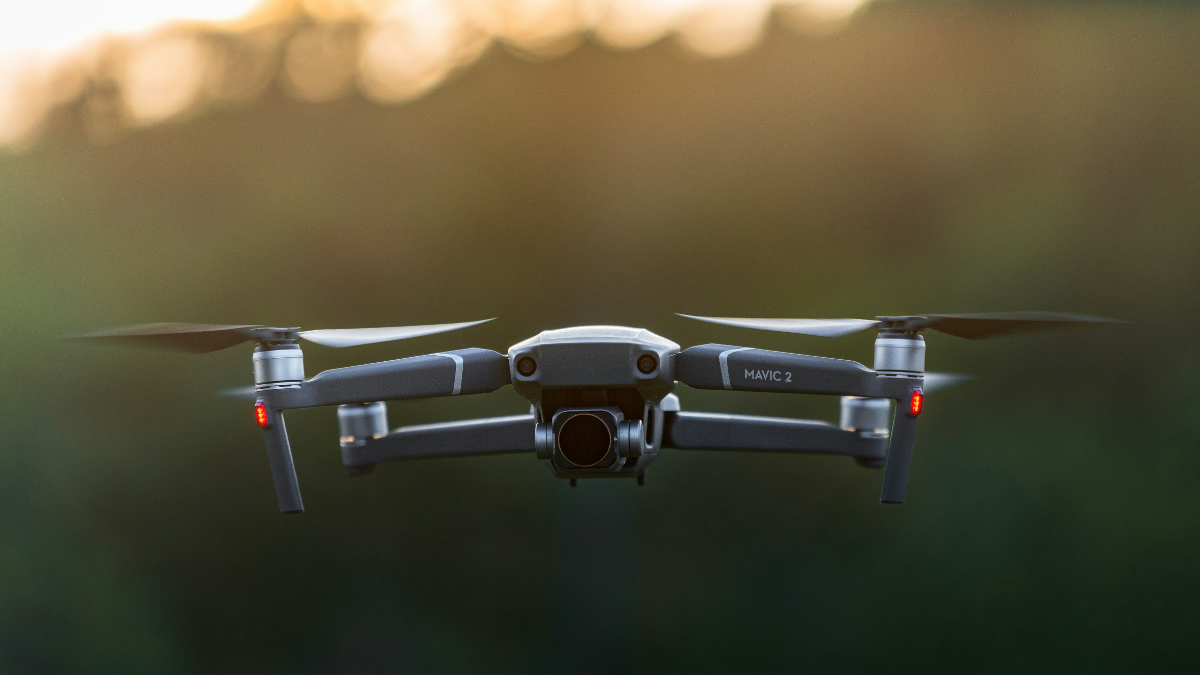

Drones are increasingly violating American airspace. We know that tens of thousands of drone sightings on our southern border are connected with the Mexican drug and human trafficking cartels. But dozens of other drone sightings at sensitive military installations suggest hostile nation-state actors, most likely China.
As drone operations in Russia’s war on Ukraine show, the threat is no longer hypothetical — it is active and escalating. Unfortunately, a dangerous combination of bureaucratic inertia and misplaced priorities has left our borders and military installations vulnerable.
In December 2023, Langley Air Force Base in Virginia endured 17 consecutive nights of drone incursions, some involving craft up to 20 feet in length. Despite clear sightings and briefings that reached the White House, proposals to jam signals, deploy directed energy weapons, or shoot the drones down were rejected as “too risky.” To this day, no official explanation has been provided, and no one has been held accountable.
In New Jersey, 11 months later, drones were reported over Picatinny Arsenal, a 6,400-acre U.S. Army research and manufacturing facility, as well as over Naval Weapons Station Earle. After weeks of public alarm and official confusion, then-Homeland Security Secretary Alejandro Mayorkas said, “I want to assure the American public that we in the federal government have deployed additional resources, personnel, technology to assist the New Jersey State Police in addressing the drone sightings.” He went on to ambiguously remark, “Some of those drone sightings are, in fact, drones …”
By Dec. 16, five weeks before Donald J. Trump was sworn in for his second term, the Department of Homeland Security, the Federal Bureau of Investigation, the Federal Aviation Administration, and Department of Defense issued a statement, disclaiming any threat, noting that the sitings were of “… lawful commercial drones, hobbyist drones and law enforcement drones, as well as manned fixed-wing aircraft, helicopters and stars mistakenly reported as drones.”
Yet Stewart International Airport, 60 miles north of New York City, shut down due to the perceived drone threat, while the FAA issued temporary flight restrictions over Picatinny Arsenal and Bedminster, New Jersey, suggesting that something was amiss.
Eventually, federal officials attributed most incidents to lawful commercial drones and misidentified aircraft. Public fears subsided.
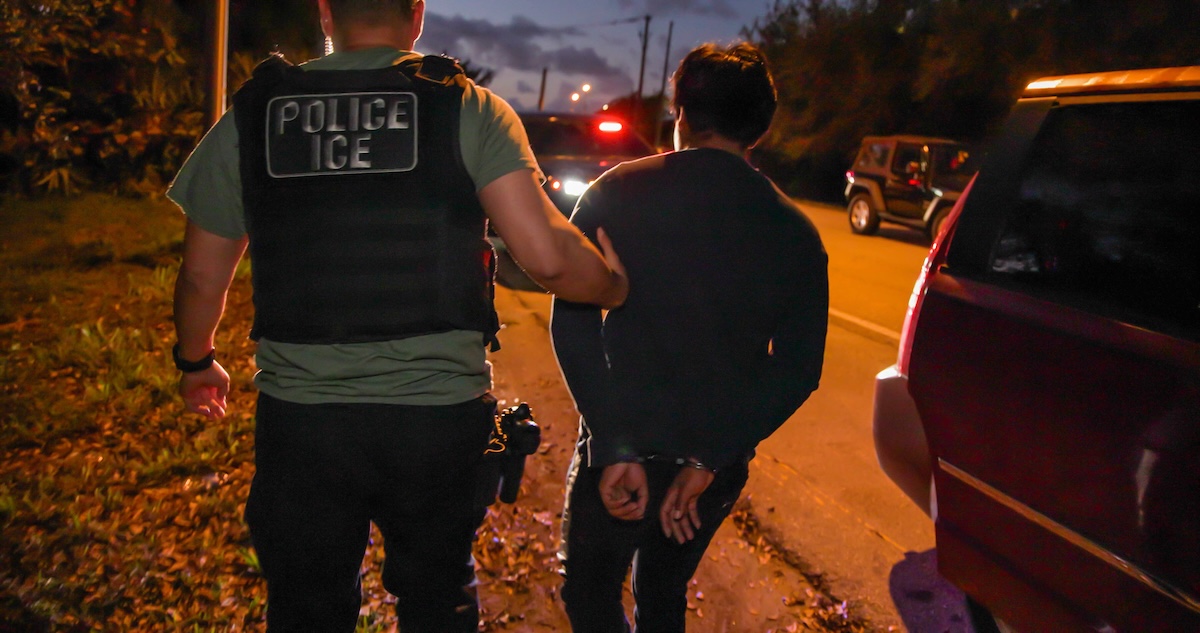
But along the southern border, the threat is clear and continuous. Cartels operate thousands of drones annually — estimates exceed 60,000 sightings along or over the border, all in the latter half of 2024. The cartels operate the drones for four main purposes: surveillance, drug smuggling, counter-surveillance, and airspace denial — as drone swarms can prevent U.S. government helicopters from safely operating in the vicinity. Some cartel operatives have reportedly traveled to Ukraine to study advanced drone warfare, tactics now being turned against U.S. Border Patrol agents as well as rival cartels.
The sudden airspace closure over El Paso on Feb. 11 happened because someone finally decided to act. Depending on reports, U.S. forces neutralized at least one cartel drone — or an errant party balloon. Eyewitness accounts reported to the Daily Mail described a large hovering object releasing smaller drones near the border around the time of the incident, contradicting claims by some that authorities had merely downed a stray Mylar balloon.
The FAA’s initial response — a 10-day shutdown imposed without advance notice to the White House, Pentagon, or local officials — suggested less a safety measure than an act of bureaucratic retaliation in the form of malicious compliance.
At the heart of the problem lies the Federal Aviation Administration’s singular focus on civilian air travel safety at the expense of national security. Counter-drone technologies — jammers, lasers, kinetic interceptors — require exhaustive FAA safety certification borne of modern safetyism that demands zero risk. These demands are effectively impossible to meet; endless testing and risk assessments guarantee delay. When disputes arise over testing protocols, as reportedly occurred before the El Paso closure, the FAA resorts to drastic measures that aim to punish government rivals rather than protect the American public.
The FAA’s emphasis on airspace safety — heightened after the deadly January 2025 Reagan Washington National Airport midair collision and anti-drone tests in the D.C. area two months later — has fueled caution on counter-drone technologies that risk interfering with manned aircraft systems. Yet this tragedy is a false analogy, having nothing to do with anti-drone technology, which operates within very clear and predictable parameters.
Langley and the border tell a different story: Persistent threats met with a bureaucratic maze that results in hesitation or inaction. As a consequence, mystery drones over military bases or crossing the border go unchallenged. Cartels and nation-state adversaries, likely China, exploit our indecision.
America’s skies must not be surrendered to the cartels or hostile operators.
Border Patrol and the military need clear authority to deploy counter-drone systems in sensitive areas without endless FAA vetoes. Rules of engagement must be streamlined and regulators held accountable to prevent “safety” or process from protecting our airspace.