
A new report from the American Accountability Foundation (AAF) calls on U.S. academia and policymakers to take stronger measures to protect critical science and technology from communist China.
The report, titled “Chinese Scientist Infiltration Initial Report,” is the first to analyze a dataset of more than 10,000 Chinese scholars and researchers currently or recently affiliated with American universities and national labs under J-1 visas. These visas, intended for exchange programs funded by governments or institutions, historically required holders to return home for two years after their programs to apply their knowledge domestically.
In late 2024, however, the Biden administration’s Department of State revised the Exchange Visitor Skills List, removing this two-year home residency requirement for J-1 visa holders from 34 countries, including China. This change, applied retroactively in many cases, eases pathways for such researchers to remain in or return to the U.S. — potentially amplifying risks at a time when national security concerns are mounting.
Profiles of 21 Academics
The AAF profiles 21 Chinese academics identified through a preventive risk assessment based on four critical factors: ties to the Chinese Communist Party (CCP), affiliations in China, areas of study or research in the U.S., and the sources of funding. It is important to note that there is no evidence of espionage or illegal activity in these 21 cases.
Out of the 21 individuals, four have confirmed CCP membership, with others linked through events or programs. Moreover, 16 of them attended universities with connections to the People’s Liberation Army (PLA) or oversight by the State Administration for Science, Technology, and Industry for National Defense — many of these universities fall on the U.S. Commerce Department’s Entity List for strict export controls on dual-use technologies (which serve both civilian and military purposes).
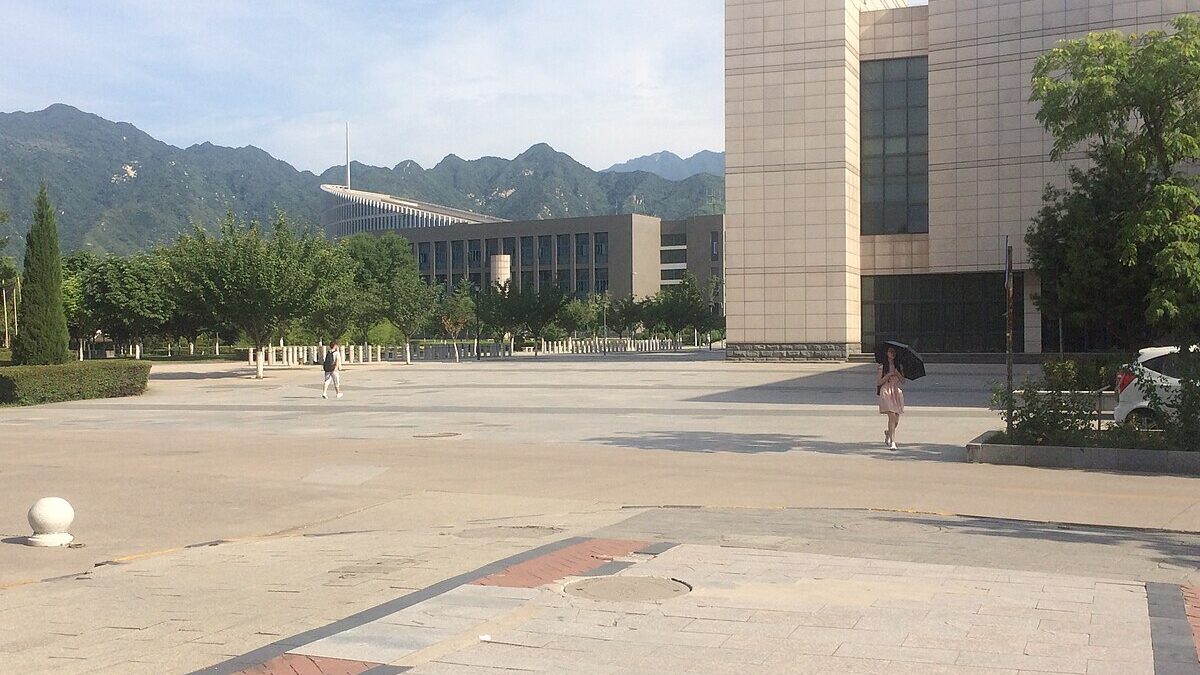
For instance, one of the 21 Chinese individuals studied at Northwestern Polytechnical University, one of China’s “Seven Sons of National Defense.” The term refers to seven elite public universities directly overseen by the Ministry of Industry and Information Technology. While these schools enjoy strong academic reputations in China and attract talented students who may pursue purely civilian careers, their deep military ties make them high-risk partners for Western collaboration, as noted by U.S. agencies and think tanks.
Another red flag the AAF report raises is that all 21 individuals study or work in sensitive dual-use fields such as semiconductors, AI, quantum computing, and viral pathogens. These researchers are embedded at top U.S. institutions — Harvard, Carnegie Mellon, the Lawrence Berkeley National Laboratory, and others — often contributing to federally funded work via agencies such as the Department of Energy, the National Institutes of Health, the Air Force Office of Scientific Research, the U.S. Army Research Laboratory, the Office of Naval Research, and the Defense Advanced Research Projects Agency (DARPA).
Americans Subsidizing Chinese Advancement
The AAF argues that American dollars are unwittingly subsidizing advancements that could bolster China’s military capabilities. Therefore, the report recommends expelling the profiled individuals or denying re-entry. However, such steps would face significant legal hurdles absent proven wrongdoing. Inaction, however, is no longer tenable either.
The National Counterintelligence and Security Center identified the CCP as posing “the broadest, most active, and persistent espionage threat” to the United States, with no rival matching China’s aggressive targeting of American research. Beijing exploits open partnerships, talent recruitment programs such as the Thousand Talents Plan, and the presence of Chinese scholars in the U.S. to acquire critical technologies — both legally through open collaboration (with the intent to transfer them home) and illegally through espionage and theft, thereby threatening U.S. national security and economic prosperity.
One Researcher’s Ties
A telling illustration is Ruopeng Liu, who arrived in the U.S. in 2006 to study metamaterials (engineered materials with potential stealth and optics applications) under Professor David R. Smith at Duke University via research partly funded by DARPA and other defense agencies. After earning his Ph.D., Liu returned to China under the Thousand Talents Program and founded Kuang-Chi, a company that rapidly commercialized metamaterial technologies.
Professor Smith and FBI sources have expressed concerns that proprietary knowledge and designs from the Duke lab were transferred without authorization. While Liu has denied wrongdoing and described his work as legitimate fundamental research, Kuang-Chi has secured substantial Chinese government support, including a 2012 visit from Xi Jinping himself, and forged partnerships with state-owned defense conglomerates like those under the China Aerospace Science and Industry Corporation, which is sanctioned by the U.S. government. Today, Kuang-Chi supplies metamaterial-based products to the PLA, exemplifying how U.S.-trained talent can accelerate its adversary’s military capabilities.
Liu’s story underscores the tightrope American institutions must walk: preserving the openness that fuels scientific progress while defending national interests against a determined adversary. Universities and national labs are on the front lines of great-power competition. They cannot afford complacency.
To meet this challenge, American academia and policymakers must act decisively yet thoughtfully. Some recommended steps include strengthening vetting for J-1 and other visa applicants with ties to high-risk institutions or programs; implementing robust IP safeguards, including better monitoring of data access and collaborations; and fostering closer partnerships with federal agencies such as the FBI and Commerce Department to share threat intelligence without stifling legitimate exchange.
In an era of unrelenting strategic competition, safeguarding our technological edge is not optional — it is essential to preserving American security, prosperity, and leadership in the world. The time for stronger safeguards is now, before more breakthroughs born in American labs end up strengthening our most formidable adversary.