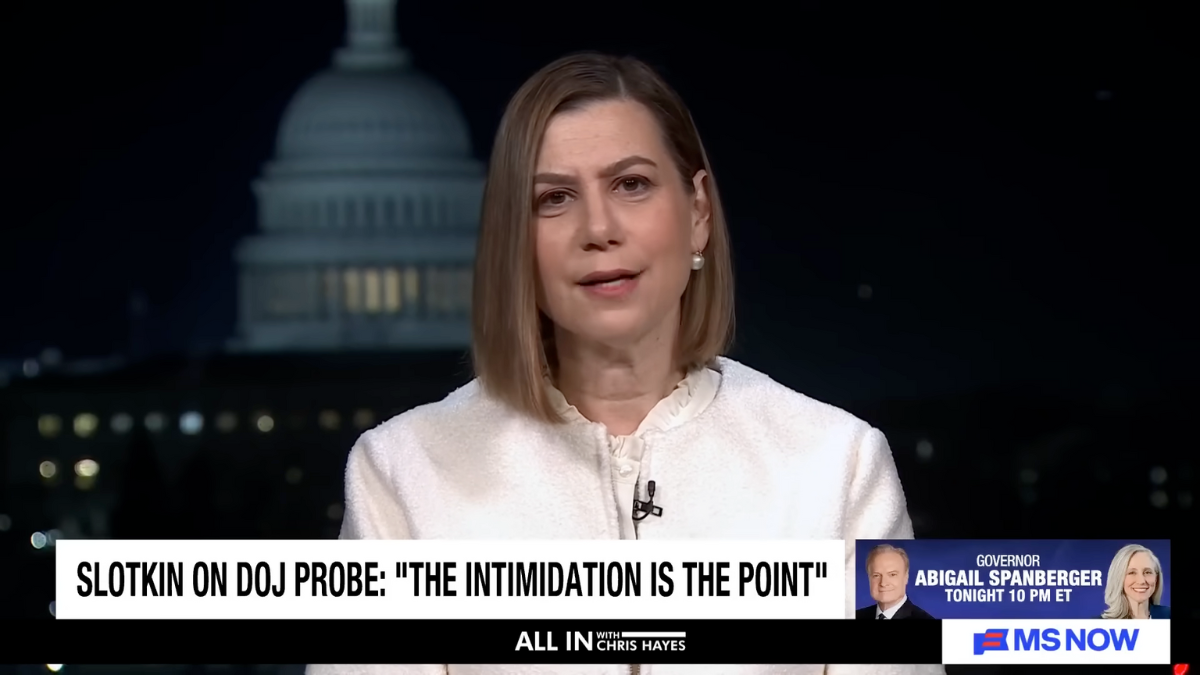

The Democrat Sen. Elissa Slotkin just got something right. Unfortunately for her, she doesn’t understand what she was right about.
Back in November, six congressional Democrats released a video on social media “to speak directly to members of the Military and the Intelligence Community.” The meaning of their message has been hotly debated ever since, and mostly not in good faith. If you haven’t watched their video since then, take a minute to watch it again, because it’ll be important to remember exactly what they said:
Since the moment the video was released, Democrats and the legacy media have falsely characterized the message as a simple reminder of the military duty to refuse to obey illegal orders. And how could that be offensive, right? If anyone ever gives you an illegal order, then, at that hypothetical future point, you should disobey. “It was a 90-second video that simply restated existing law that if you’re in the military you have the responsibility to refuse illegal orders,” Slotkin said last week.
But that’s not what they were doing. At all. Watch closely between the 30-second mark and the 47-second mark, and you’ll see what they were up to. Screenshot:
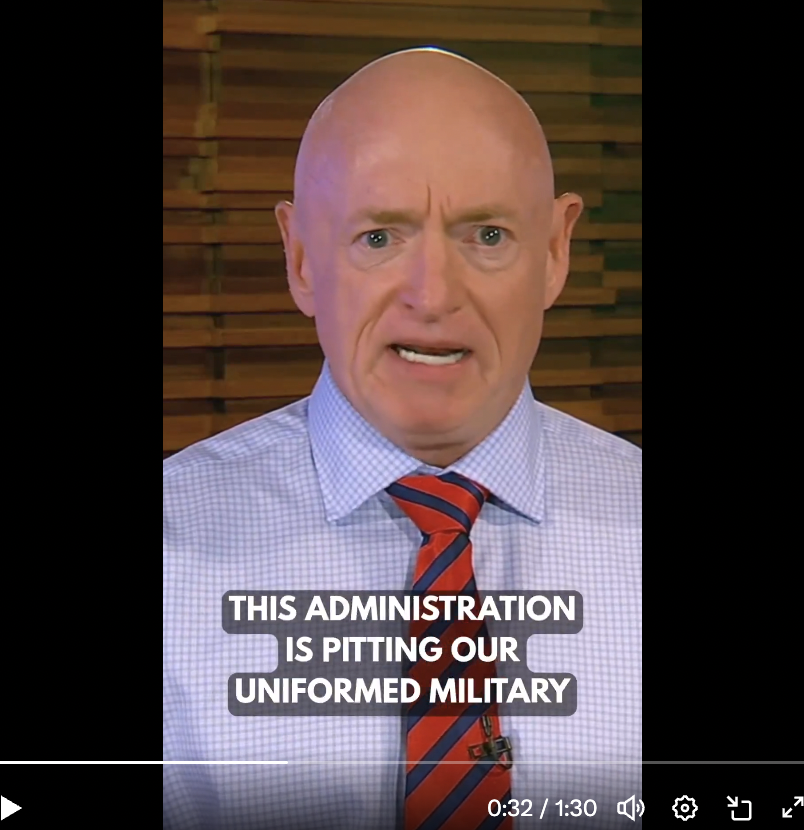
The Trump administration, they said, “is pitting” the military against the country. They told a story about a current, ongoing constitutional crisis, an assault on Americans by the person elected to the presidency. They depicted Donald Trump as an illegitimate president whose orders were illegal, and called for immediate disobedience from the armed forces. They used the phrase “right now.”
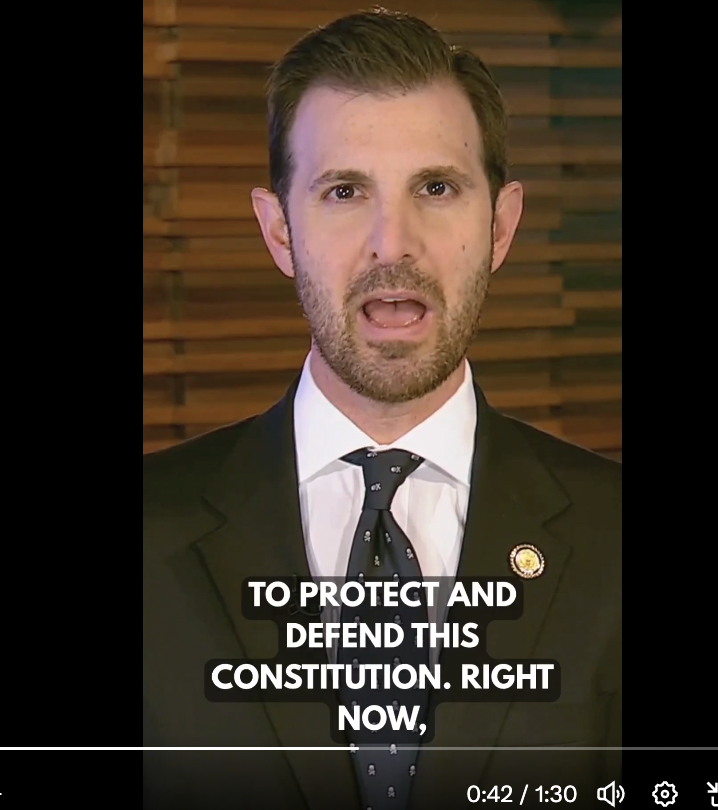
Their message was a call for the armed forces to immediately defeat an internal enemy. This is the sentence that followed the words “right now.”
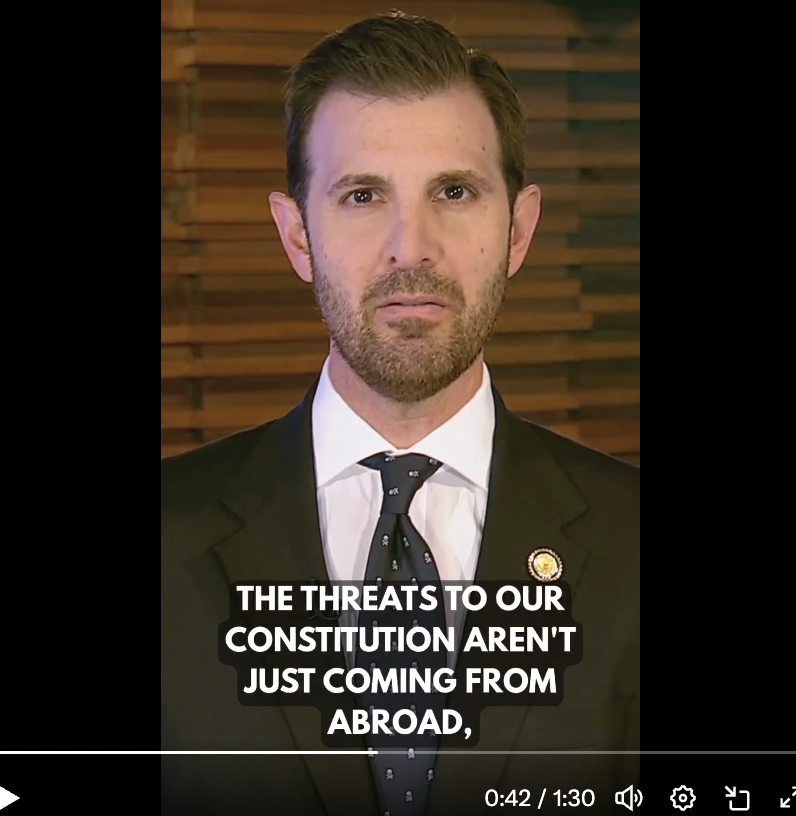
That’s what they were saying to the military: Donald Trump is a threat to America, so his presidency has to be treated as illegitimate, and his orders have to be regarded as illegal and immediately disobeyed. They weren’t using the phrase “right now” because they meant to educate service members about a potential future event. They were wishcasting a mutiny, calling for immediate and widespread military disobedience. They were speaking in the present tense. Here, let me use sophisticated media tools to make the point clearer:
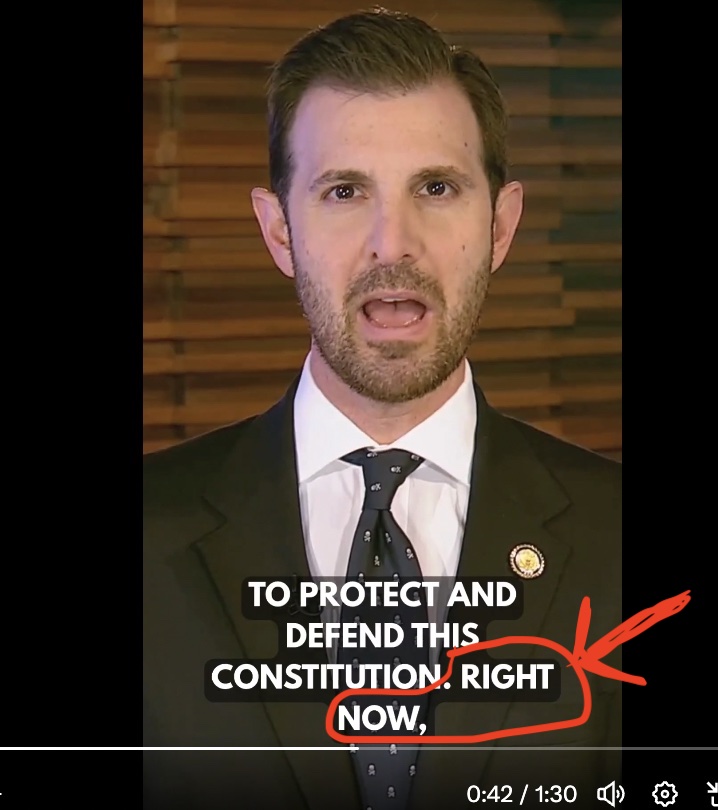
The project went sideways on them the moment they began it. Asked to name the illegal orders they were referring to, the six Democrats who recorded the message pivoted to the claim that they were doing theoretical prophylaxis, educating people in the armed forces just in case a hypothetical illegal order ever came up at some remote, distant point. They never meant to say that Trump has issued any specific illegal orders, they said, and they playacted shock and confusion at the thought that anyone could ever have taken their message that way.
But that’s flatly not what they were doing. They were promoting constitutional crisis, calling for immediate resistance to the civilian control of the military. They were openly telling people in the armed forces to stop obeying the president of the United States, “right now.”
We arrive at the important choice: The administration responded with righteous fury, instantly, and didn’t quit that course in the face of legacy media pearl-clutching. They attacked, labeling the Democrats in the video the “Seditious Six.” Secretary of Defense or War Pete Hegseth, depending on your party registration, announced that Sen. Mark Kelly, a retired captain in the U.S. Navy, would face a review of the grade at which he retired, and might see his retirement pay reduced.
“When viewed in totality,” Hegseth wrote to Kelly, “your pattern of conduct demonstrates specific intent to counsel servicemembers to refuse lawful orders.” Democrats continue to argue against this interpretation, but a fair reading of the November video supports it.
Kelly has sued over Hegseth’s censure, and a federal judge is skeptical of the government’s argument about its authority to punish retired military officers for political speech — even for reckless and dangerous political speech. As policy, I doubt that Hegseth prevails. The limits of free speech at the edges of military service have been a source of legal and cultural conflict since the birth of the American republic.
In a book on the history of American military justice, I described the court-martial of a captain in the Newport Artillery for insulting the governor of Rhode Island at a political reception, while he wasn’t in uniform or performing military duties. Captain Robert B. Cranston told the officers assembled to hear his case that they couldn’t conduct a trial over the speech of a citizen who sometimes performed military duty without placing their own lives as citizens under military jurisdiction. They saw the point, and promptly adjourned without hearing testimony.
Speech limits for people on active duty are clearer, but we’ve always argued about the reasonable limits on speech for people with some form of military status who are not currently in uniform. If we’ve erred in setting those boundaries, we’ve erred on the side of free speech. That’s probably how this conflict ends too.
But if the administration’s punitive response to the Seditious Six ends up failing as policy, it absolutely still succeeds as politics. Trump and Hegseth have changed the topic of conversation. No one is now actively considering or advancing the dangerous argument that the armed forces should refuse to obey the orders of their current commander-in-chief. The Democrats who told people serving in the armed forces to disobey “right now” have lost the argument. Google Trends, for the term “illegal orders,” November to February:
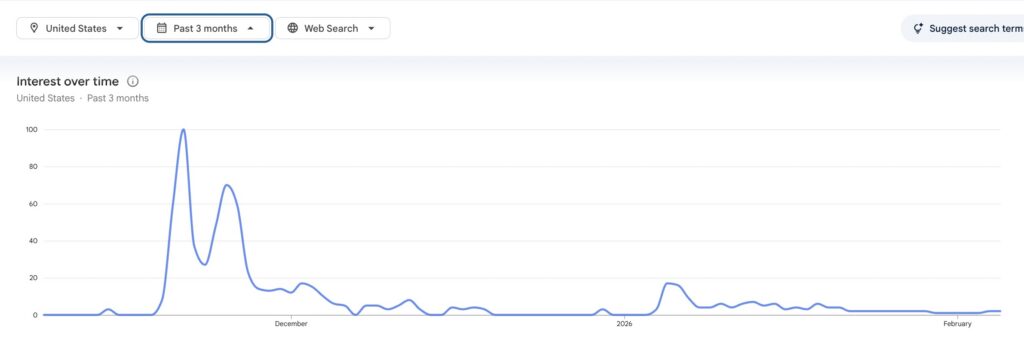
That conversation is over. The administration ended it.
The Federalist sent email messages to the six Democrats who made the November video, asking them a single question: Are you currently, actively counseling people serving in the military to disobey orders from President Trump? I only got one response, from Sen. Slotkin’s spokesman, Josh Stewart. He defended Slotkin, but didn’t answer the question that I asked:
I think her original video speaks for itself. She cited current law in a similar way that Pete Hegseth did here.
I would also urge any coverage of this to include the President’s reposting of a call to “hang them.”
We went back and forth a few times, and one of Stewart’s answers was to refer to Slotkin’s recent comments about “going on offense” against an administration that’s now threatening a sedition investigation of the six Democrats.
At the 3:52 mark in this interview, Slotkin says this: “So sitting on your hands and keeping a low profile actually doesn’t help. It’s the opposite. And so we just decided to go on offense and make them tap-dance a little bit.”
But that’s exactly the lesson Slotkin’s opponent figured out. The Seditious Six called for a mutiny, and the administration decided to “go on offense and make them tap-dance a little.” However it ends, that choice put an immediate stop to the open call for military disobedience.
In a statement to the Federalist, White House Deputy Press Secretary Anna Kelly said, “President Trump publicly expressed his concerns about the troubling comments made by Senator Mark Kelly and other Democrat lawmakers encouraging them to defy lawful orders from their Commander-in-Chief. Secretary Hegseth rightfully directed a review to determine future actions as a result of these dangerous comments by Senator Kelly, who as a military retiree is subject to the Uniform Code of Military Justice.”
A spokesman for the War Department made a similar statement: “While news cycles move forward and change frequently, the Department of War continues to take the Seditious Six video very seriously.”
Slotkin concludes that the best choice in a political controversy is “going on offense.” The problem for her is that the Trump administration agrees.