
Allegations surfaced last week that FDA Commissioner Martin Makary instructed the FDA to slow-walk its study of the dangers of the chemical abortion pill in order to avoid the issue being in play during the midterm elections. If this is true, it is a mistake.
We conducted the largest-known study of the abortion pill, using real-world data, which we coauthored and published at the Ethics and Public Policy Center. It found the abortion pill has severe risks, as we are confident that the FDA will conclude. In response to our study, Secretary of Health and Human Services Robert F. Kennedy had promised the Senate that at the very least the label would need to be updated — and he directed Makary to have the FDA conduct its own study, the one he’s now accused of delaying.
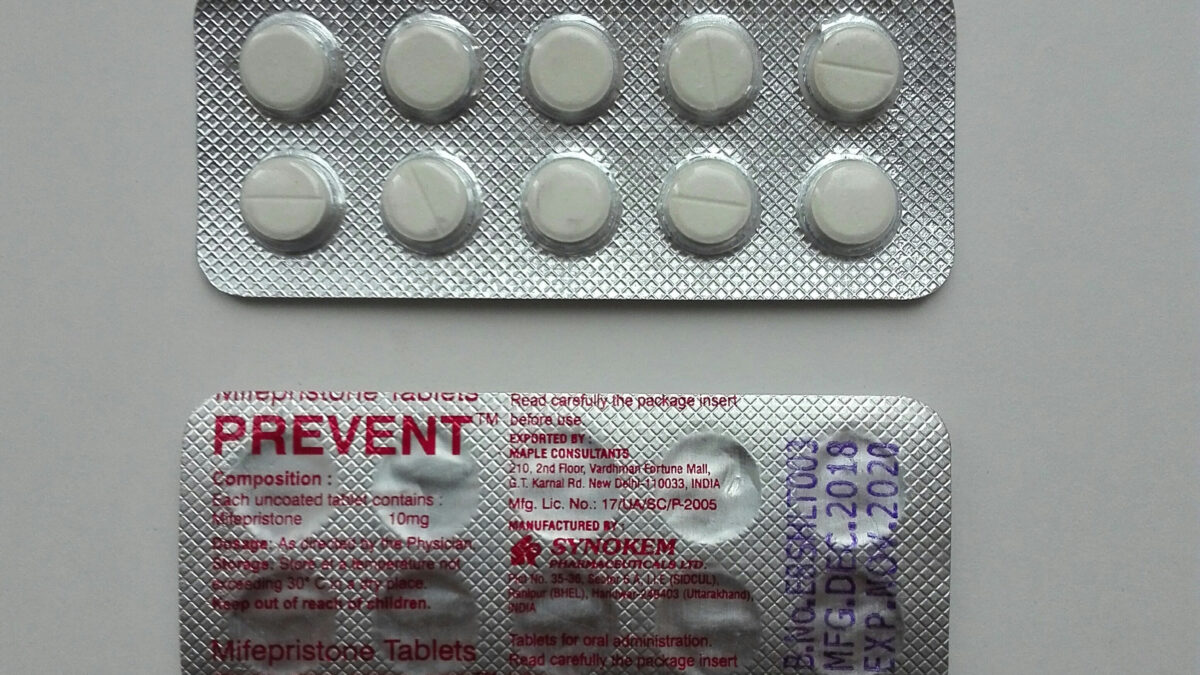
Our study found that 10.93 percent of patients using the abortion pill experience sepsis, infection, hemorrhaging, or another serious adverse event (as classified by a team of doctors following an FDA definition and NIH methodology) within 45 days after their abortion prescription. This is more than 22 times the summary figure of “less than 0.5 percent” reported on the drug label.
Biden Eliminated Safeguards
Dr. Makary’s alleged delay is a mistake for two reasons. First, it continues to place women’s health, safety, and even freedom at risk. There’s a reason why the FDA has required, ever since the Clinton FDA approved the abortion pill, that patients see a medical professional in person before a chemical abortion pill could be prescribed. This was essential to protect their health.
The Biden FDA used Covid as an excuse to eliminate the required in-person doctor visit before someone could access these pills. But the in-person visit was essential to determine the age of the unborn child, rule out ectopic pregnancies, and ensure that women were not being coerced into the abortion.
The abortion pill is only approved for the first 10 weeks of pregnancy. After that it poses significant risks to the woman’s life. But there’s no way to determine the gestational age of the child via the internet — which is how many women now get abortion pills. Only an in-person doctor visit can determine this.
The abortion pill can be deadly if taken during an ectopic pregnancy (where the child is implanted in the fallopian tube, not the womb). But there’s no way to determine the location of the child via the internet, as that too requires an in-person doctor visit.
Furthermore, abortion proponents say it’s about a woman’s choice. But we have already seen — and continue to see with alarming regularity — women coercively poisoned to kill their unborn babies by boyfriends who order chemical abortion drugs online and slip them into their drinks. It has become an unregulated free-for-all where no woman is truly protected. This wouldn’t happen if the FDA once again required in-person doctor visits as they did during the first Trump administration.
Makary need not wait for the FDA to conduct what he describes as its own “bigger, more robust” study. The medical reasons that led prior FDAs to require in-person doctor visits still stand. Indeed, the Trump FDA should protect women’s safety by reverting to the previous medical standards.
Misplaced Midterm Fears
Second, fear of the midterms is entirely misplaced (and inappropriate anyway for the commissioner, who is charged with ensuring the safety of our drugs, not considering the political ramifications). Voters overwhelmingly support common-sense safety protocols for abortion pills. A recent survey conducted by President Donald Trump’s most trusted pollster, McLaughlin & Associates, shows that 7 in 10 likely voters support requiring an in-person doctor visit for a mifepristone prescription, while 9 in 10 support updating the drug label to warn of real-world safety risks.
The Trump administration is all about promises made, promises kept. And the president made three relevant promises here.
First, he promised to Make America Healthy Again. But you can’t make America healthy with a pill that causes 1 in 9 women to experience a serious adverse event.
Second, he promised to undo all of the misguided policies the Biden administration enacted. Using Covid as an excuse to eliminate in-person visits was terribly misguided, and needs to be rectified.
Third, he promised he’d leave abortion to the states, upsetting many pro-lifers. But you can’t leave abortion to the states when a citizen in Texas or Florida can get around their pro-life laws by going on the internet and getting abortion pills in the mail from California or New York. And anyone can get these deadly drugs online and in the mail — which allows for the coercive abortions we’ve already seen.
Requiring in-person doctor visits fulfills all three of President Trump’s promises. It’s time for his FDA commissioner to make good on them.
Misguided Criticism of Our Study
Makary also minimizes our study, claiming “that study was done in claims data, so it didn’t have granularity into the patient characteristics in a way that many researchers would want to have.” This is perplexing, as claims data is exactly the kind of data the FDA itself relies on when evaluating real-world safety. If claims data wasn’t “granular” enough to be useful, then the FDA would have to throw out most of its own pharmacovigilance work, as well as Dr. Makary’s peer-reviewed Covid research, which was based on claims data from FAIR Health. Indeed, if claims data is inadequate for assessing mifepristone safety, then the FDA has a much larger problem. Claims data is the backbone of modern drug safety monitoring. Rejecting it for mifepristone would mean rejecting it for every drug.
The study we conducted at EPPC is the biggest and most robust study conducted thus far — much more so than the studies the FDA has previously relied on — and we are confident that the FDA will find similar results to ours using real-world data.
Our analysis was based on a commercially available health insurance claims database in which we identified 865,727 chemical abortions prescribed in the United States from 2017 to 2023. We were able to track outcomes for about a quarter of all women who took mifepristone under the real-world conditions that prevailed in the U.S. in recent years. By contrast, the drug label presents outcomes for a prescreened group of only 30,966 healthy women who took mifepristone under the carefully controlled conditions of clinical trials conducted around the world more than a decade ago. It is unsurprising that we found very different results when looking at real-world patients with real-world conditions.
Clinical trials lack detail about the real world. Claims data doesn’t. Clinical trials are “granular” in the sense that they track carefully screened volunteers under perfect medical supervision. That’s not how women actually experience abortion in the U.S. Claims data captures reality — including complications that never show up in tightly controlled trials.
To the extent that Dr. Makary may have concerns about granularity, he should be relieved to know that when we sort the data by state, payor, patient age, etc., we find similar outcomes. Our observed serious adverse event rates are higher than the label whichever way we slice the data, so we can be confident in our results. If he looks into the data, he’ll see the same.
Long-time Washington Post fact checker Glenn Kessler carefully examined our study shortly after its release, peppering us with questions in a search for any methodological flaw that would discredit our research. He ultimately did not assign us any of his famous “Pinocchios.”
Those we are aware of who claim to have “debunked” our study are abortion industry partisans who wrote about the worst things they suspect we might have done, rather than engaging directly with our detailed explanation of our methodology. For example, some speculated that we may have counted as a serious adverse event every time a woman showed up at an emergency room after taking mifepristone, when in fact we excluded 72 percent of these ER visits because they either were not medically serious or were not related to the abortion.
Nevertheless, it should be irrelevant what these abortion advocates think — or even what the FDA thinks — about abortion. The FDA is charged not with setting abortion policy but with evaluating the safety and efficacy of mifepristone and determining an appropriate safety protocol if it remains on the market.
There’s a reason why from the Clinton administration up until the Biden era the FDA required patients to see a medical professional in person before a chemical abortion pill could be prescribed. This was essential both to verify the gestational age and location of the pregnancy and to ensure that the woman was not being coerced into the abortion. It is high time for the FDA to restore the in-person doctor visit and improve transparency regarding the risks of mifepristone. Women deserve health care that truly cares about women’s health, and women deserve to know the truth about abortion.