
Back in the halcyon days of 2011, my wife and I spent a year living in Montpellier, France, on the Mediterranean coast. We had an apartment in the old medieval city center, surrounded by narrow winding cobblestone streets. Our place was on the fifth floor, reachable only by a worn spiral stone staircase. It was a five-minute walk to the city’s main square, a daily farmer’s market, an 18th-century aqueduct, and the oldest medical school in the world still in operation, established in 1220.
Living in Montpellier meant being immersed daily not just in French culture but also in European history. The University of Montpellier, where my wife taught that year, officially dates from the 13th century, but its roots are in the Gallo-Roman rhetoric schools of the Roman Empire. Its alumni include Auguste Comte, François Rabelais, Petrarch, and Nostradamus. Minutes from our place was the beautiful Promenade du Peyrou, an esplanade laid out in 1689 featuring a large equestrian statue of King Louis XIV. The king’s hand is extended towards the city, holding a scroll of the law — a reference to Montpellier’s Protestant rebellion during the Reformation, which was put down after a siege by Louis XIII in 1622.
Everywhere we turned in the city, we encountered a piece of French history and culture, true France. But just outside the city was something else entirely. A completely different France — indeed a completely different country. Outside the pleasant confines of Montpellier’s medieval city center there were, to put it bluntly, colonies of North African migrants who had recreated versions of their squalid homelands on French soil.
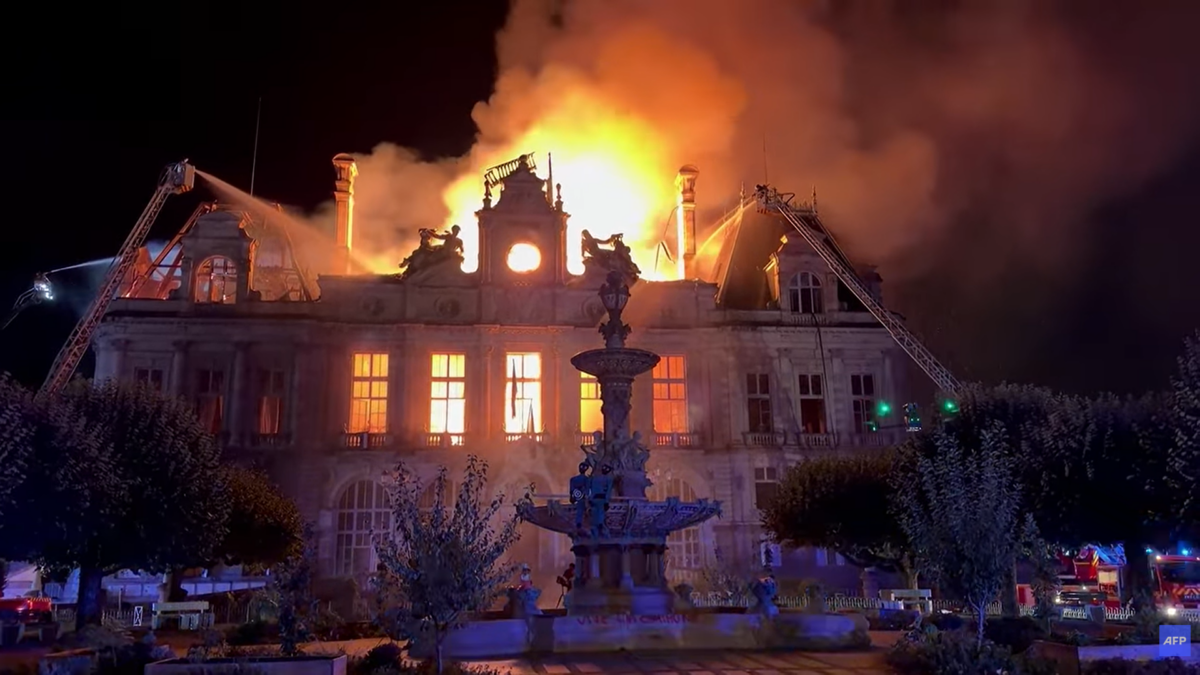
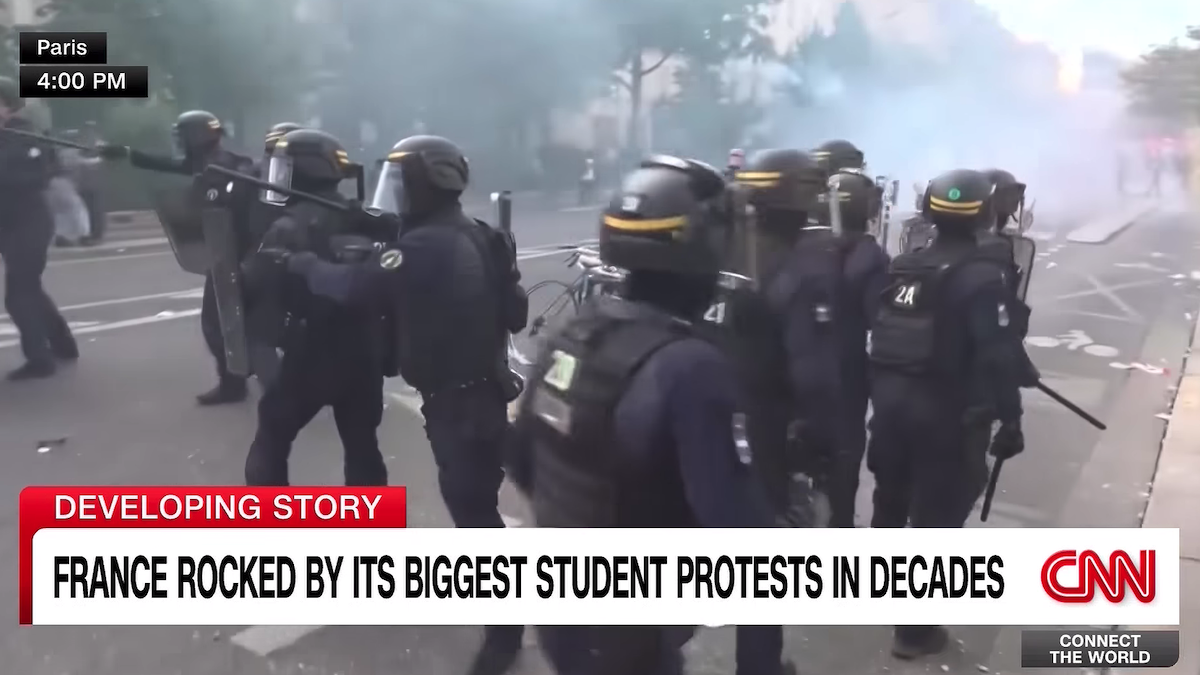
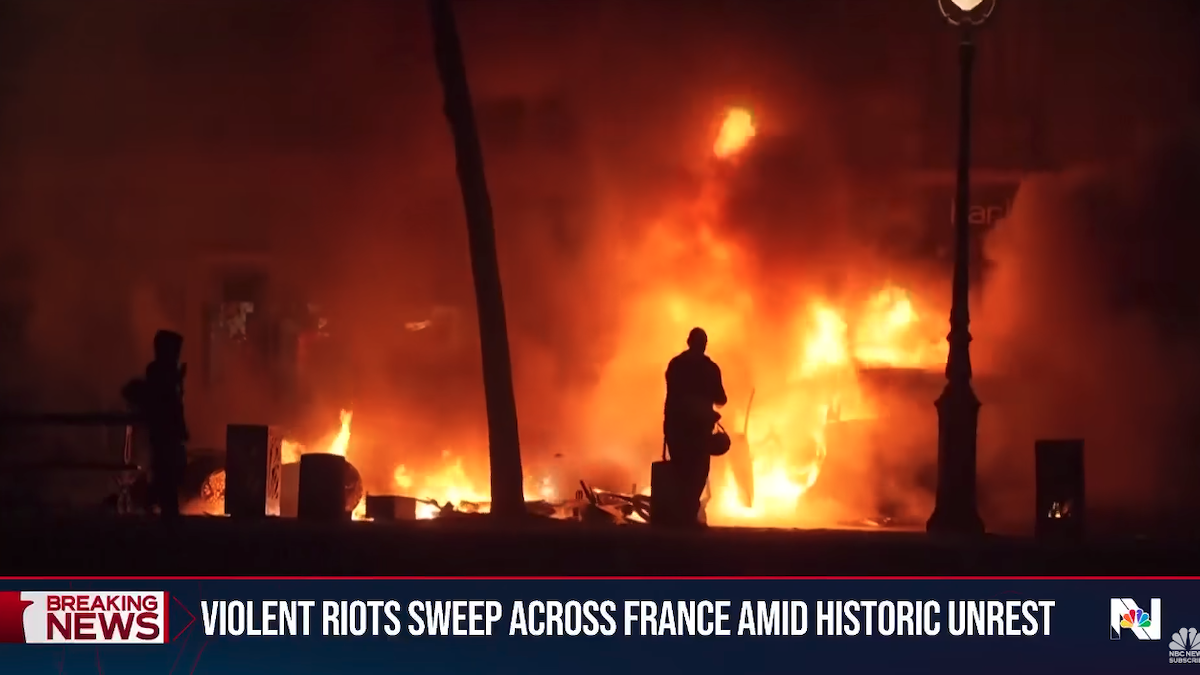
It is that France, the new France, outposts of Africa and the Middle East, that have taken to the streets of French cities in recent weeks. For anyone who cares to be honest, the reason for the rioting and looting is obvious: mass immigration from the Third World. French President Emmanuel Macron can deny it all he likes, the corporate press can try to spin the story to be about poverty or lack of economic opportunities, but we all know these are not “student protests.” (Among those arrested so far, about 70 percent are adults, to give just one data point.)
These riots were never about poor classroom conditions or teacher pay or anything to do with France’s education system. As many observers have pointed out in recent days, the French government spends an obscene amount of money on social services, including education. Nearly 5 percent of France’s GDP is spent on education, significantly higher than most other developed countries. In any case, the government could hardly spend more than it already does on education, no matter how many city centers the Antifa-Islamist mobs take over.
This is, simply put, an intifada, waged by leftists thugs together with Muslim migrants from Africa and the Middle East. And by “migrants” I mean also the unassimilated children and grandchildren of migrants, who are not French in any meaningful sense. Their purpose in taking to the streets is to overthrow the French republic, to tear it down, to plunder and pillage and destroy.
When we lived in Montpellier, the tipping point had not yet come. But we could see what was coming. That year we decided to explore the region around Montpellier and the southern coast of France rather than jet around to major European cities on the weekends. We spent time in Marseilles and Avignon, as well as smaller nearby French towns like Béziers, Sète, and Aigues-Mortes.
In these smaller towns we beheld the fruits of a failed French immigration policy that stretched back decades, to the 1960s and 70s when large numbers of migrants began arriving in France from North Africa. This cohort and their children and grandchildren never assimilated to life in France, never became Frenchmen in any meaningful way. After two or three generations, they are still clustered in their own neighborhoods, insular and unacculturated to their host country.
We experienced some of this firsthand. In Béziers, we went looking for an old Catholic Church we’d read about in some travel guide. It turned out to be in a migrant neighborhood, where a group of Muslim North African men followed us for blocks yelling at us to leave. We saw no women on the street, anywhere in that part of the city. The entire place, it seemed to us, was a vast migrant slum erected on the ruins of French civilization.
It was worse in larger cities like Marseilles, which in many ways is less a French city than a North African one. We were warned by friends in Montpellier before we went not to go out at night there, and to stay away from certain migrant neighborhoods. I recall on a walk one afternoon coming across a large public square and seeing hundreds of Muslims, all of them men, kneeling at prayer in the square. Along the outskirts of the square were booths and tents set up in a kind of informal, haphazard market or bazaar of the kind you might see in North Africa or the Middle East, with goods and wares (many of them clearly stolen) spread out on the ground for sale.
Many of these places in southern France are poor, and the region of which Montpellier is the principal city, Occitania (formerly Languedoc-Roussillon), was at the time one of the poorest regions in the country. (I wrote about it at the time, referring to it as the rust belt of France.) Like the banlieues of Paris, which also suffer high rates of poverty, these places are poor because they are migrant colonies. Montpellier itself has banlieues, public housing projects filled with North Africans and Middle Easterners. If you did not know you were in France, you would swear you were in Algeria or Morocco (where incidentally we spent some weeks that summer, so the comparison for us was visceral).
Keep in mind this was all before the Syrian civil war in 2014-15 that sent record numbers of Arab refugees and migrants into the EU. It was before fallout from Covid sent waves of African migrants to France, who constituted nearly half of all immigrant arrivals in 2023 and 2024.
What has happened in the fifteen years since 2011 has made what was already an intractable problem much worse. It was simmering before; now it has boiled over.
There is only one course of action France can take to save itself, and it’s the same course of action that every western country must now take, since every western country has for decades embraced a policy of mass migration, together with multiculturalism and non-assimilation. All of them must go. Mass deportations, mass remigration, total closure of the borders.
The French people will go to the polls for national elections in six months. Their fate as a nation and as a people will likely be sealed after that. Either they will save themselves and elect a government that will take the necessary steps, or they will be conquered. If they are conquered, it will be because their political leaders, of every party over the course of decades, decided to give the country away to foreigners rather than protect and defend the nation.
But in the end they will not be able to blame the Muslim migrants, who never agreed to become Frenchmen or respect the French people or even adopt their ways. They will only be able to blame the leaders they elected, who sold them out. And of course they will rightly, and sadly, be able to blame themselves.