There’s not much reason to respect the Associated Press (AP), which routinely publishes left-wing propaganda disguised as journalism. But if there’s any reason to give the outlet respect, it’s that they will never let facts get in their way of pushing a narrative they care about. This time, the outlet has turned a story about a black woman’s alleged murder at the hands of a black man into a story about racist lynchings.
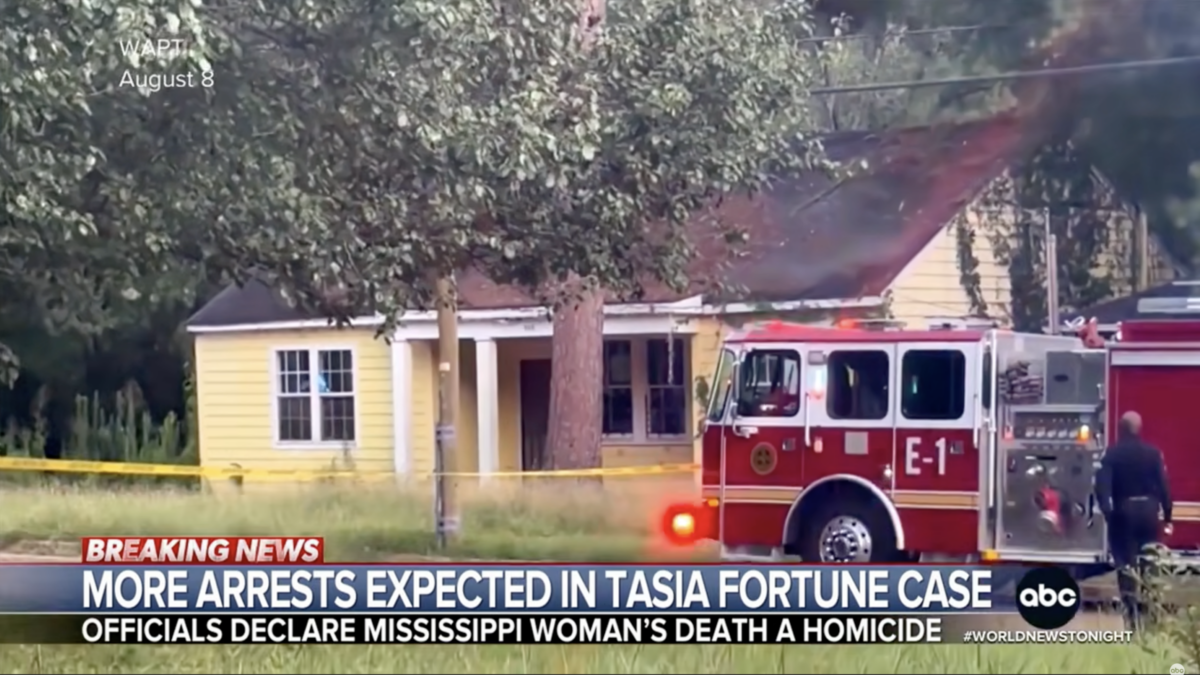
“The death of Tasia Fortune, a Black Mississippi woman found hanging from a tree on Aug. 3, has stirred distressing memories of the grim history of lynchings across the U.S. South,” The AP posted on X. The implication was clear: a black woman found hanging is a symbol of racism and that the South is racist. Fortune’s death was tragic. Her body was found hanging behind an abandoned home in Jackson, Mississippi.
The only problem for the AP’s narrative is that Fortune’s alleged killer had already been arrested before the AP put out the disingenuous tweet suggesting there was a racist element in her killing, and her alleged killer is also black.
The AP themselves knew this key fact too, having released an article three full days before trying to connect Fortune’s death to racism that acknowledged authorities arrested Jarques Ratliff — a black man. In fact, the AP reported that Fortune’s mother “doesn’t believe race had anything to do with her daughter’s death.” Instead, Fortune’s mother told the AP she thinks “this is something very personal, very personal.”
But that didn’t stop the AP from going out of its way to try to link Fortune’s tragic death to racism. Three days after acknowledging Fortune’s death appears to be yet another example of black-on-black crime, the AP published an article entitled: “Cases of Black people found hanged in the US South are a reminder of nation’s lynching history.”
“The death of a Black Mississippi woman found hanging from a tree has stirred distressing memories of the grim history of lynchings across the U.S. South,” The AP wrote, implying Fortune’s death was a racist lynching. The AP does note that Fortune was allegedly killed by a fellow black man, but quickly tries to assure readers that there is still something racist about the killing “regardless” of the actual facts.
“Regardless of the circumstances of the case, for many Black people, the imagery of a rope and noose evokes the legacy of lynching and vigilante violence against Black people in the U.S. and brings with it deep pain and trauma,” the article reads. The piece then quotes Jackson, Mississippi activist Brad Franklin, who said that what’s happening in 2026 — that is, black-on black-crime — is the same “feeling” and experience that black Americans felt “in 1956 and 1966” when there were racially motivated lynchings.
The AP had the facts, spoke to Fortune’s mother who dismissed race as a connection, and yet still chose to make lynching the lens through which readers would learn about Fortune’s death.
That type of propagandist approach might sound familiar for anyone who frequents CNN. Weeks earlier, CNN’s Omar Jimenez did a report prior to a suspect being arrested and acknowledged that while no details were known about her alleged killer, “The raw imagery of a black person hanging from the tree in the American South evokes a very painful history.” Jimenez tried to reinforce the racist undertone by grouping Fortune’s death with two other “lynchings” in the area before noting the other two individuals were reportedly to have died by suicide (and one of the deceased was white).
None of the information provided by Jimenez had established a pattern of racism, so linking three deaths together while emphasizing a “painful history” in “the American South” was a disingenuous attempt to create the appearance of racism.
Fortune deserves justice. Her family deserves answers. Neither of those things are served by outlets seeking to use her death to push a bogus narrative of racism.