While watching the recent documentary Thank You for Sharing, I found the last 10 minutes to be the only interesting part. While the rest of the documentary railed against the industry of medical professionals incentivized to create and “treat” mental illness over the past century, the last few minutes finally addressed how to escape the scourge of “mental illness” and learn to be well.
Most of the interviews consisted of generalizations about the danger of “experts,” and some reviewers found that worthwhile. Some of us, perhaps, tire of discussing what is wrong and are more interested in what we can do about the problem.
And it is clearly a problem. More than 16 percent of U.S. adults report taking psychotropic drugs. Among women, it’s more than 1 in 4. These are some of the same drugs that, according to the court of public opinion, are capable of temporarily stripping a mother of agency and accountability while compelling her to methodically and violently end her children’s lives, one by one. The situation, it would seem, is dire.
Thank You for Sharing included interviews with several people who had previously been diagnosed and treated for mental illness and found that mainstream treatment did nothing fundamentally to improve their lives. The common thread in the people who got better? People. Connection to other human beings opened the interviewees up to healing and living fuller lives. For one, it was religious chant with drums and a group of people. For another, a down-to-earth sponsor in Alcoholics Anonymous offered practical advice. Someone else found solace in reading and connecting through the written word. Real relationships made the difference.
An unexpected place where the healing power of people comes up is Catherine Pakaluk’s 2024 book, Hannah’s Children: The Women Quietly Defying the Birth Dearth. In this unique study consisting of interviews with women who chose to have five or more children, Pakaluk, an economist, examines why college-educated, religious women intentionally buck the trend of declining birth rates. What does the fertility rate have to do with mental illness? More than you might suspect.
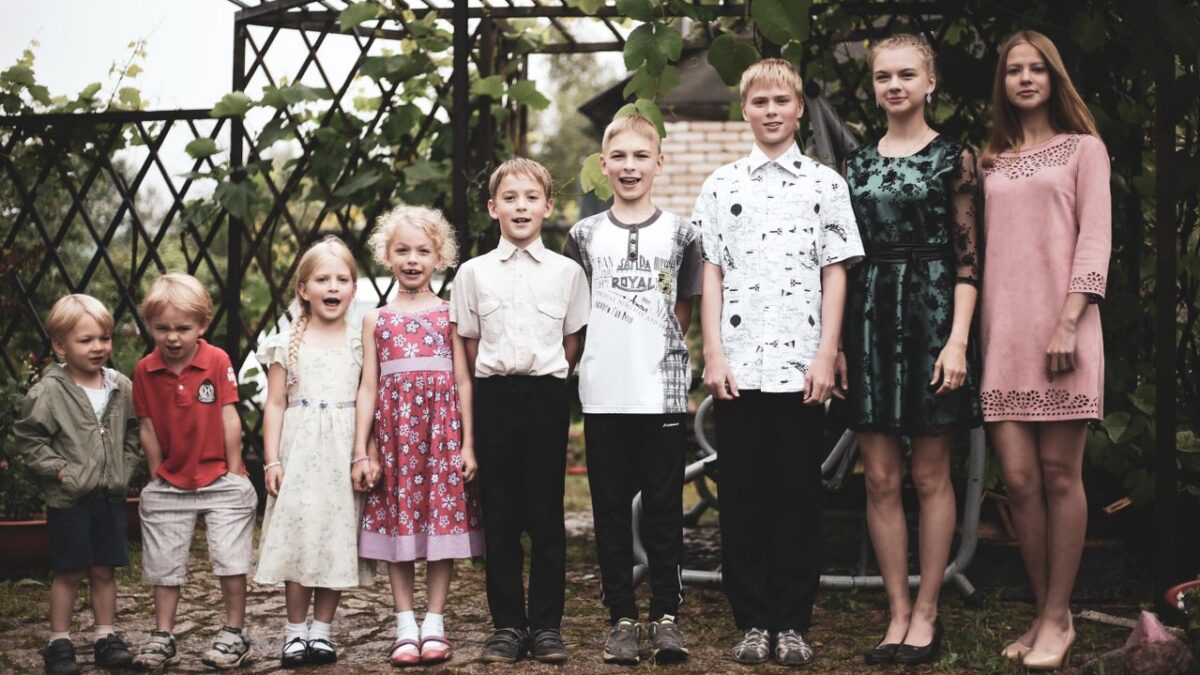
In several interviews, and in asides about her own personal experience, Pakaluk points to the often underappreciated effect of larger families on teenagers. Anecdotally, the companionship of babies and toddlers can have a profound effect on teens and adults who are anxious, depressed, or grieving. Holding a defenseless baby, being called out of yourself to meet the needs of a young child — these are invitations to interpersonal connection that can draw anguished people out of themselves and back to a reality rich with meaning for which they can be grateful.
Ours is a culture that tends to villainize large families and assume that older children will be “parentified,” expected to care for and nurture children in ways that are harmful to teens’ development. What this paranoia misses is that the happiest teens are often those who have responsibility. No, they should not be treated like siblings’ parents or expected to be waking with a teething baby in the middle of the night or running a household prematurely. But having some sense of duty and obligation is a boon to health and wellness.
This concept is corroborated in a recent study on the effect of dogs on teens with anxiety. Caring for the animal helped to improve teens’ mental health. However, not all dog relationships were found to be beneficial. The study’s senior author observes, “One possible explanation [for an unhelpful effect] is that a dog becoming a teen’s main source of social support may reflect a lack of other social connections.”
In previous generations, it would seem that a natural avenue for social connections was brothers, sisters, aunts, uncles, cousins, etc. Smaller families mean potentially more isolation. Could that lack of connection be a factor in the ill health of recent years?
What Thank You for Sharing does not address is that the mental health industry did not arise in a vacuum. First, the fabric of society was rent, and people were isolated. Those are the conditions necessary for the spread of so-called experts over-diagnosing, over-medicating, and ultimately failing generations of “anxious” and “depressed” young people. What many people call “mental health challenges” are really garden-variety emotional disequilibrium that could probably be better addressed with connection to other human beings, a good night’s sleep, and regular exercise outside.
In discussing the #MeToo movement, scholar Mary Eberstadt noted that many people were incredulous of the claims made by women. Did they really not know they should not go to a boss’s hotel room? Did they think it normal to be given multiple drinks at a business dinner? The obvious answer, upon examination, was that they really didn’t know. With fewer present and involved fathers, fewer brothers and cousins, girls have fewer men to shape their norms and expectations for interactions with the opposite sex.
Something similar might be at play with the “mental health crisis.” It can be tempting to scoff at people ensnared in self-inflicted ill health. Do they really not know you should get out and engage with other people instead of drinking alone and fretting over a sink full of dirty dishes? Do they really not know you should focus your time and energy on goals of meaning and value instead of fixating on your moment-to-moment emotional experience? The answer appears to be that many people do not know. Larger families can lead to stronger social bonds, intergenerational wisdom, and a happier life. Smaller families can contribute to the breakdown.
In closing, consider that more than 1 in 5 people are estimated to suffer from mental illness in the contemporary and expanded understanding of the term. People will misinterpret this to mean that at any family dinner table with five or more people, someone is suffering from a disease completely beyond their control. Honest observation will reveal that oftentimes there are full tables of happy and healthy people who encourage and support each other, and there are other tables at which all of the people are ill. If you are sitting at a table utterly alone, yours might be a lot less likely to be a happy one.