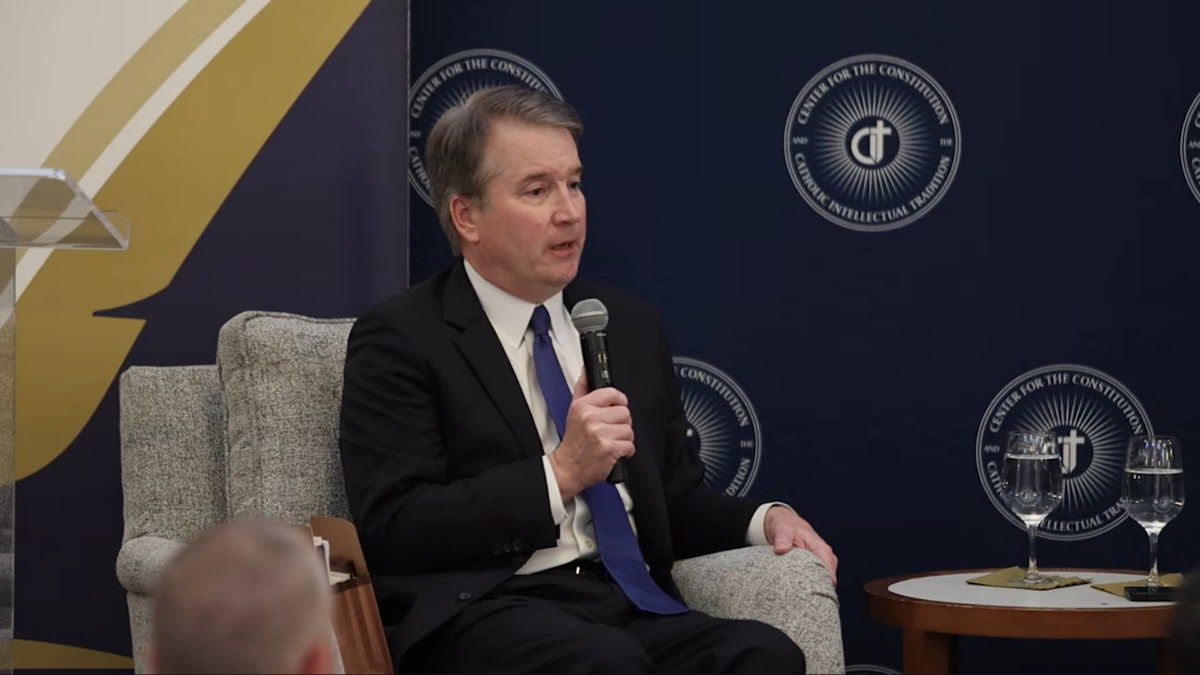
A federal district judge reinstated Missouri’s GOP-friendly congressional map for the 2026 midterms on Tuesday. The ruling came moments after Supreme Court Justice Brett Kavanaugh rejected an emergency request to do so in a separate case on the issue.
“Missouri is prepared to follow and comply with Chief Judge Clark’s order that binds the state to using the Missouri FIRST map for the November General Election,” Missouri Attorney General Catherine Hanaway said in a statement. “We maintain that changing the congressional map in between the primary and general elections is simply not feasible and profoundly unjust to Missouri voters.”
The Missouri Legislature and GOP Gov. Mike Kehoe approved the new map in question in September 2025. If permitted to go into effect, it would move the state from a six Republican-two Democrat map to a seven Republican-one Democrat map.
A group of activists submitted signatures in support of a petition later that year to place a statewide referendum for the new maps on the state’s 2026 fall ballot. Republican Secretary of State Denny Hoskins rejected the petition last month, arguing that the state constitution “does not authorize a referendum on congressional redistricting plans passed by the General Assembly.”
The Missouri Supreme Court disagreed in its ruling last week, in which it blocked the new map from being used in the upcoming midterm elections. The state court held that “the plain language of … the Missouri Constitution authorizes a referendum as to ‘any act of the general assembly’ and no exception applies.” It further ruled that the petition “was legal, sufficient, and timely.”
With state ballots set to be finalized on Tuesday, Hoskins and Missouri filed an emergency application with the U.S. Supreme Court this past Friday requesting that the decision be paused. The Show Me State officials noted how the state primaries have already been held under the new congressional map, and that the Missouri Supreme Court’s ruling “undoubtedly will require the winners of the Primary Election to run in dramatically different districts for the General Election.”
“Looking backwards, the order renders a completed federal Primary Election utterly pointless — disenfranchising hundreds of thousands of voters who will now be moved into new districts and forced to vote for candidates they had no role in selecting. Looking forwards, the State is genuinely unsure whether it can switch its governing congressional map in time to run a timely federal election,” the application reads.
In a Tuesday order, Kavanaugh — who oversees applications from the 8th Circuit (which includes Missouri) — denied the state’s request to pause the ruling without explanation. The Trump appointee has previously championed the Purcell principle in past Supreme Court opinions, which says that courts should avoid altering election rules too close to an election.
It wasn’t long after Kavanaugh’s order came down that Missouri-based Chief Judge Stephen Clark issued a temporary restraining order in a separate case involving a lawsuit brought by several Missouri congressional candidates. In his ruling, Clark enjoined the state’s election officials from “implementing, using, publishing, distributing, or mandating the use of any congressional district map other than the [new 2025] map for the November 3, 2026, general election.”
“Using a different map for the general election would wreak havoc on the fairness and orderliness of Missouri’s congressional elections, calling into question the candidacy of those nominated in the primaries and the votes of those who voted in the primaries,” Clark wrote. “Widespread voter confusion would inevitably follow. The public interest factor thus weighs in favor of a TRO.”
Clark’s TRO is set to remain in effect for 14 days, with a preliminary injunction hearing set to be scheduled in a different order. As of Tuesday night, the order is “already on appeal” at the 8th Circuit Court of Appeals, according to local media.