
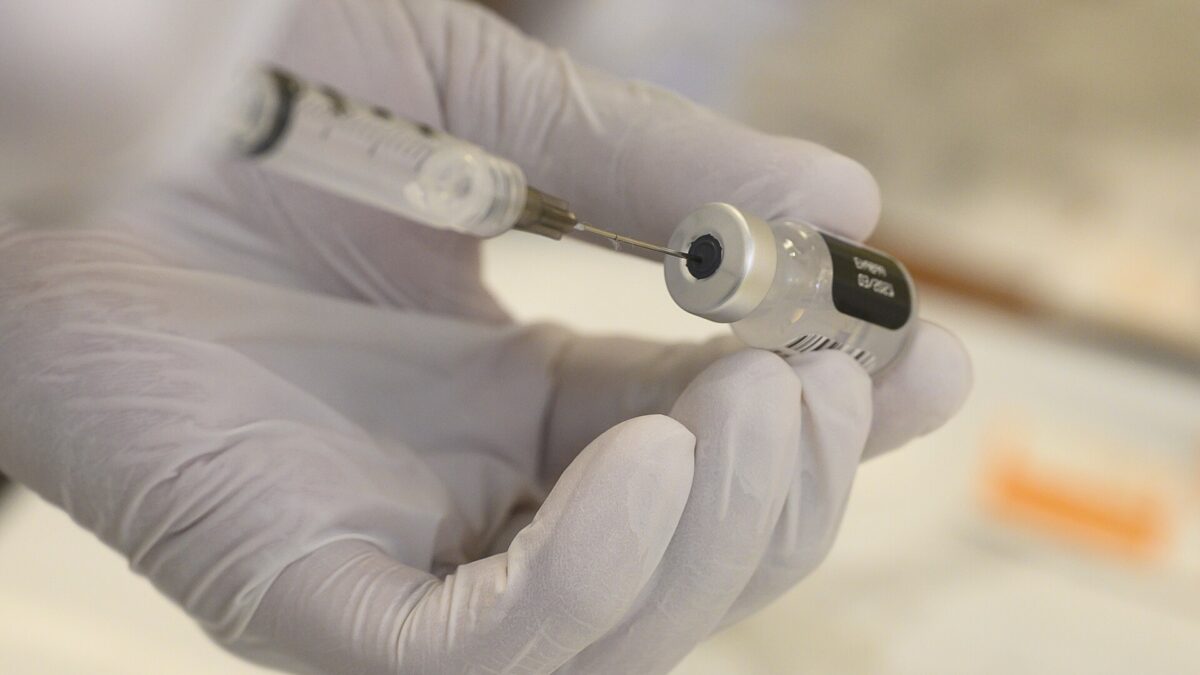

America’s lower federal courts have often misconstrued a pivotal Supreme Court ruling to legalize expansive Covid vaccine mandates. Fortunately for the justices (and everyday Americans), a pending case gives the court the perfect opportunity to correct such flaws.
In the coming weeks, the high court is expected to consider whether to take up and hear arguments in Boysen v. PeaceHealth. The case deals with a challenge brought by Oregon health care workers against their employer and the state’s Covid jab mandates.
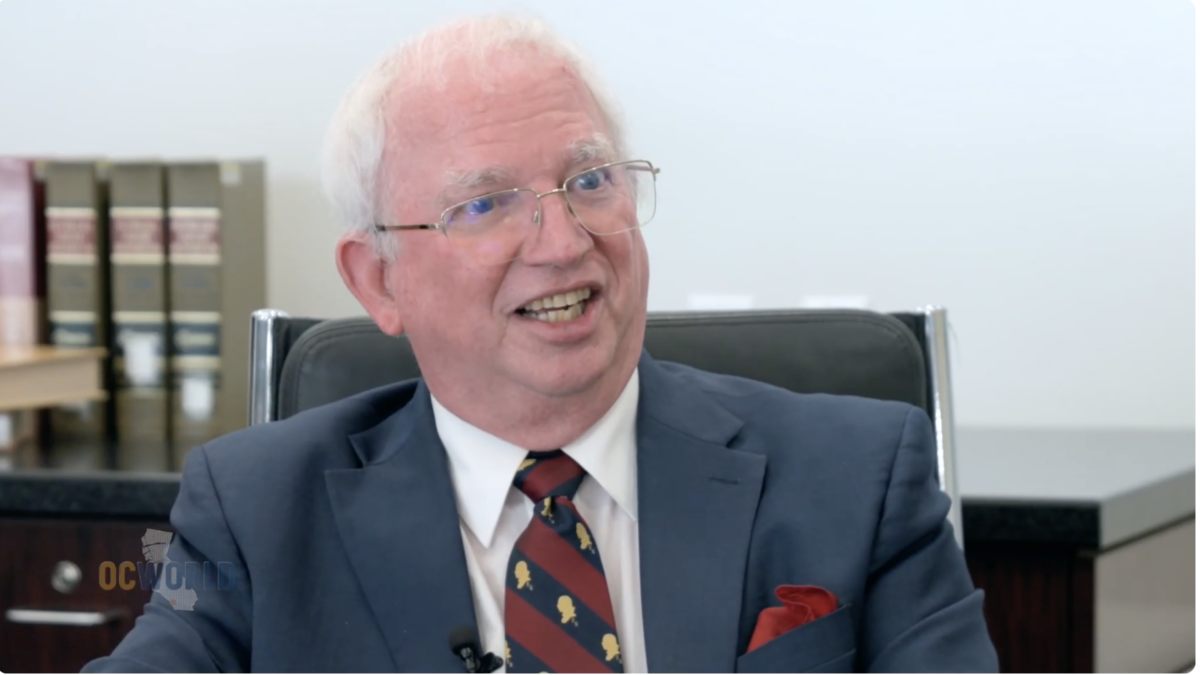
While the Supreme Court has repeatedly declined to take up cases involving such requirements in recent years, New Civil Liberties Alliance (NCLA) Senior Litigation Counsel John Vecchione sees Boysen as a great opportunity for the high court to finally step in and correct the lower courts’ flawed jurisprudence on the matter.
“Disease isn’t going to go away. I can’t say when there’ll be another pandemic, but they’ve been in our history,” Vecchione told The Federalist. “The panic will happen again and mandates will happen again, and everybody should want to control their own medical decisions when it doesn’t affect anyone else. The court should clarify that is the law as it now stands.”
Background
Boysen traces back to August 2021, when the nonprofit health care system PeaceHealth and the state of Oregon mandated that health care workers either obtain a Covid shot or receive an approved religious or medical exemption. PeaceHealth subsequently terminated the plaintiffs after they declined to adhere to such requirements.
The plaintiffs filed a lawsuit against PeaceHealth and former Oregon Gov. Kate Brown and former Director of Oregon Health Authority Patrick Allen in the U.S. District Court for the District of Oregon in August 2023.
In doing so, they alleged violations of their 14th Amendment rights, “including their bodily autonomy right to refuse unwanted medical treatment, freedom from unconstitutional conditions on employment and federally funded benefits, federal statutory rights, procedural and substantive due process, and equal protection,” as described in their SCOTUS petition. They also “asserted Supremacy Clause preemption with respect to the ‘mandated’ COVID-19 investigational drugs, thus negating [PeaceHealth and state’s] reliance on any rational basis argument appropriate to FDA approved and established vaccines.”
Judge Ann Aiken, a Clinton appointee, granted PeaceHealth and the state’s motions to dismiss the challengers’ lawsuit in August 2024. The 9th Circuit Court of Appeals later affirmed that ruling in December 2025. The decision came almost two months after the appellate court dismissed a similar lawsuit brought by Washington State health care workers against their employer and the state’s Covid shot mandates.
With nowhere left to go, the Boysen plaintiffs petitioned SCOTUS to take up their case on May 4.
Legal Analysis
Speaking with The Federalist, Vecchione underscored several holdings from the lower courts that he and NCLA believe to be incorrect. As documented in their brief encouraging SCOTUS to take up the case, he said those holdings misinterpret a key 1905 Supreme Court decision known as Jacobson v. Massachusetts.
In Jacobson, the high court upheld a Massachusetts law permitting localities to require residents to be vaccinated against smallpox. As described by Oyez, the high court ruled (7-2) the statute fell within the legitimate use of a state’s police power “to protect the public health and safety of its citizens,” and that “[l]ocal boards of health determined when mandatory vaccinations were needed, thus making the requirement neither unreasonable nor arbitrarily imposed.”
Vecchione noted that the smallpox vaccine had been around for some time at that point, and that it was well known to be a “sterilizing vaccine.” In other words, that recipients would be “sterilized of smallpox and cannot spread it to other people.”
“We believe that’s the key reason why Jacobson came out the way it did,” he added.
Turning to Boysen, Vecchione argued that the lower courts have misapplied Jacobson to uphold Covid vaccine mandates.
On one prong, he said that the 9th Circuit’s holding that Jacobson requires courts to apply rational basis review — the least strict standard applied by courts to challenged laws — to any vaccine mandate is incorrect because subsequent SCOTUS decisions have affirmed that Americans “get to control your own health decisions within reasonable bounds.” He said that such rulings have “taken a more searching look than just rational basis.”
“A problem with [rational basis] is not just that it’s a low-level standard, but that the court can make up reasons that the legislature didn’t have. If they can think of anything that would make it rational for the law to go into effect, then that upholds the law,” Vecchione said. Decisions since Jacobson have recognized that “there’s got to be a greater analysis of whether this rule impinges on your personal rights, what is the reason for [it], and [whether] it holds up under constitutional scrutiny.”
Another issue with the 9th Circuit’s holding, as highlighted by NCLA, is that Jacobson applies “even where the vaccine is mandated only for the recipient’s benefit.”
Drawing a contrast to Jacobson and the sterilizing effect of the smallpox vaccines, Vecchione said that the lower courts’ new standard allows the government to mandate citizens to take the Covid shot even though the jabs don’t prevent transmission of the virus. He also said that this expansive standard could be used to force those with natural immunity and antibodies to get the shot.
The government will “tell you that you have to take the risk of taking the vaccine with whatever side effects it has, and they’ll make the decision of whether that’s better for you or not,” Vecchione said. “Can the government make you exercise and eat less until your weight is down? Can it say you can’t smoke? What’s the limiting principle? There is none as far as we can tell.”
Vecchione reiterated NCLA’s position that Jacobson “is all about [the government] forcing you to do something that will prevent you transferring [a disease] to other people and stopping epidemics” — not forcing Americans to get a vaccine (like for Covid) that doesn’t achieve those objectives. He said that while they’re not asking SCOTUS to overrule Jacobson, they are asking the justices to bring clarity to the issue given its affirmation “many times since then that you have the right to refuse medical treatment.”
Looking Ahead
Despite remaining a persistent issue in the lower judiciary, the Supreme Court has regularly refused to take up cases involving challenges to Covid vaccine mandates. (At least four justices must agree to hear a case before the full court can consider it).
The most recent example came in the closing days of the high court’s 2025 term, when it declined to hear arguments in Doe v. Hochul. The case dealt with a Title VII challenge by New York health care workers who were fired after choosing not to get the Covid shot on religious grounds.
The plaintiffs’ petition only received support from Justices Clarence Thomas, Samuel Alito, and Neil Gorsuch.
[READ: Gorsuch Skewers SCOTUS For Ducking Covid Shot Mandate Case]
Should the high court agree to hear Boysen in its upcoming term, Vecchione predicted that Chief Justice John Roberts and Justices Brett Kavanaugh and Amy Coney Barrett — the three Republican appointees who have been most hesitant to take up such issues — will be key to the case’s outcome.
While all three justices ruled against President Biden’s OSHA Covid vaccine mandate in NFIB v. OSHA (2022), Roberts and Kavanaugh sided with the Democrat appointees in Biden v. Missouri (2022) in upholding the administration’s mandate for health care workers at facilities participating in Medicare and Medicaid. And much like Roberts and Kavanaugh, Barrett has a track record of turning away Americans seeking relief from overreaching Covid shot requirements.
The Supreme Court extended on Monday the time by which PeaceHealth may file a response to the Boysen petitioners’ filing to Sept. 8. It’s unclear when the high court will decide whether to accept or reject the case.

_F.jpg)