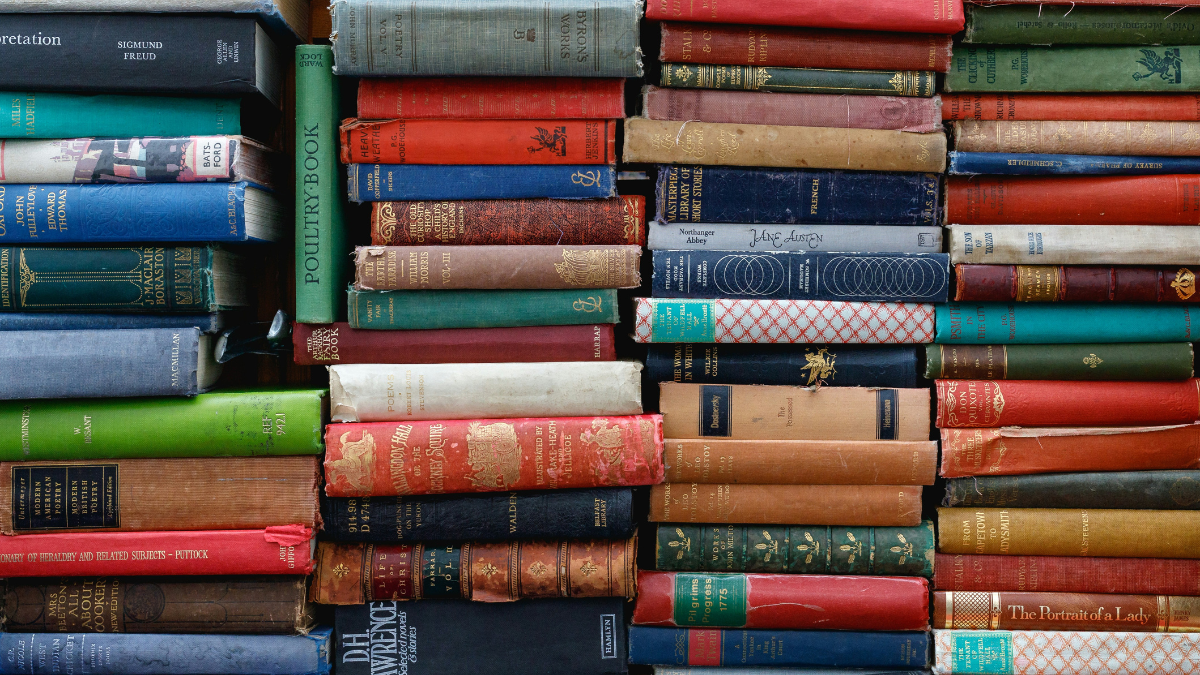

Several years ago, upon recommendation from a learned acquaintance of mine, I ordered a book by acclaimed English Victorian novelist Anthony Trollope.
When the (very long) book arrived, there was a little sticky note attached to the first page: “You will never read this. — Brent.”
Though considered a classic (and Trollope’s masterpiece), Brent’s humorous prophecy has, so far, proven true. I made it about thirty pages before giving up.
Americans don’t read literature much any more. According to a YouGov survey, 40 percent of adults did not read a single book last year and the median American likely read less than two novels. That’s the case even though the number of Americans holding a four-year degree has more than doubled since the 1970s. I sense, perhaps, a collective shrug from many — who cares if Americans don’t read fiction? Those who favor republican government should care. Reading is a marker of the relative health of a democratic society.
The Tried-and-True Benefits of Good Literature
Studies show those who regularly read literature score higher on measures of emotional intelligence, seeing other people’s perspectives, and social cognition. Yet as Joshua Hren argues in More Than a Matter of Taste: The Moral Imagination & the Spirit of Literature, that’s a minor benefit. Hren says that reading literature “enhances our vision beyond the empirical,” and “cultivates the kind of contemplation by which the soul might purge illusions and recognize reality for what it really is.”
What is Hren talking about? Those who were forced to read To Kill a Mockingbird or The Great Gatsby may rightly ask, do such texts really have the ability to transform us into better people? Yes, actually. It’s not just about considering others’ perspectives. Literature often makes a more effective point that can have a visceral effect that’s deeper than dry, rhetorical logic. “Literature emerges as an innately complex corrective to our overly easy moralistic proclamations,” writes Hren. “It can take the moralistic man through an analogical pilgrimage.”
In other words, it’s one thing for someone to technically define courage, prudence, or long-suffering. It’s another thing to be drawn into exemplars of them in War and Peace, The Grapes of Wrath, or Brave New World. Alternatively, literature can serve as a via negativa, directing the reader towards the virtuous by showing him the perils and misfortunes of indulging vice, as we observe in Anna Karenina or Animal Farm. When we read such stories, we also develop self-knowledge — do I possess those virtues, or at least the potential for them? Have I been tempted and deceived to think some sinful behavior is a trifle, rather than a real threat?
What Good Literature Has To Do With Citizenship
The Founders knew the republican government they established would require an informed, moral people. John Adams declared,“Our Constitution was made only for a moral and religious people. It is wholly inadequate to the government of any other.”
“Of all the dispositions and habits which lead to political prosperity, religion and morality are indispensable supports,” said George Washington.
“Only a virtuous people are capable of freedom. As nations become corrupt and vicious, they have more need of masters,” warned Benjamin Franklin.
A citizenry who reads great books, then, is a citizenry instilled precisely in those virtues necessary for self-government. They are also people who, trained by the patience of reading literature, have generated what the great twentieth century philosopher Josef Pieper called an “attitude of receptive observation.”
But it’s even more than this. John Jay in Federalist No.2 asserts that part of the reason for the success of our nation is that we are “… a people descended from the same ancestors, speaking the same language, professing the same religion, attached to the same principles of government, very similar in their manners and customs.”
As much as Americans share the experience of reading from the Western literary canon, they share a common language, common narratives, and common imagery that directs our hearts and minds to beautiful transcendent truths. That has tremendous rhetorical power, as the great statesman Abraham Lincoln well knew, drawing as he so regularly did on biblical imagery in his speeches.
That said, it’s also true that overly moralistic literature can be suffocating in its didactic character. Much of the best children’s literature is the kind that tells a great story that happens to have a moral, rather than being a text that has a great moral and happens to have a story appended to it.
This is why the best literature is morally complex, considers the perspective even of villains, and resonates with the complicated experiences we regularly face. It also effectively communicates comic irony, which exposes our tendency towards self-serving, vainglorious understandings of ourselves. Recently, I couldn’t stop laughing at the irony of a scene in Flaubert’s Madame Bovary, in which two narcissistic lovers-to-be at a local civic event quietly bond over their shared self-indulgent romantic passions, while in the background a speaker dully raves about agriculture. “Flax, gentleman, do not let us forget flax!” he declares.
Reading Won’t Save the Republic, But It Will Make Us Better Americans
However, let’s be frank. It will move mountains to significantly change the amount of Americans who read fiction. We are a distracted people addicted to our screens and social media feeds. We stream content that all fosters the exact opposite qualities required to quietly sit, read a book, and contemplate eternal truths. Nor are our nation’s problems so easily solved that persuading millions of Americans to read Mark Twain will somehow miraculously resolve the disorder and distemper of our current political crisis.
Ultimately, the reason we should read good fiction is the same reason we should exercise, devote time to loved ones, or pray: because it’s good for us. At first, it may seem daunting — if you haven’t read a book in a while, start with an easy, short “modern” classic that will keep your attention. I recommend something by Agatha Christie, Raymond Chandler, or Graham Greene. Even their books, I have found, are capable of broadening the imagination and elevating the appetite for authentic goods (and they’re always great stories!).
I don’t think anyone is under the illusion that reading will save our fragile republic. But a citizenry who reads is a sign of a nation’s intellectual and moral health. This anniversary of our nation, return to the classics of our literary canon. I’ve got the Trollope book back on my desk now.