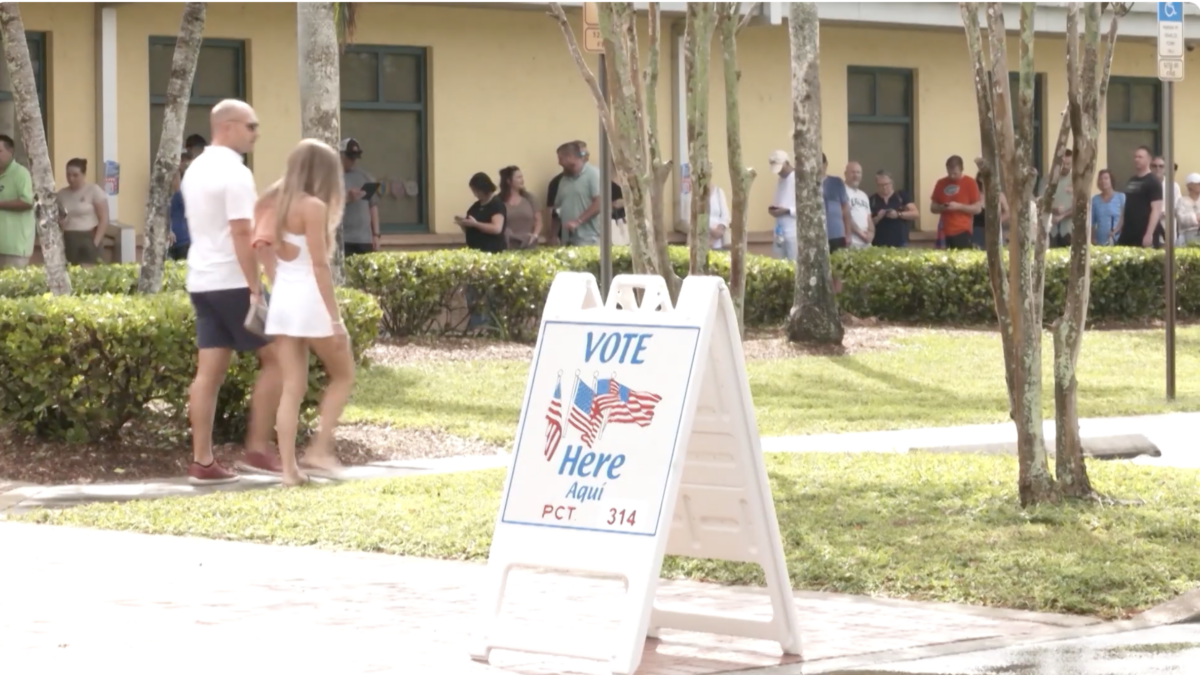
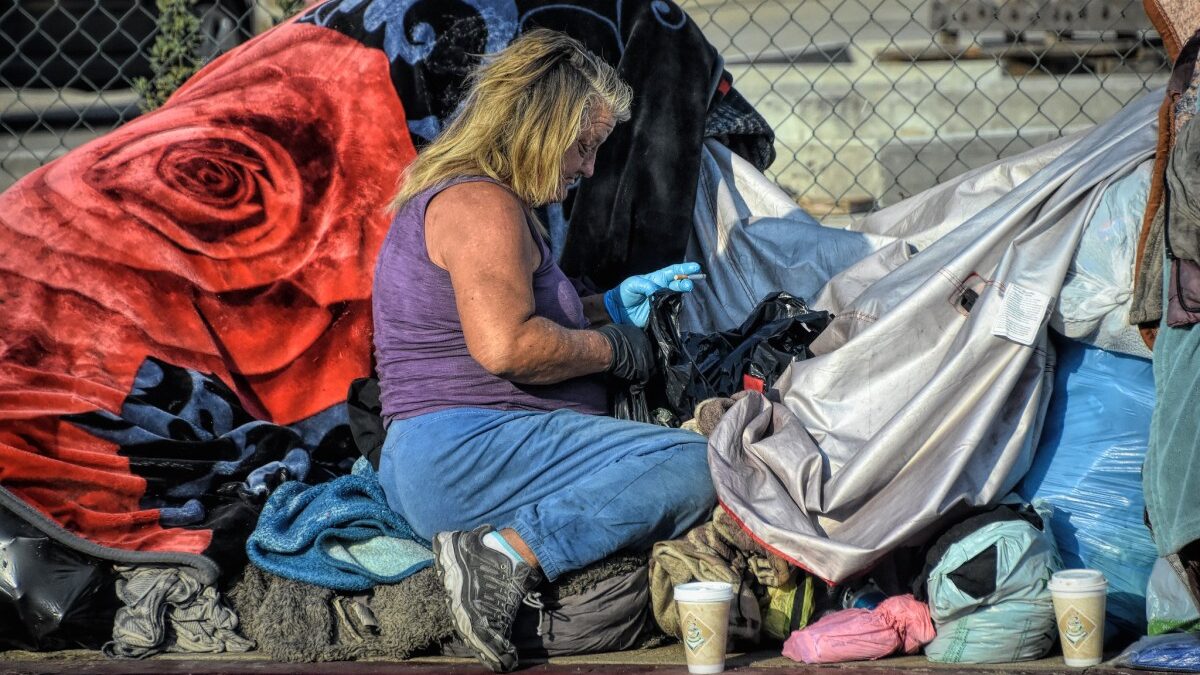
The Republican-run council in Indiana’s second-largest city votes Tuesday on its Democrat mayor’s proposal to install a homeless center that would serve drunk, high, and otherwise criminal residents without any expectations or ID checks. Research and experience show similar “low-barrier” centers in Democrat-run states such as Illinois and California increase homelessness and addiction, as well as crime, vagrancy, and public spending.
Fort Wayne has worked for the last 20 years and spent billions in taxpayer dollars and incentives to transform “from a Rust Belt downtown to vibrant and … flourishing,” Councilman Russ Jehl, a Republican, told The Federalist via phone. But he’s heard from his apolitical wife and many constituents they’re avoiding their revitalized downtown because of the increase in addicts and vagrants. That’s a nationwide problem affecting this Midwestern city of 280,000 with small-town vibes and bigger-city amenities.
“The city’s sole economic development strategy for the last 20 years has been to make downtown Fort Wayne great again,” he noted. “After that success, we’d be ceding a large portion of downtown to the blast radius by picking this particular location.”
The proposed location for the Anchor Resource Center is within a few hundred feet of the city’s most popular farmer’s market, a park, a YMCA, one of the city’s historic churches, and Indiana’s longest-running Christian K-8 school. That combined with the city’s insistence that the center will not require any background checks or even identification for clients could violate a state law banning sex offenders from residing near youth centers, schools, and parks.
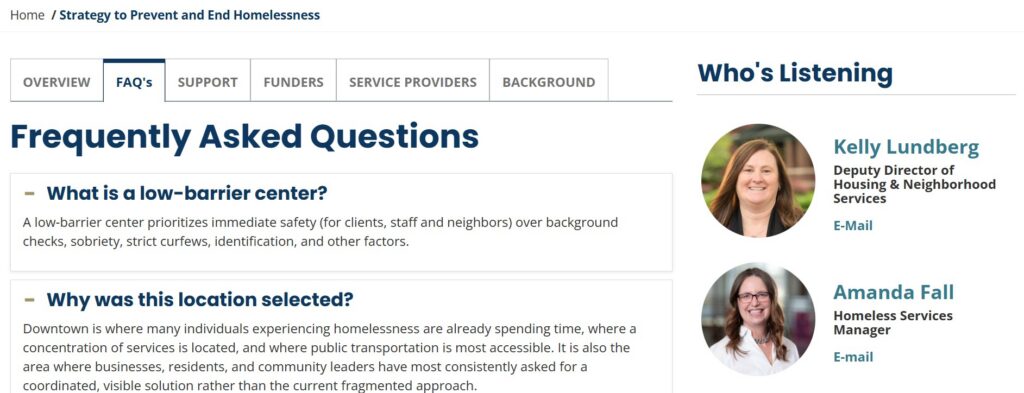
According to three sources, the city responded to that concern by saying Anchor will only house self-declared offenders for two days instead of three, employing a legal loophole to prioritize criminals above innocent kids rather than seeking a location that serves homeless people without endangering other vulnerable populations.
In addition, the city told local media it will allow people to live in their cars in the center’s parking lot, creating the potential for a permanent homeless encampment right in the center of the revived downtown, feet away from a popular farmer’s market teeming with elderly, mothers with babies, and children, as well as a local history museum popular with families. Jehl said business owners near the current proposed location have told him they are likely to close up shop if it goes through, blighting several blocks in the center of the downtown.
Everyone agrees they want to humanely address the addiction, poverty, and mental illness that drives homelessness, Jehl noted. The problem is that U.S. taxpayers have thrown hundreds of billions at the problem yet it’s only grown worse. Homelessness increases, say studies, when cities and charities offer services without enforced expectations that homeless people will use the resources responsibly, to rise to the level of their human dignity rather than damaging themselves and others.
“These low-barrier shelters are basically designed for people who are chronically homeless,” Jehl, a Hillsdale College graduate, said. “Is it humane to encourage people to be permanently in encampments, slowly succumbing to drugs on public property? That’s morally repugnant and a horrible use of public property, which I am a steward of.”
Jesus Didn’t Personally Endorse This Spot, Folks
Jehl says residents like him, who want a location further from downtown and to dignify homeless people by requiring prosocial choices such as not shooting up, have been repeatedly accused of hatred and spiritually browbeaten with false accusations that they hate Jesus. City Council President Marty Bender, a Republican, told The Federalist that at a public meeting last week, people on both sides of the issue claimed God backed their position.
“This is one of those that it’s going to be a major issue before it’s over and done with, I’m afraid,” Bender said via phone Monday morning.
Claiming God said something He didn’t say — such as the specific prudent location for a homeless shelter — is theologically considered an act of blasphemy. Traditionally, Christians are free to differ about which approaches to loving their neighbors they think are most effective. What frustrates Jehl is that amid the uncharitable namecalling and accusations of evil motives against people who have good-faith disagreements, city leaders are distracted from creating a better proposal.
“Because the fight has been controversial, we’ve never gotten to the real question that should be discussed, which is: what exactly is this going to do and is this going to work?” Jehl said. “All of the discussion has been just on the location. We never got to that elephant in the room, which is, hasn’t the left coast done this already? Haven’t many of our communities in Indiana done this, and aren’t the vast majority of [low-barrier homeless centers] something a community can’t be proud of? Haven’t most of them made it worse?”
Only Fools Replicate Failure
Contrary to accusations on social media and public forums, those who think the current proposal could be better do want to address the problem, Jehl said. His ideas include imposing requirements on would-be residents, moving Anchor to a location away from downtown businesses and family areas, and expanding the surrounding county’s effective drug court. That “scalable and humane” program takes people convicted of drug possession and gets them off the street, sober, and into counseling and housing.
He also said the city shouldn’t merely repeat the mistakes of the rest of the country and should combine sticks with its carrots: services with expectations. He wants to see local police prioritize keeping homeless encampments away from places children and families go downtown, such as schools, parks, and residential neighborhoods.
“Everybody from Gavin Newsom to Donald Trump these days is saying there has to be an enforcement action” involved with any plan to address homelessness, Jehl said. “Clearly in liberal, generous California, even they are understanding there’s a difference between enablement and enforcement, and you can’t just be enablers or you get more homeless attracted to your community.”
Many Unanswered Concerns
Bender said he is leaning towards voting for the center, but that the 6-3 Republican council majority have quite a few unanswered questions for Mayor Sharon Tucker. They hope to clear those up with a public Q&A before the council vote on the proposal Tuesday.
“City Council has not had a whole lot of input into a lot of this, and that’s what’s bothering a lot of the council members,” he said. “They want to know a lot more about what’s going on.”
Still unaddressed questions about the center that needs $6 million to open its doors include, Bender said, the disastrous track record of low-barrier housing projects nationally, whether the center will have beds, and the center’s funding model: “We don’t want it to become part of the annual city budget.” That must be especially so at a time when Hoosiers are outraged about massive increases in property assessments this year.
The city has $5 to 6 million stored up to put into the project and about $3 million in donations, Bender noted, but that only gets it operating for two years. The concern there is that closing a center and releasing a bigger homeless population in the streets in two years if they don’t provide funding will be too politically difficult for the council, forcing them to keep the center open even if it proves to be another homelessness nightmare.
There is also some contradictory information coming from the mayor’s office, such as that a key population driving the need for this shelter is women and children who suddenly become homeless due to domestic abuse, Bender said. But women and children in that situation don’t need a low-barriers center, because their problem isn’t addiction. There’s no reason such mothers can’t provide an ID. So why is the city using this sympathetic group as a compassion shield for a project not actually designed around their specific needs?
Fingerprints of the Failed Democrat-Industrial Complex
According to the mayor’s office, it developed this project by consulting with “representatives” from struggling, Democrat-run locales plagued with chronic vagrancy, including Memphis, Tenn.; San Jose, Calif.; Little Rock, Ark.; South Bend, Ind.; Cincinnati, Ohio; Phoenix, Ariz.; Tucson, Ariz.; and the failing states of California and Maine. The only Republican-led city consulted was the extremely dissimilar megalopolis of Dallas, Texas, whose mayor was a Democrat for his entire life until he switched affiliation in 2023.
Tucker assumed office without ever receiving a public vote for mayor. Her predecessor, 18-year mayor Tom Henry, died five months after his 2024 re-election. The local Democrat Party installed Tucker in his place with no election, pursuant to city law. Henry died from late-stage stomach cancer he publicly disclosed three months after he was re-elected in 2024. Henry had a reputation as a moderate and was respected by Republicans in the city for helping reduce drug use and vagrancy downtown since its previous surge in the 1990s.
While a savvy politician who speaks bipartisan political patois very well, Tucker is no Tom Henry. This week, she won a “Mayor’s Climate Protection Award.” Henry’s police department was proactive, professional, and robust. In 2020, it swiftly curtailed swelling Black Lives Matter riots locally, shutting down within days street rioters damaging downtown buildings and throwing frozen bottles at cars.
In contrast, in February Tucker opposed Fort Wayne police cooperation with federal law enforcement: “The resources we have will not be used for federal immigration enforcement.” In that public forum, she effectively told illegal aliens that unless they committed additional crimes, Fort Wayne is a sanctuary city. The two federal immigration officers in the region, responsible for 16 counties, are “going after individuals who have warrants that have been issued for their arrest,” she disclosed. “They’re not actively seeking in our community individuals to enforce immigration law.”
Tucker’s administration also uses public resources to inform illegal aliens how to evade arrest and use legal delay tactics to effectively nullify U.S. immigration law. Research shows the U.S. homelessness spike since the Biden administration has been driven almost completely by illegal immigration, combined with ineffective “housing first” approaches such as those Tucker wants to bring to Fort Wayne.
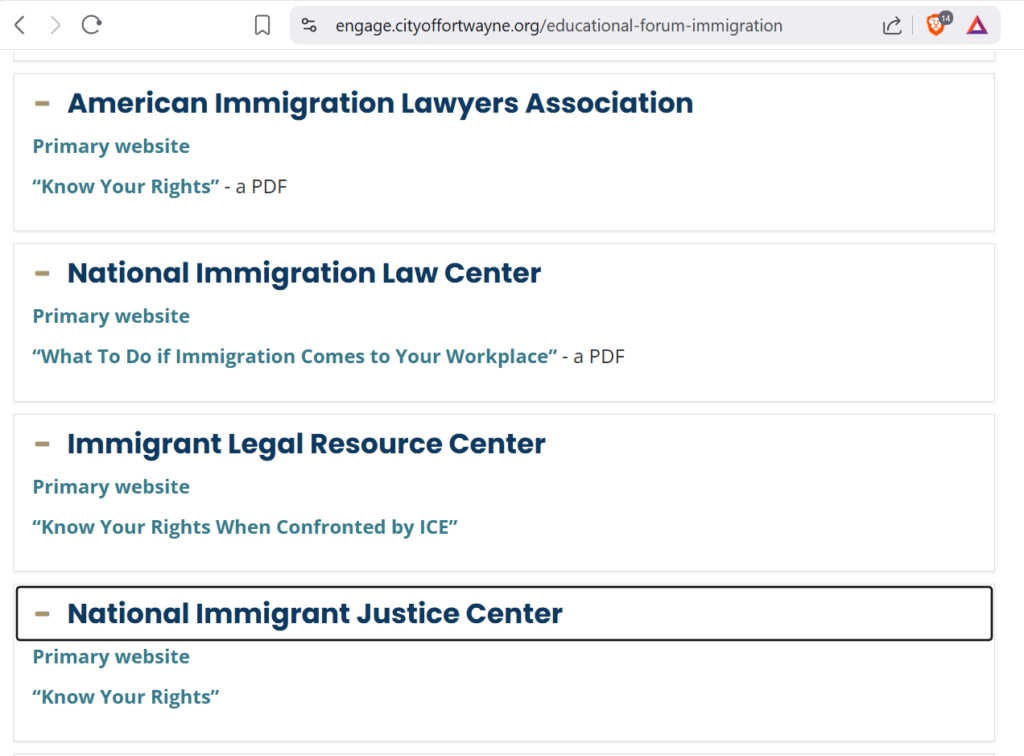
One of the organizations assisting Tucker in efforts to deter federal law enforcement is the local branch of Catholic Charities, also an Anchor partner. Like Catholic Charities, the St. Joseph Community Health Foundation, another Anchor partner and funder, is a longtime recipient of federal migrant funds. It has long been active in recruiting low-skill foreign citizens to Fort Wayne and reducing assimilation by providing translation services, encouraging welfare use, and discouraging cooperation with federal law enforcement.
Tucker appointed Meg Distler, who was executive director of St. Joseph Community Health Foundation until December 2025, president of the homeless center’s board.