
In a much-discussed phenomenon, blue state government spending is soaring, and doing so against limited population growth:
Nick Shirley is offering one highly plausible answer about where all the money went, but there’s also another answer. The culture of progressive governance lights money on fire for symbolic performances that never produce the promised results, and it creates money-hungry projects that become impossible to shut down even when they obviously don’t work. The most infamous of these projects is California’s high-speed rail project, with a plan approved in 2008 to connect Los Angeles and San Francisco by bullet train. It hasn’t done that, it won’t do that anytime soon, and the budget keeps climbing for a project that keeps becoming significantly more modest in its promises.
But here’s another example of blue culture waste, and it’s maybe even easier to show how preposterous it is because the thing is actually working. And the end state, what it looks like when it’s up and running, is almost more absurd than you’ll be able to believe. There are some numbers at the end, but don’t skip ahead and look at them until you’ve seen the thing itself and have some context for those dollar figures.
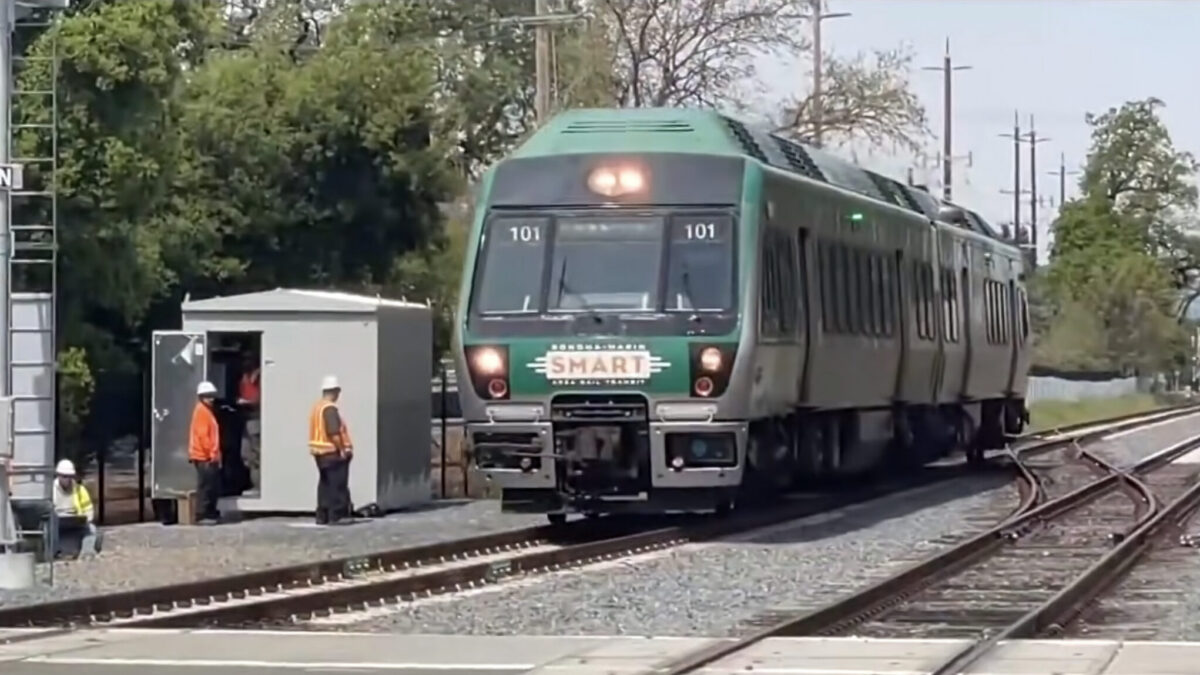
This story also starts in 2008, the year California voters approved a plan to build the bullet train. At the same time, Bay Area voters in suburban Sonoma and Marin counties approved a sales tax increase to partially fund a regional commuter train that would also get state and federal grants, the SMART train: Sonoma-Marin Area Rail Transit. The system, a single north-south line, is still under construction, but the parts that have been built are in service. Yes, Chris Bray appears in this train station photograph.
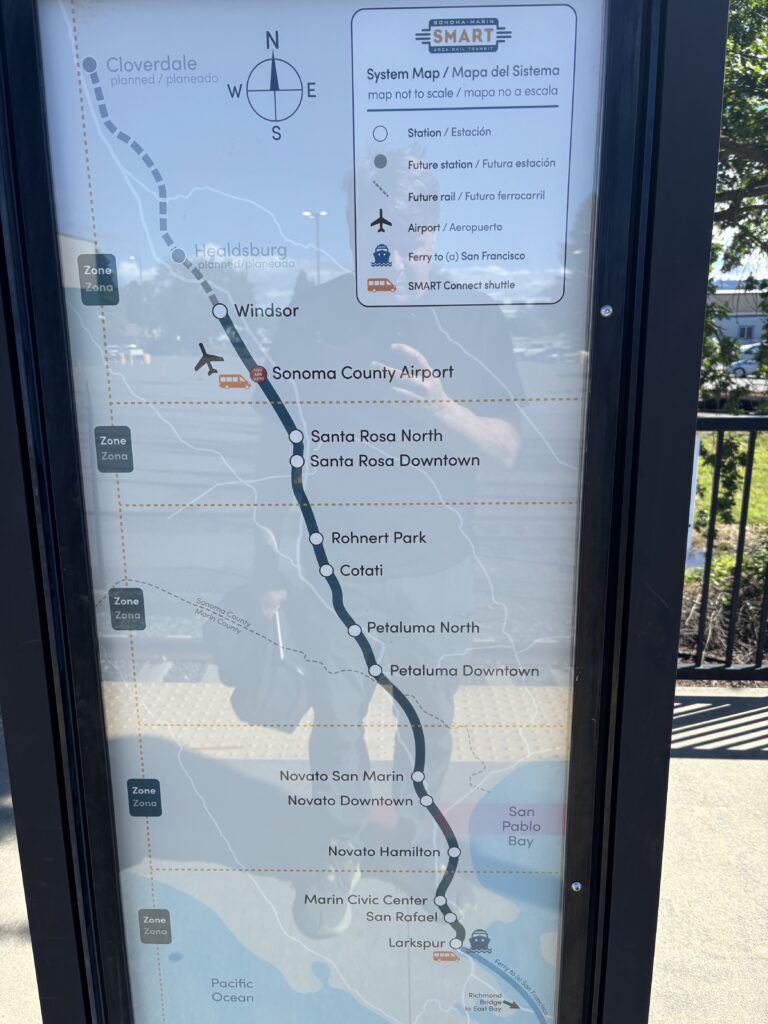
There’s a war of words, right now, over the success or failure of the SMART train, with critics calling it a hopeless waste and regional government officials attacking the critics as liars. As the map shows, a nearly 700-million-dollar regional rail line connects suburban communities to suburban communities, requiring transfer to different systems to reach major employment centers in San Francisco and the East Bay. Advocates said that the trains would take people off the 101, the arterial freeway that connects these communities, reducing traffic congestion and preventing climate change. Yes, they really said the train would help to stabilize the climate. Critics said that an intra-suburban rail system would become a hobby train, not serving serious commuters and not having a real impact on traffic.
Together, Sonoma and Marin have a population of about 750,000 people, but probably a bit more with new growth that hasn’t yet been measured by the Census Bureau. In a new book about the SMART train, Michael Coffino writes that the 101 sees about “1.5 million daily vehicle trips” in the area served by the train, while the train averages less than 3,000 daily trips, removing far less than one percent of travelers from the freeway.
Rail advocates blast Coffino’s account as misleading, saying that new ridership numbers in the post-pandemic economy approach 4,500 trips per day. Note that a “trip” is a person getting on a train to ride somewhere, so a single rider taking a round-trip between Petaluma and Santa Rosa is two trips. But give the train the benefit of the full number, and grant the highly unlikely assumption that every single one of those riders would otherwise have been in a car on the freeway: SMART ridership is still a tiny percentage of traffic on the freeway, where traffic congestion is unchanged.
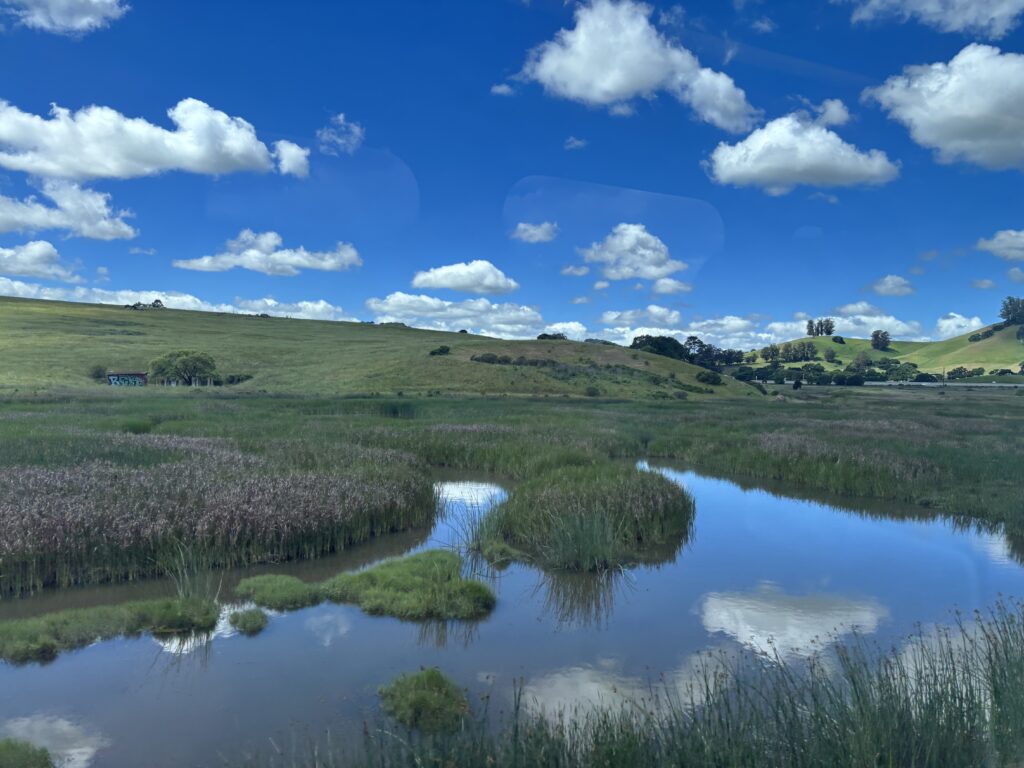
Testing the competing arguments, I rode the train on Monday, from the Santa Rosa airport station in the north to the Larkspur station in the south. Then I rode back. If you wonder why people put up with the unrelenting political madness of California, I took this picture from my seat on the train, and you can see the reflection of the windows from the other side of the train car:
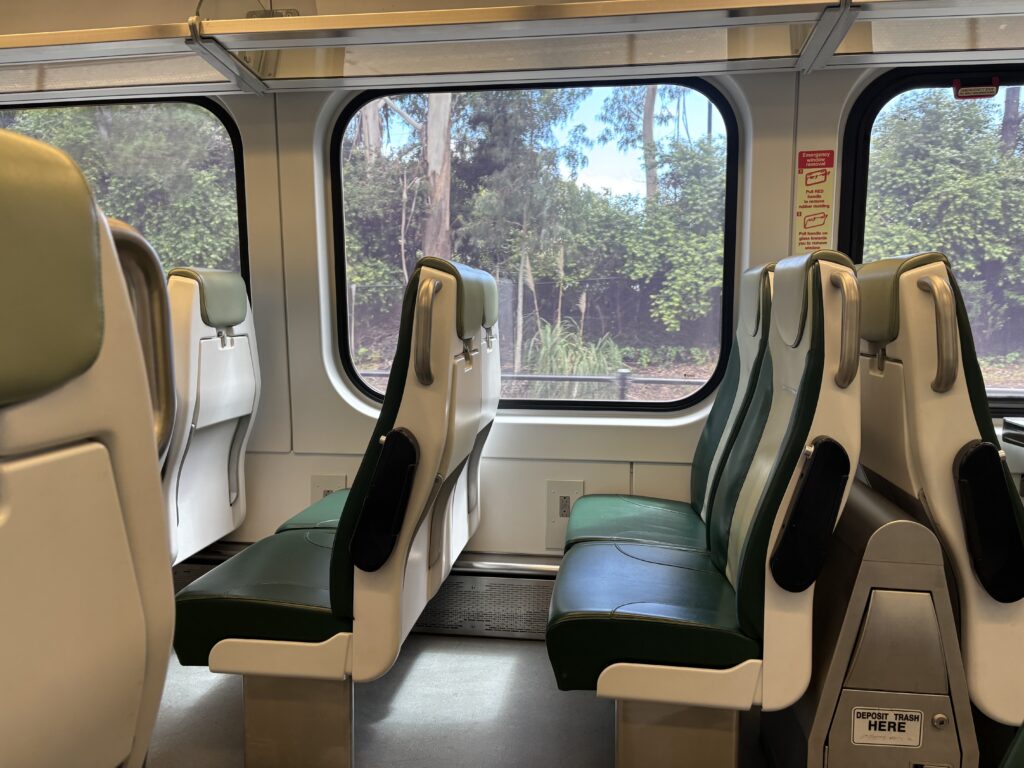
I also took this picture from my seat on the train:
Here’s one I took as I rode back the other way:
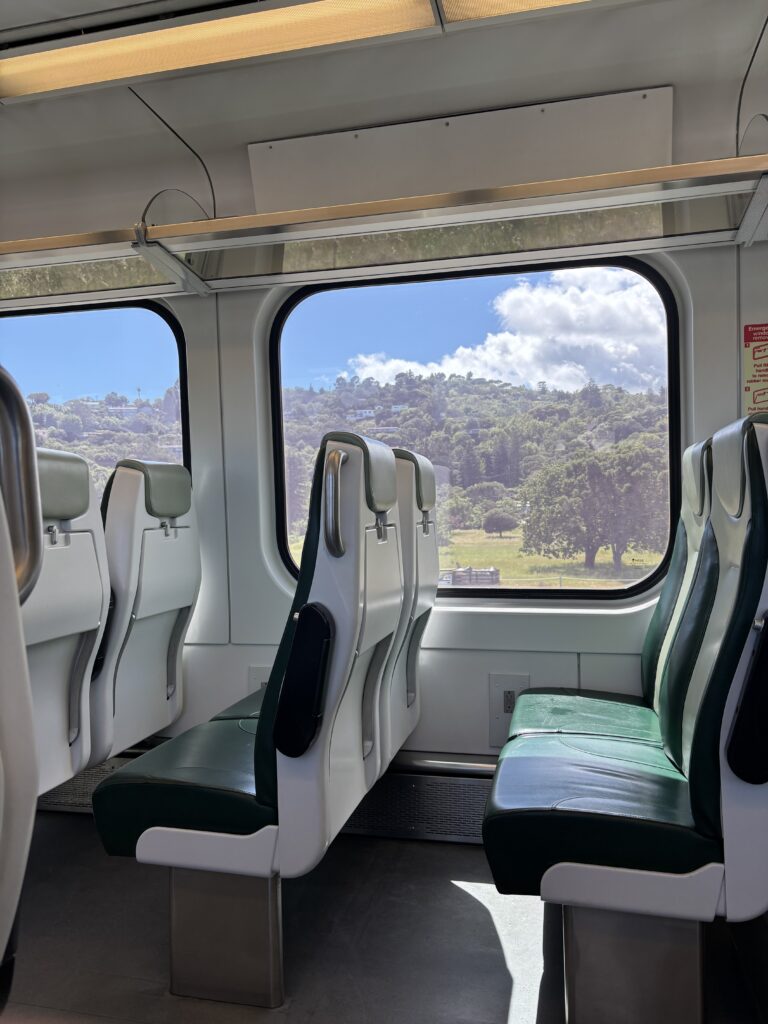
In the afternoon I rode back to Santa Rosa from Larkspur, down on the bay in the southern end of Marin. The train had two cars. Here’s the interior of my car as I prepared to get off at the end of my ride:
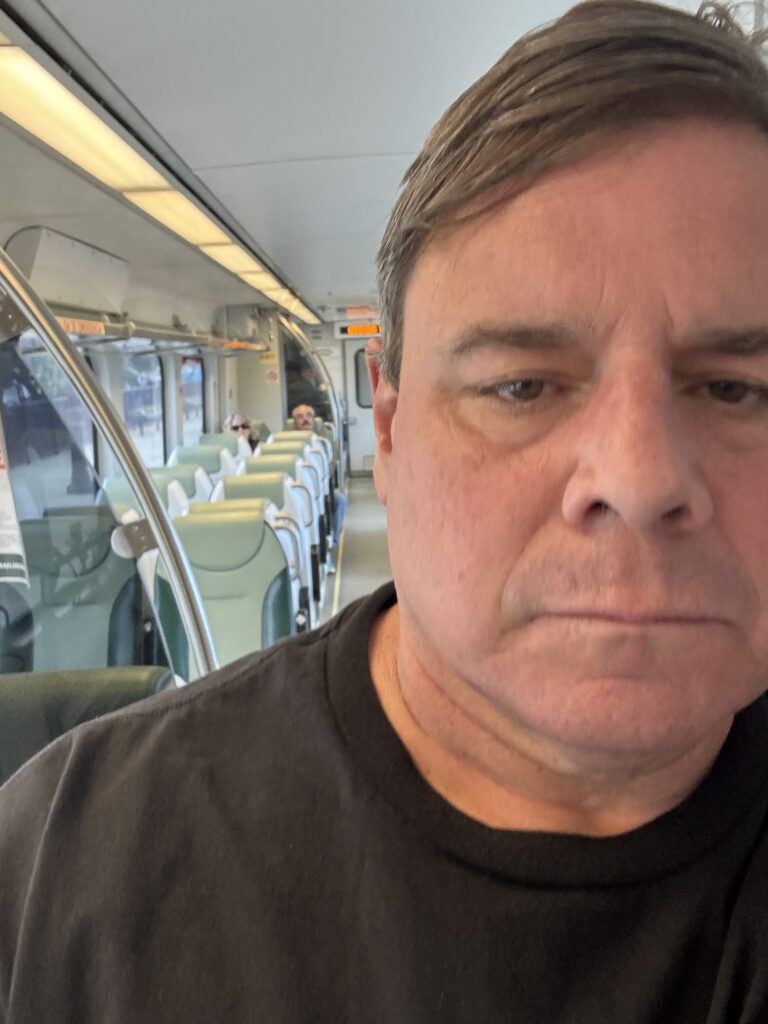
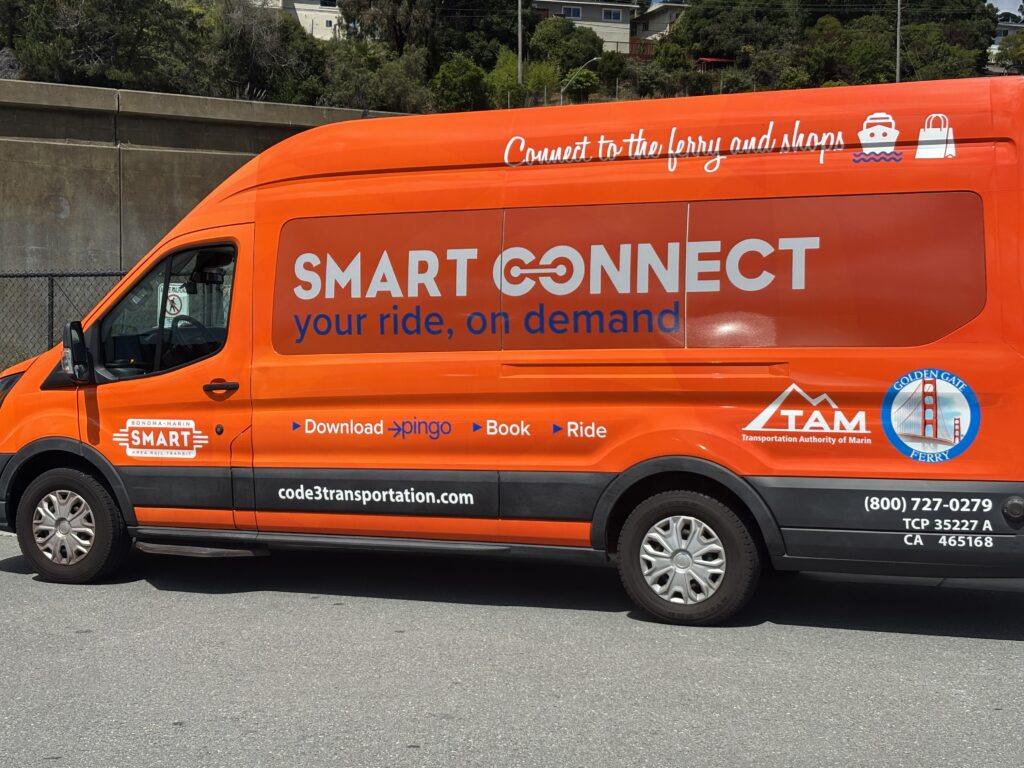
As a final note before the dollar figures, the train doesn’t take riders to the other transit connections in Sonoma and Marin. Instead, it gets you pretty close, after which you can spend another $1.50 for a shuttle from the train station to reach the ferry terminal or the airport.
Now, the dollar figures. Final construction of the full line is likely to cost about a billion dollars, a figure that requires assembly and extrapolation since the regional authority that runs the system doesn’t publish it. (A 2014 report from the civil grand jury in Sonoma County, now well out of date, estimated total system funding of well over a billion dollars.) A recent estimate for the completion of the line to just the last two northern stations, representing less than a quarter of the line, says this: “The current cost estimate to complete extensions to Windsor and Healdsburg is $230.5M.”
Annual costs are an easier problem. You can find financial reports from the Sonoma-Marin Area Rail Transit District here. For the fiscal year ending on June 30, 2025, here are the important numbers from pg. 32:
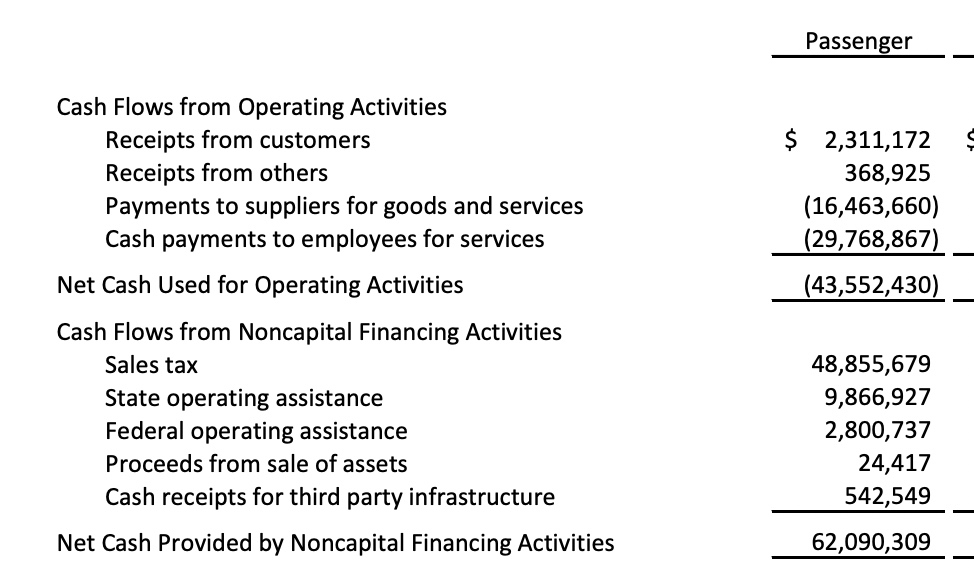
So –$43.5 million “Net Cash” for operations, and note the minus sign in front of that figure, with over $60 million in funding from local taxes and government grants but just $2.3 million from passengers. About $47 million in annual operating costs, not counting construction costs, to serve a few thousand passengers. Name the private sector business that survives with a $30 million payroll and $2.3 million in receipts from customers.
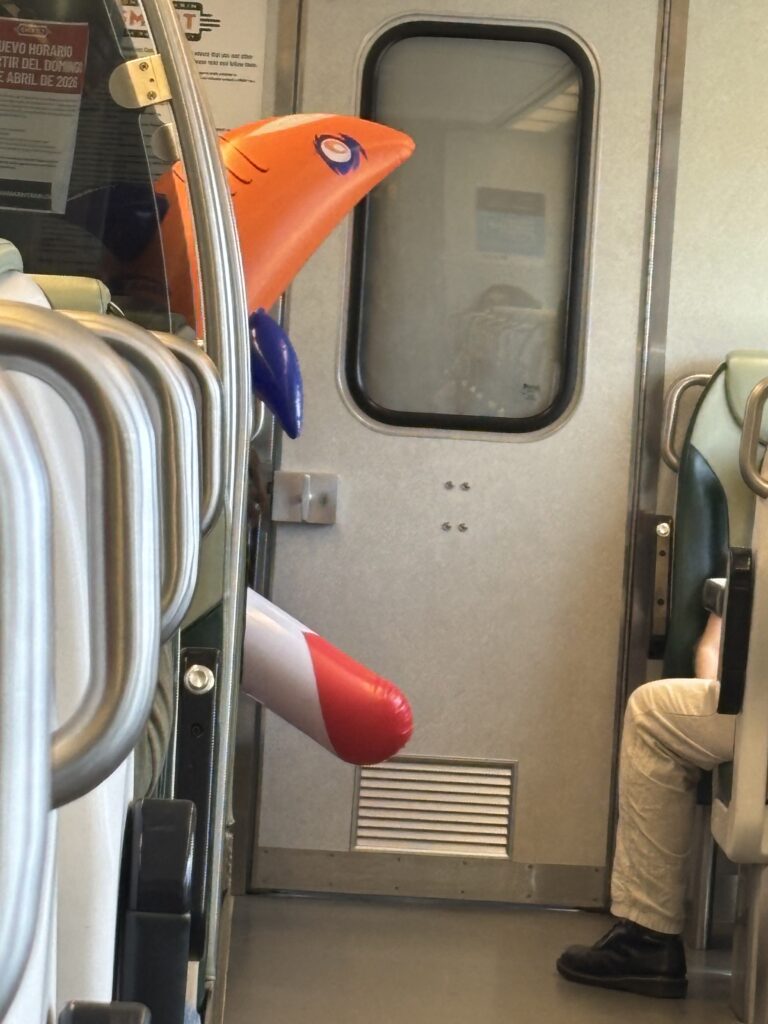
Trying to boost ridership, the special district that runs the SMART train decided to offer free fares for senior citizens and everyone under the age of 18. As I rode the train on Monday, that’s who was riding, including a group of children who carried swimming pool toys.
Critics warned that the SMART project would become an expensive hobby train, recreation more than traffic relief, and that’s what happened. There are projects like this all over the state, costing a fortune and delivering exceptionally modest results. Together they start to form a pretty clear trajectory.