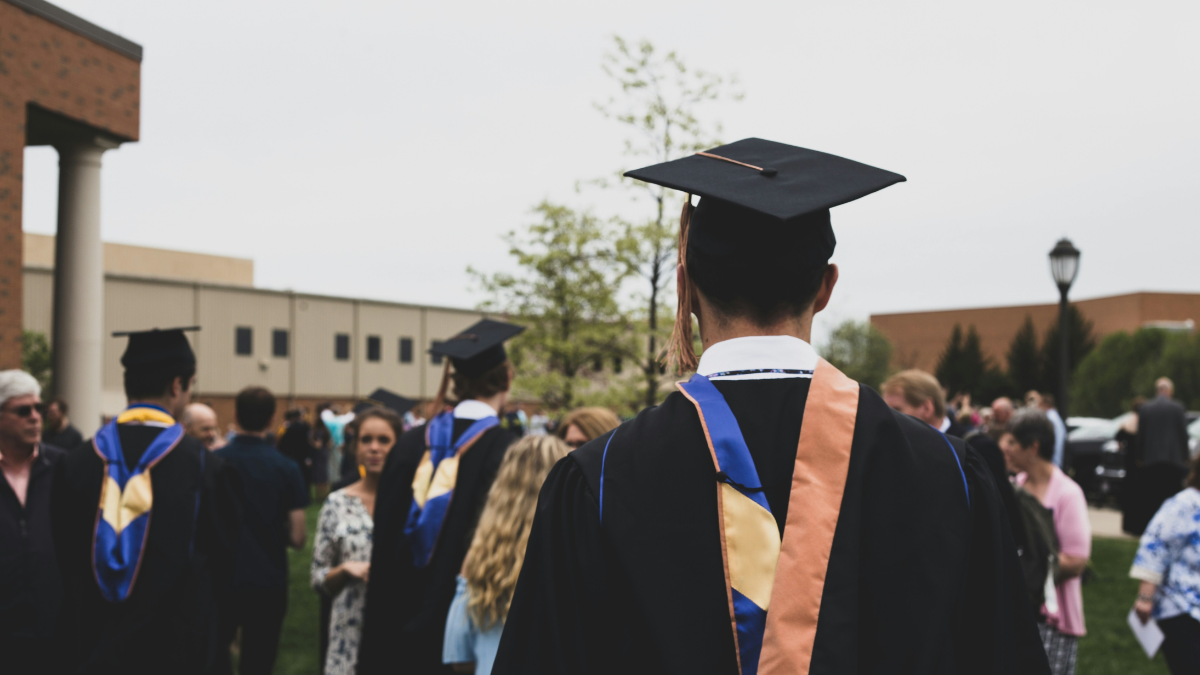


One of the few silver linings of the pandemic era was a parental awakening as they got a closer look at their children’s schoolwork. Booming attendance and barnburner speeches dotted school board meetings across the country. Parents started electing new members to focus on core subjects over social engineering. It was a newly informed citizenry in action. The school board system, though imperfect, is where parents and taxpayers can shape public education. Unfortunately, active-duty military families don’t have that option.
Parents and guardians of the roughly 67,000 students at Pentagon-run K-12 schools, known as the Department of Defense Education Activity (DoDEA), saw classrooms get more ideological too. A litany of troubling examples emerged: DoDEA leadership embraced materials from far-left organizations such as the Southern Poverty Law Center that encouraged instigating “uncomfortable conversations” around race and privilege; middle school health textbooks included a lesson on “gender identity” that asserted “gender” is not biological, but is socialized from birth, and that “people also have the power to choose a gender identity;” a progressive advocacy group successfully lobbied the school system to standardize “updating affirmed names in DoDEA’s Google Classroom system” because “many trans and nonbinary youth have had to fight for these updates in their schools;” and an “Equity Summit” for DoDEA staffers included promotion of a book called Coaching for Equity that rebukes “patriarchy” and laments America’s founding on “stolen land.”
President Donald Trump and Defense Secretary Pete Hegseth have called for de-radicalizing education at all levels over the past year. Durable change won’t happen without parental involvement, but parents have been systematically turned away from the few venues they once had to steer DoDEA learning environments.
No Parents on Committees
A new report from Open the Books details subtle but damaging changes under former DoDEA head Thomas Brady, who served from 2014 to 2024 under presidents from both parties, that shut parents out. The report describes decades of byzantine bureaucracy that came before his tenure and describes opportunities for the current administration to right the ship.
The DoDEA has never had traditional, elected school boards. The transitory nature of military families may make them impractical, but their absence tilts control toward career administrators. In their place is a multi-level governance model — a series of limited-access advisory committees from the school up to the federal level.
Thirty-seven years ago, in a subcommittee hearing before the House Armed Services Committee, military parents informed Congress of the difficulty navigating and making change through this system. One of their requests was that parents be given a seat on the highest-level advisory committee at DoDEA headquarters called the Dependents Education Council.
Nearly four decades later, parents still do not sit on the DEC and have lost representation another level down the chain. The Advisory Council on Dependents Education, where parents did hold appointed seats, was written out of law by Congress at the recommendation of the Brady leadership team.
Over the years, the system became more opaque. DEC meeting minutes no longer list the names of individuals who attend — even when requested per the Freedom of Information Act (FOIA). Some service members are asking whether union leaders, radical nonprofit organizations, or other “experts” are pushing their ideology at the DEC.
We know for certain that groups such as the Modern Military Association of America and PFLAG have worked with DoDEA to craft policy like the aforementioned “affirmed name” changes in a student’s Google Classroom record. Are organizations like these attending regular meetings? There are no official channels for parents or the public to find out.
A similar problem underlies the system’s five-year strategic plan, the Blueprint for Continuous Improvement. Though parents did serve on the relevant steering committee from 1995-2000 and 2001-2006, they are no longer involved in the strategic planning for their children’s education. Like the DEC attendance list, Blueprint Steering Committee member names and organizations are unpublicized and redacted from FOIA productions, though this information had been publicly available in years past.
Other Arcane Changes Disempowering Parents
Other changes are more arcane, but similarly destructive to the parent’s voice in education.
In 2024, an administrative instruction from DoDEA headquarters handed even more committee control to administrators over servicemembers and guardians. School Advisory Committee minutes show parents in the Pacific region tried to voice concern while administrators dragged out the response process for more than two years.
Dissatisfied parents could at least turn to the Stakeholder Feedback Survey, which DoDEA headquarters has sporadically administered to all schools in Europe, the Pacific, and the Americas. The survey is meant to be a means for students and parents to send headquarters feedback on what works and what must change at the individual school level. DoDEA does not publicly release individual comments, but Open the Books obtained them through FOIA. The responses from the 2023 survey revealed parents encountering similar problems worldwide.
Several comments reflect frustration with ideology being pushed into the classroom. “I don’t believe we have any real impact on curriculum that is taught,” wrote one parent. “Also, enough with the choosing of one’s pronouns and teaching that a child can choose their gender.” Another echoed the sentiment, writing, “I’m concerned about the trend toward confirming a child’s ‘chosen’ gender and adults lying to these confused children. Race and gender indoctrination should have no place in the classroom.”
The following school year, the qualitative portion of the survey was entirely removed. No survey was given during the 2024-25 school year. Another avenue for parents to voice concern had become a dead end.
Parents’ Feedback
Some parents reached out to Amy Haywood, a military parent herself who founded the group Military Families in Support of Parental Rights. She has authored a series of articles about DoDEA, including at The Federalist, and parents reached out to her directly after she published past survey responses.
“DODEA has had the benefit of having a rotating class body without sustained advocacy as parents move on to other duty stations,” a parent in Bahrain wrote to Haywood. “It’s only after a few months there they realize the subpar education children are getting and the toxic environment their kids are left to suffer in.”
Stateside in Alabama, another wrote, “So many families are struggling with the DoDEA schools and being ignored. We just came from Fort Campbell and now at Fort Novosel. [T]he schools are NOT allowing parent participation and honestly not even acting like they even care about our families. Reminds me of FCPS [Fairfax County Public Schools].”
In short, families knew DoDEA was becoming ideologically captured and that there was precious little they could do to fix it from the inside.
Brady has since left his post, but many of his administrators, like current director Dr. Beth Schiavino-Narvaez, remain in prominent positions.
The Trump administration has both the will and the ability to undo the damage of the Biden-Brady era and has already made remarkable headway. Helping parents formally advocate for their own children can make the fixes durable.
Finally, few things are more American than competition. Should a future administration return to ideology as a guide, military families deserve a chance to choose a school that works for them. The State Department gives Foreign Service families education allowances to select a school abroad that meets their family’s needs. Our service members should be offered the same.
The full report, “No Voice, No Choice,” is available at OpenTheBooks.com.