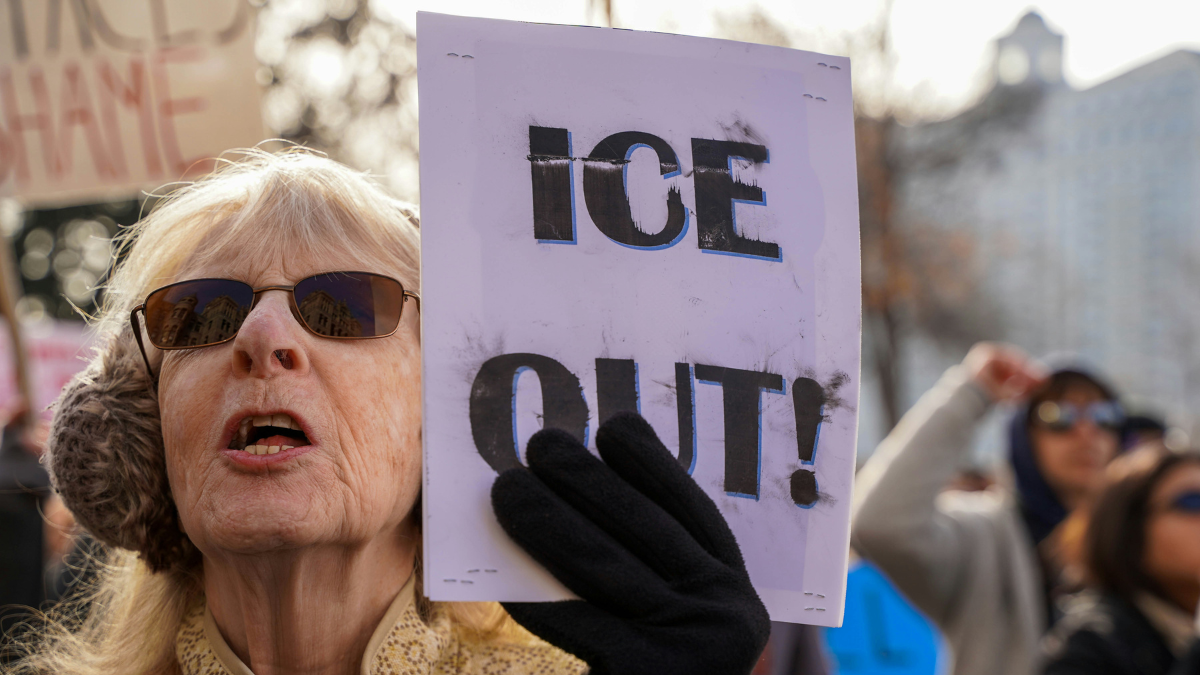

In a recent viral video, an angry mob (composed almost entirely of white women) hurled expletives at the staff of a Minneapolis CorePower yoga studio, berating them because they reportedly removed anti-ICE signage. While their verbal onslaught apparently worked in this case, these females revealed just how many women live in a Land of Make Believe where everyone magically bends to their will.
This tiny glimpse into the world of make-believe perpetuated by Affluent, White, Female, Liberals (AWFL) has been a long time in coming; many are waking up to the saccharine dream where the AWFLs can do whatever they want, unscathed, while the rest of us must conform and then clean up their messes. For decades the West has built itself around the ideal life for these women, requiring very little by way of sacrifice, inconvenience, earnest effort, or real scrutiny. In today’s world, it is good to be a victim. It is a made-up world that most of us have grown used to believing is real.
To understand the origins of the Land of Make Believe, we have to go back to before Mr. Rogers’ neighborhood. Most of human history hasn’t had entire generations come and go without experiencing a hot war, aggressive overthrow, famine, economic downturn, or some other significant life-threatening event. Such realities, we are told, stymie culture instead of building it. Curiously, however, for all our contemporary comfort and plenty, cultural growth has not been what one might expect.
While living in Italy for two years, there was always a question at the back of my mind as I walked through the heart of Rome each day for morning Mass followed by morning cappuccino: Why is all this so beautiful while the same walk in most any American city would leave one cold and uninspired? I marveled at the sheer saturation of it all, marked clearly, but with a lack of uniformity — the Pantheon’s hole in the ceiling; Piazza Navona’s breadth and fountains; the regal Romanesque of Santa Maria in Trastevere; and the living marble of Apollo and Daphne at the Borghese Gallery. None of these, however, was the fruit of a people who had enough leisure and comfort to sit on their laurels and simply create in wealth and luxury.
In fact, the opposite seems to be true in a place like Florence, where it was the local skirmishes that produced the best art, architecture, literature, and saints the world has ever seen. As G.K. Chesterton explained in his biography of St. Francis:
And if we infer from our own experience that war paralyzed civilization, we must at least admit that these warring towns turned out a number of paralytics who go by the names of Dante and Michael Angelo, Aristo and Titian, Leonardo and Columbus, not to mention Catherine of Siena and the subject of this story [St. Francis of Assisi]. While we lament all this local patriotism as a hubbub of the Dark Ages, it must seem a rather curious fact that about three quarters of the greatest men who ever lived came out of these little towns and were often engaged in these little wars. It remains to be seen what will ultimately come out of our large towns; but there has been no sign of anything of this sort since they became large. …
Without fear of famine, war, or natural disasters, we have had the luxury of following leaders down the rabbit hole into the Land of Make Believe. In it, there is room to become lax and lazy, disordered, and disagreeable. There is space to disparage authority, flaunt rules, and disregard natural law, especially when the personal cost seems negligible — food still arrives, salaries are paid, homes are heated. Life continues to go on while the Land of Make Believe takes over more and more real estate in our consciousness.
Who cares if there are angry and bitter women ceaselessly campaigning against their own fertility (and their own children)? Who cares that criminals have been recast as victims, deserving every measure of entitlement, including placement into women’s prisons? Who cares that men, simply for being men, have been recast as villains and purveyors of toxic masculinity? Who cares that our desire for safety has become so swollen that any explanation that includes “for our safety” silences debate? And who cares that comfort and entertainment have become so monolithic that notions of sacrifice, discomfort, or boredom seem to evaporate into the wind? Restaurants stay open; planes still fly; fashion still sells; movies are still shot; and sports still played. Daily life continues.
Meanwhile, the source and summit of our contemporary fears are embodied in The Protest. In the Land of Make Believe, there is scarcely anything worse. The angry crowds, shouting voices, slick signs and slogans, stopped traffic — all lead to the public humiliation of those on its receiving end. So effective is The Protest that protesters are no longer the stinky and organic grassroots of the 1960s; the protesting mob has become big business, mobilizing quickly, with a firm belief in its own righteousness.
Astroturfed and ginned up, The Protest is the local mode of violence ending in viral scorn through the deeply superficial world of social media, screenshots, sound bites, and selectively edited content. And if one can’t take her grievance to the street, say in the workplace or academia, the Mean Girls (or the CorePower yoga women) are ready to step in, with the same general effect, just on a smaller scale — silencing opposition and canceling competitors.
But what happens when the Land of Make Believe finally becomes too thin? Too ridiculous for anyone to take seriously anymore? When its own fevered pitch becomes so high that the bullets become real and the rhetoric hits reality? When the social cost becomes too great? When decades of emotional manipulation and contrived grievances reach a tipping point and the Land of Make Believe suddenly becomes, well, unbelievable?
This is the point we are at now, where we’ve spent five decades coddling controlling and power-hungry women and the woke worldview — aided by an ocean of radical and ideological men. The Marxist-turned-feminist-turned-woke-project seems to finally be running out of steam. The ruling class members continue to agitate for it, while most of the rest of us look on, like Sydney Sweeney in an interview, unimpressed and ready to move on to something healing, restorative, and healthy.
The Land of Make Believe will eventually come to an end, and sobriety and rationality will be restored. Let’s pray the correction doesn’t come in the form of a hot war, a deadly famine, or a score of natural disasters, but through the wisdom that sees that true human flourishing requires the truth about human nature; it requires sacrificial love in the form of discomfort, self-gift, and doing difficult things.
Until we grasp these and restore the beauty and richness of what it means to truly be male and female, there will be no end to the AWFL that plagues us now, day in and day out, in the Land of Make Believe.