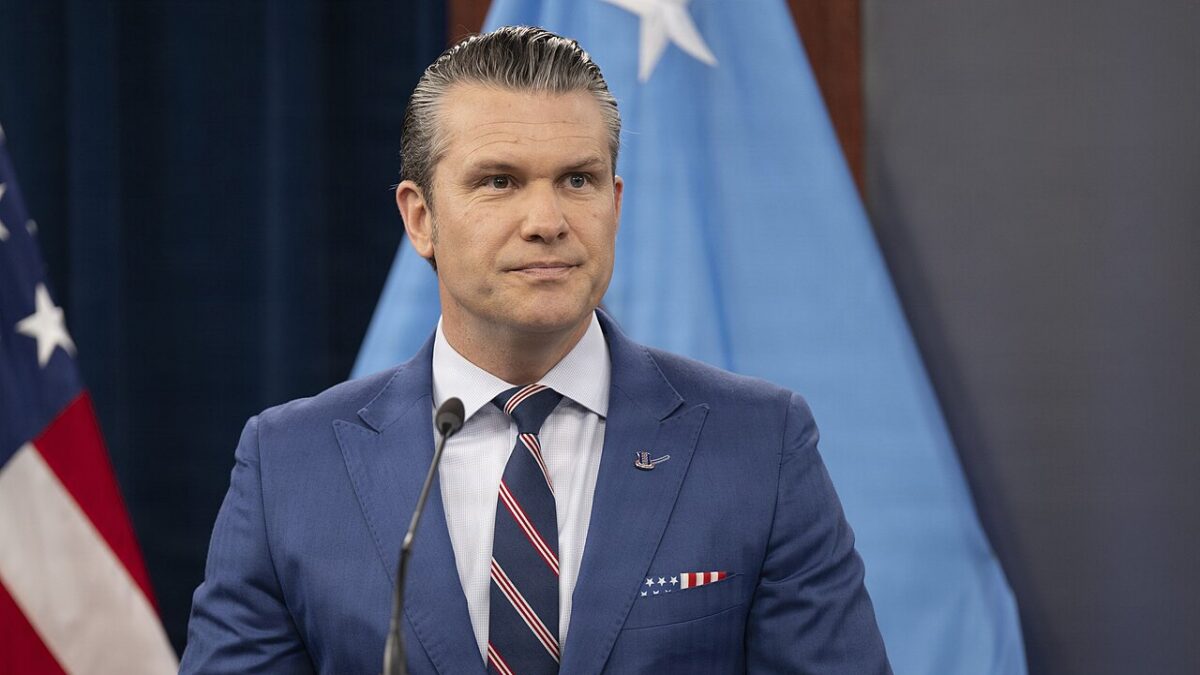


NEWPORT NEWS, Va. — “A nation that can’t create its own tools or its own defenses for its own future is a nation that is in managed decline,” Secretary of War Pete Hegseth told Virginia shipbuilders on Monday as he spoke about the importance of revitalizing America’s defense industrial base.
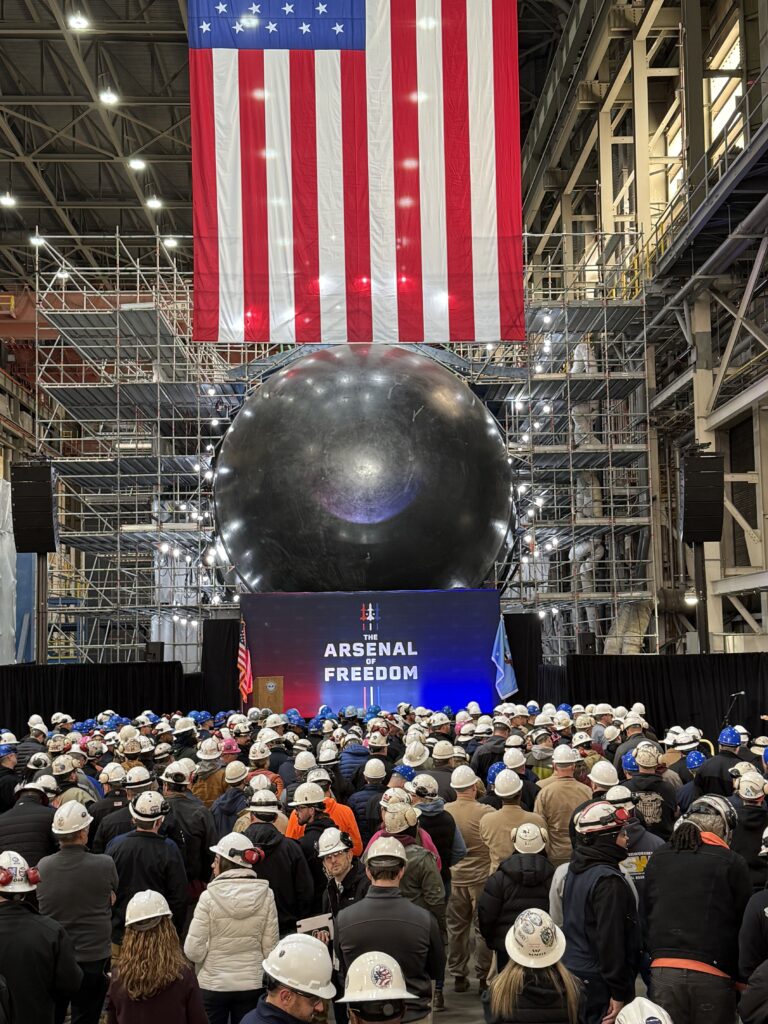
The remarks came during the secretary’s stop in Newport News, which is home to one of the country’s most notable shipyards. The visit marked the “kickoff” to Hegseth’s planned “Arsenal of Freedom Tour,” a “monthlong campaign [that] aims to promote one of the War Department’s top priorities of rebuilding the military by engaging with the [defense industrial base] DIB at various stops throughout the country,” as described by the Pentagon.
While touching on reviving the military’s “warrior ethos” and restoring deterrence throughout the globe, Hegseth directed his focus to the administration’s “generational commitment to American sea power.” Addressing attendees, he said that America’s “treasured freedoms are only as secure as our arsenal is strong and nothing is more important than securing that freedom.” He also contrasted the failures of the country’s past leadership in maintaining an adequate defense industrial base with the increasing naval buildup by communist China.
“While we were policing the world, nation-building in deserts, and debating pronouns at the Pentagon, our primary competitors, like the Chinese Communist Party, did something very different. They studied us, they learned from our triumphs and our mistakes, and then they started to build as well. And they’ve undertaken some of the most rapid, ambitious, and breathtaking naval buildup since World War II,” Hegseth said. “While we decommissioned ships, they launched many of them. While some of our shipyards did not meet the demands of our country, they expanded at a rapid pace.”
[READ: Hegseth: America’s Military Is ‘Already Surpassing’ Last Year’s Recruiting Figures]
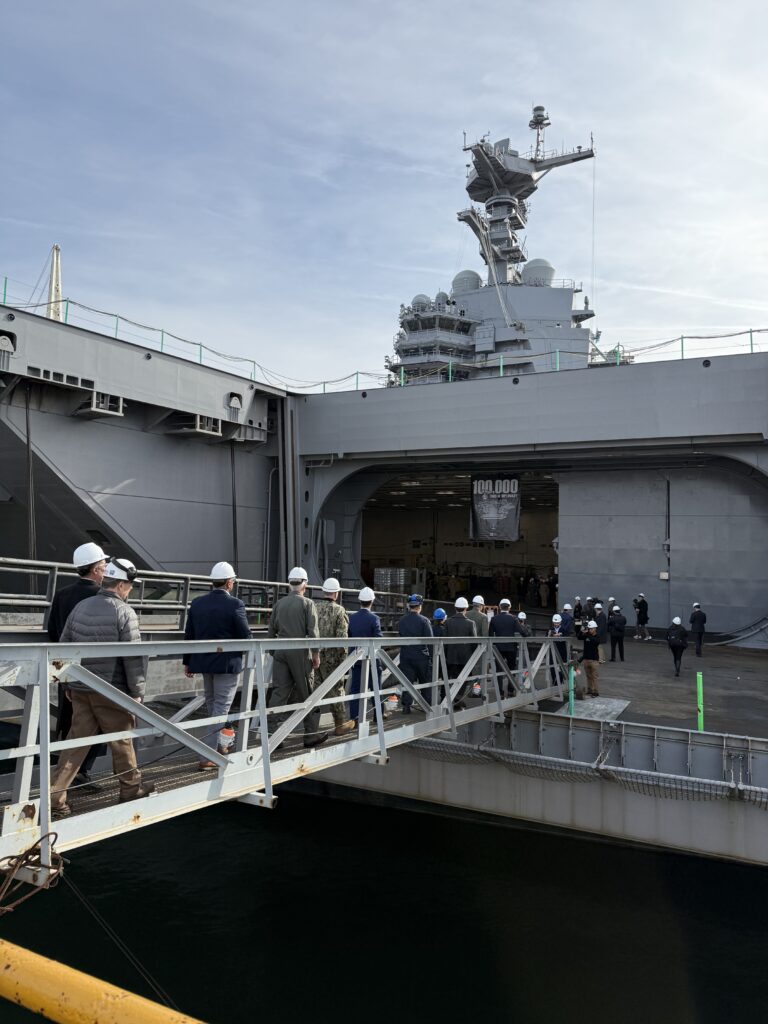
The war secretary’s remarks come amid a decades-long slump in U.S. shipbuilding prowess.
As The Federalist previously reported, the size of America’s naval fleet and the country’s shipbuilding industry have atrophied considerably in recent decades, going from a fleet of more than 500 ships at the end of the Cold War to less than 300 as of last month. Such a decline is also evident in the nation’s commercial shipbuilding sector.
In an attempt to reverse this decline, President Trump signed an executive order months after returning to office aimed at revitalizing America’s depleted shipbuilding industry. The directive instructed high-ranking administration officials to craft a “Maritime Action Plan” that contains policies and action items designed to boost the country’s maritime industrial capacity.
Still, the industry continues to face its challenges.
As indicated by numerous reports, the shipbuilding industry has struggled to maintain an adequate workforce. More specifically, these shipyards have experienced difficulty finding and retaining skilled workers necessary to grow their manufacturing capabilities.
Another notable issue that’s become more prominent in recent years relates to the military’s acquisition and procurement of new equipment and infrastructure.
As The Federalist previously reported, Congress and the Pentagon have historically thrown hundreds of billions in taxpayer money at defense projects deemed to be insufficient, delayed, and/or over budget. Such was the case with the Navy’s littoral combat ship (LCS), which, as detailed in a 2023 gCaptain investigation, has become “one of the worst boondoggles in the military’s long history of buying overpriced and underperforming weapons systems.”
Since taking the reins at the Pentagon, Hegseth has signed several memoranda aimed at reforming the agency’s acquisition and procurement strategies to seemingly avoid these types of problems moving forward. The war secretary appeared to echo this commitment to such reform in his remarks at Newport News, telling shipbuilders that the administration is “systemically dismantling the bloated, risk-averse, and self-serving bureaucracy that has stifled innovation for decades” and “streamlining our requirements and acquisition process, cutting through red tape.”
“This is not the same old reform that is always talked about in Washington, but instead, it’s an overhaul,” Hegseth said. “I’ve made it crystal clear to the entire defense industry, which I didn’t come from, and I didn’t work for, so I don’t give a damn who wins. I just want the best. We’ve been clear: the era of rewarding delays and cost overruns is over.”
Newport News Shipbuilding did not respond to The Federalist’s immediate request for an interview.