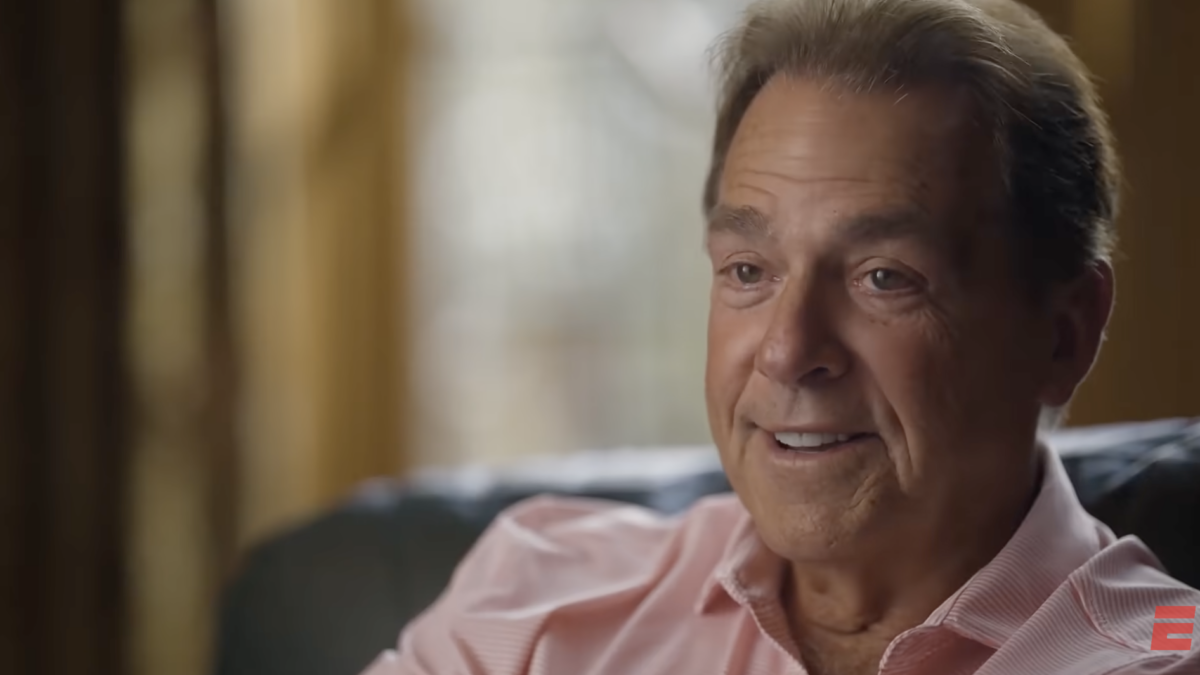

Saban, a new ESPN series examining the career of the longtime football coach and current ESPN analyst, takes a contrarian view toward the sense of entitlement plaguing our culture and today’s college campuses. Modern society focuses on instant gratification achieved after little effort. (Take, for example, recent grade inflation in the Ivy League stemming from both students’ sense of entitlement and a belief that education is but a means to an end.) On the other hand, the film, and the coach at the heart of it, connect success with prioritizing execution more than outcomes.
The end result: A film about a football coach who doesn’t focus only on winning, but who is still widely known as one of the best.
Saban often sounds like a self-help video, emphasizing how details matter before wins and are a necessary precursor to them. In this mentality, the old parental adage “Do your best” doesn’t justify subpar outcomes so much as it requires a pursuit of excellence through constant practice, discipline, and execution.
Process Makes Perfect
The series’ first episode, titled “The Process,” examines Saban’s first stint as a head coach at a big-time college program, when he helmed the Michigan State Spartans in the 1990s. Treading water as a middling coach — one focused entirely on game outcomes — he displayed the anger associated with someone whose job appeared in jeopardy. Footage of him from the time shows the kind of anger and control-freakery that famously got Indiana basketball coach Bob Knight fired. Calling a player a “dumb f—,” as Saban admits he did, arguably should have gotten him fired — and it meant that neither players nor coach enjoyed the game.
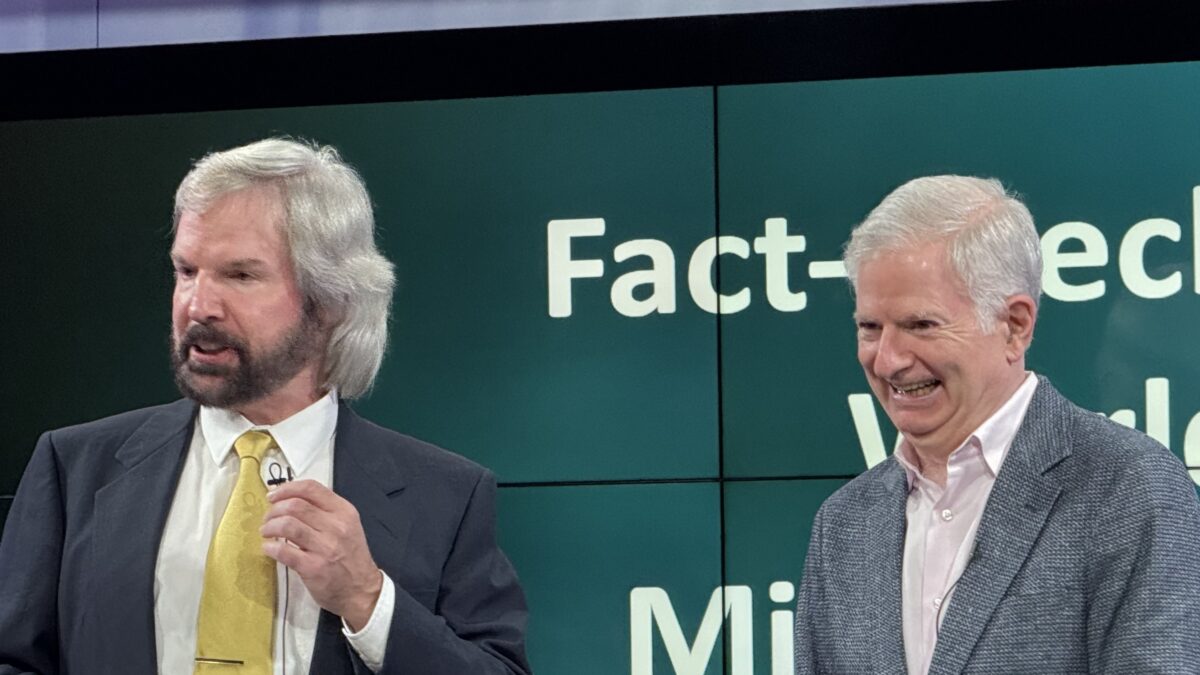
Along came an influence on Saban’s life that sounds like something out of a Hollywood buddy comedy. Seeking counsel and fearing his job, Saban sat down with Michigan State sports psychiatrist Lionel Rosen. To say the heavily bearded, hippie-like doctor and disciplinarian coach made an odd pair would put it mildly.
And yet Rosen gave Saban insights that the latter followed throughout his career. Heading into a 1998 game against Ohio State, then the nation’s top-ranked team, neither Saban nor Rosen gave Michigan State much chance. Rosen advised Saban not to focus on macro factors like the scoreboard, but the micro-factors the team could more easily control — just focus on winning the six seconds of each play, rather than executing over 60 minutes of football.
By loosening up, focusing on playing within themselves, and executing on every play rather than trying to win the game, Michigan State actually did upset Ohio State — the biggest win of Nick Saban’s career, and one that came to define his coaching philosophy. And, as he noted in an interview during the broadcast, Saban’s college coaching record after that game (265-49) vastly exceeded the pedestrian mark he had achieved up until that point (27-22-1).
A Process Fulfilled
“The Process” doesn’t always prove easy. The strict Saban continued to deliver what he calls “a—chewings” to his players on a regular basis — albeit focused on a player’s behavior, rather than the player himself. When the coach came to Alabama in 2007, the players, none of whom he recruited, necessarily bought in immediately. Quarterback Greg McIlroy noted that, if the players could have transferred to another university without penalty — as they can now — many would have done so.
But additional episodes of Saban demonstrate how “The Process” can lead to results. The most talked-about sequence of the documentary includes never-before-seen footage of Jalen Hurts getting benched during the 2018 National Championship Game. At halftime of the biggest game of the year, Saban decided to replace Hurts with Tua Tagovailoa, who went on to lead the Alabama Crimson Tide to a comeback victory over Georgia.
As Saban himself acknowledged, Hurts took the benching — painful though it was — in stride. He came back and led Alabama to a conference championship the following year. And in 2025, Hurts got the last laugh, leading the Philadelphia Eagles to a blowout win in Super Bowl LIX. (For his part, Tagovailoa has yet to make it to a Super Bowl.)
As for Saban, a total of seven national championships — six during his tenure at Alabama, and an earlier one at LSU — aren’t anything to sneeze at either. Like Michael Jordan and The Last Dance, this ESPN documentary attempts to chronicle the secrets of Saban’s success, but does so in a way that could deliver life lessons well away from the football field.
Episodes of Saban air on the ESPN family of networks or are available on the ESPN app.