It starts when the gatekeepers abandon the gate.
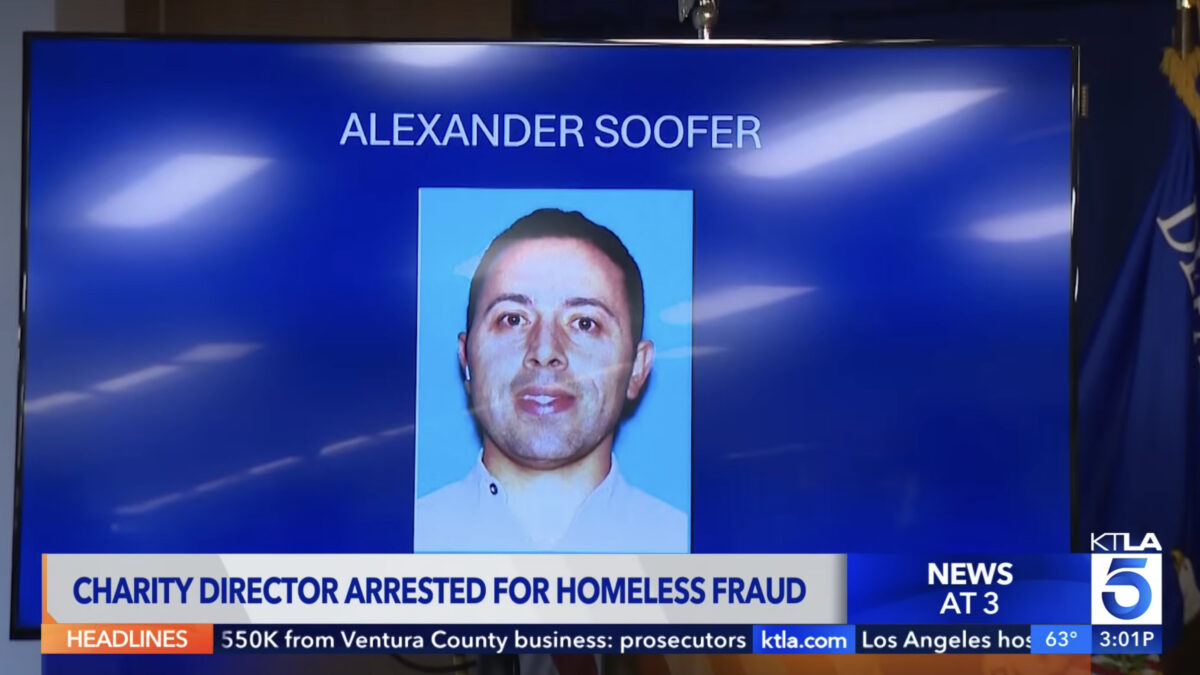
Alexander Soofer is awaiting trial in Los Angeles, accused in state and federal courts of using millions of dollars in public funds for personal luxury: a $7 million house, extensive foreign travel, expensive clothes, five-star hotels. As The Federalist has reported (repeatedly), Soofer is the CEO of Abundant Blessings, a nonprofit corporation that received at least $23 million to provide transitional housing and support for the homeless.
A criminal investigation began after auditors from the office of the Los Angeles City Controller made a site visit to a facility run by Abundant Blessings and asked to see evidence of the services he was supposed to be providing. Like Nick Shirley showing up at Quality Learing Center, the problem began with one dangerous request: Show me.
But before Abundant Blessings ever saw a single dollar of taxpayer money, Soofer had to apply to be funded as a provider of homeless services. In January, The Federalist used the California Public Records Act to request those applications from the Los Angeles Homeless Services Authority (LAHSA), a joint powers agency formed by the city and county of Los Angeles. We finally received those applications last week, and they reveal some fascinating details.
Public records show that Soofer is the owner of a frozen yogurt franchise near the beach, and the City of Santa Monica provided The Federalist with a business license for that store, which includes Soofer’s name. No reliable evidence shows that he had a professional background as a provider of social services.
To show LAHSA that he ran an experienced nonprofit that was widely recognized as an excellent provider of services to the homeless, Soofer included a long series of letters in his applications from corporations and foundations that honored Abundant Blessings for the quality of its work. Those letters came in the form of “letters of commitment,” promises to provide funding.
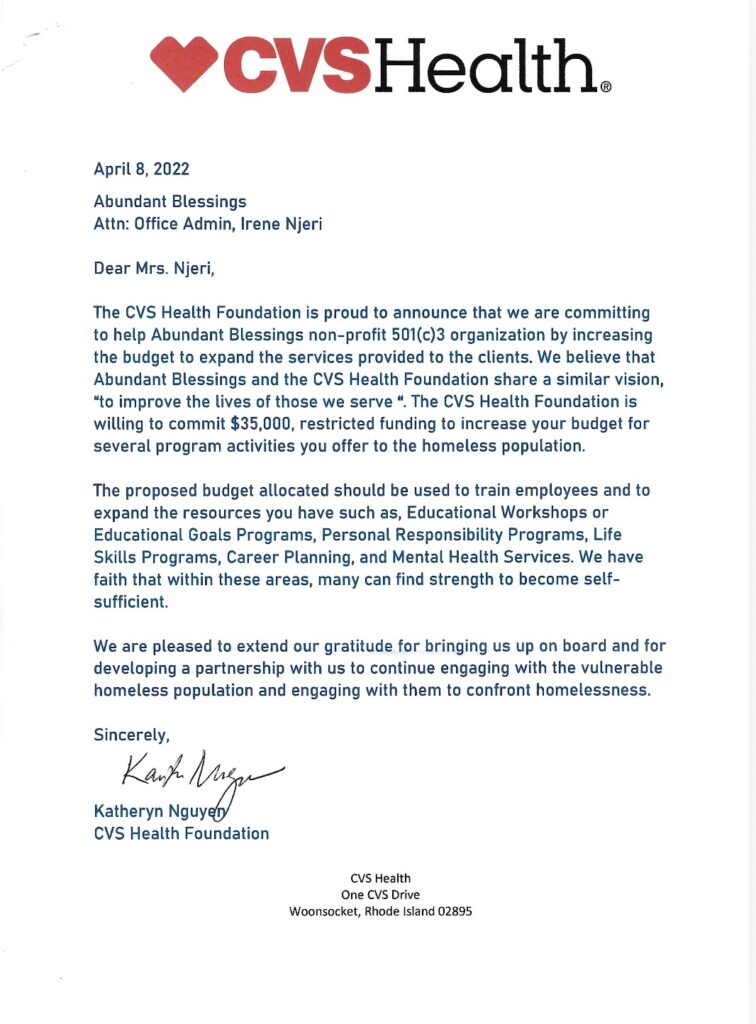
On Tuesday, CVS Health spokesman Ethan Slavin told The Federalist by email that this letter is fake: “We did not (and currently do not) have a person by this name (Katheryn Nguyen) working at the CVS Health Foundation and have no record of either this letter or a donation to the organization that you mentioned (Abundant Blessings).”
Same story with Wells Fargo.
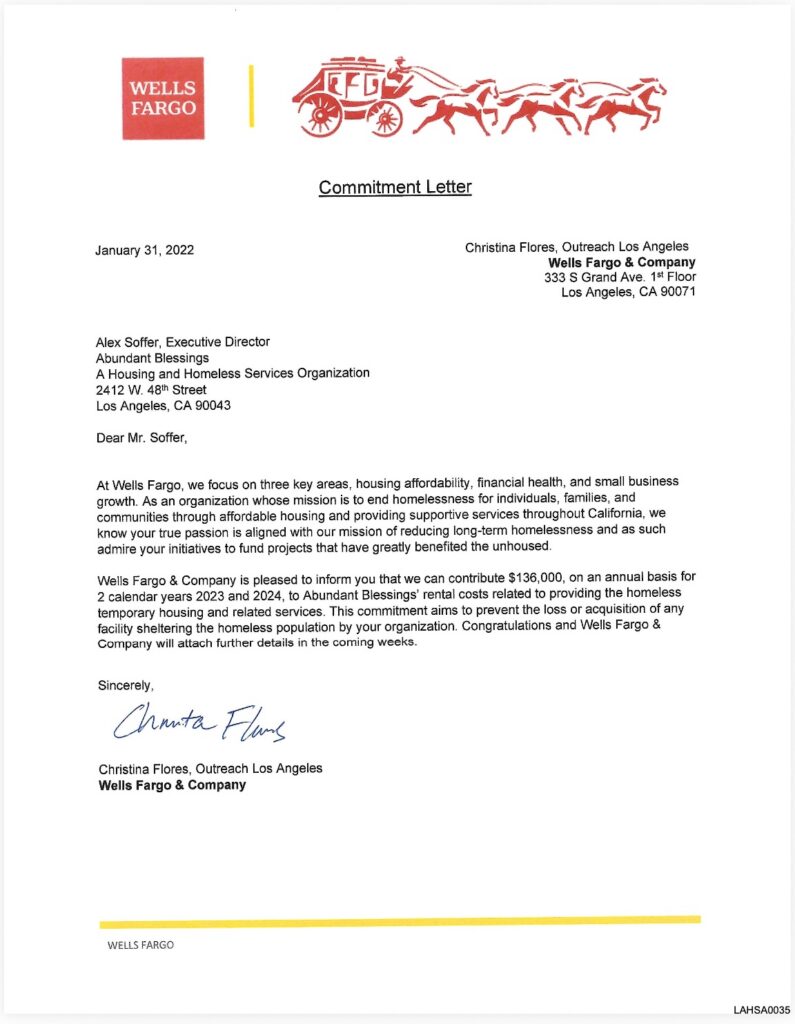
On Monday, speaking on background because of the sensitive nature of a fraud allegation, a person employed at Wells Fargo told The Federalist that the bank “does not have any funding activity with that organization.”
In some cases, the commitment letters submitted to LAHSA by Abundant Blessings are easier to fact-check.
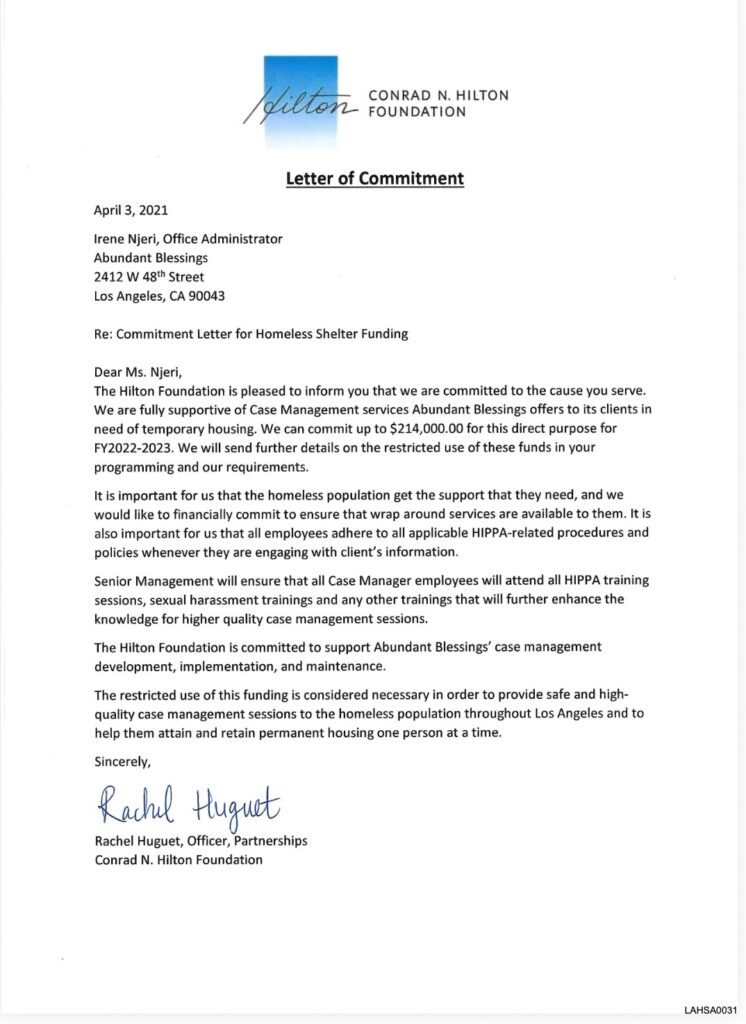
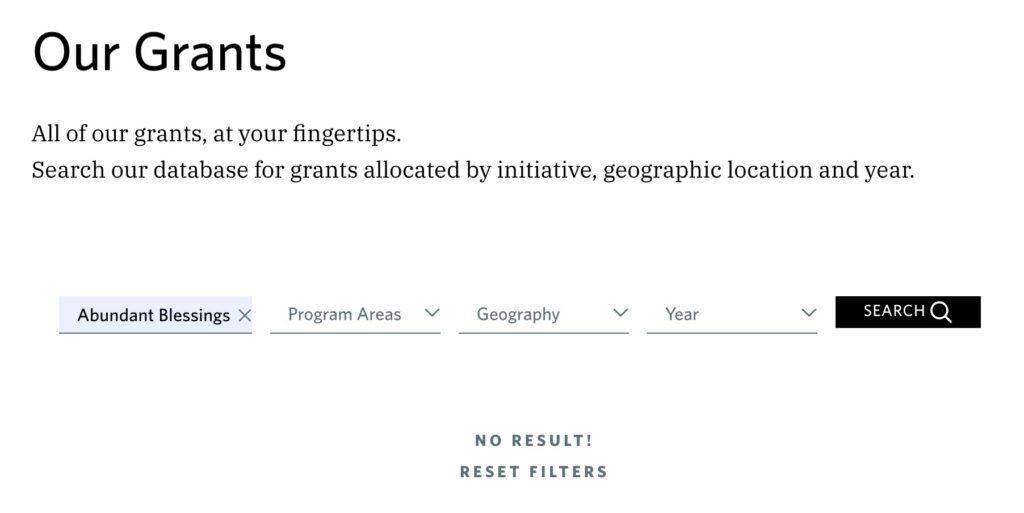
The Conrad N. Hilton Foundation provides a searchable online database of its grant recipients.
For another example, Soofer submitted a letter of commitment from the IKEA Foundation:
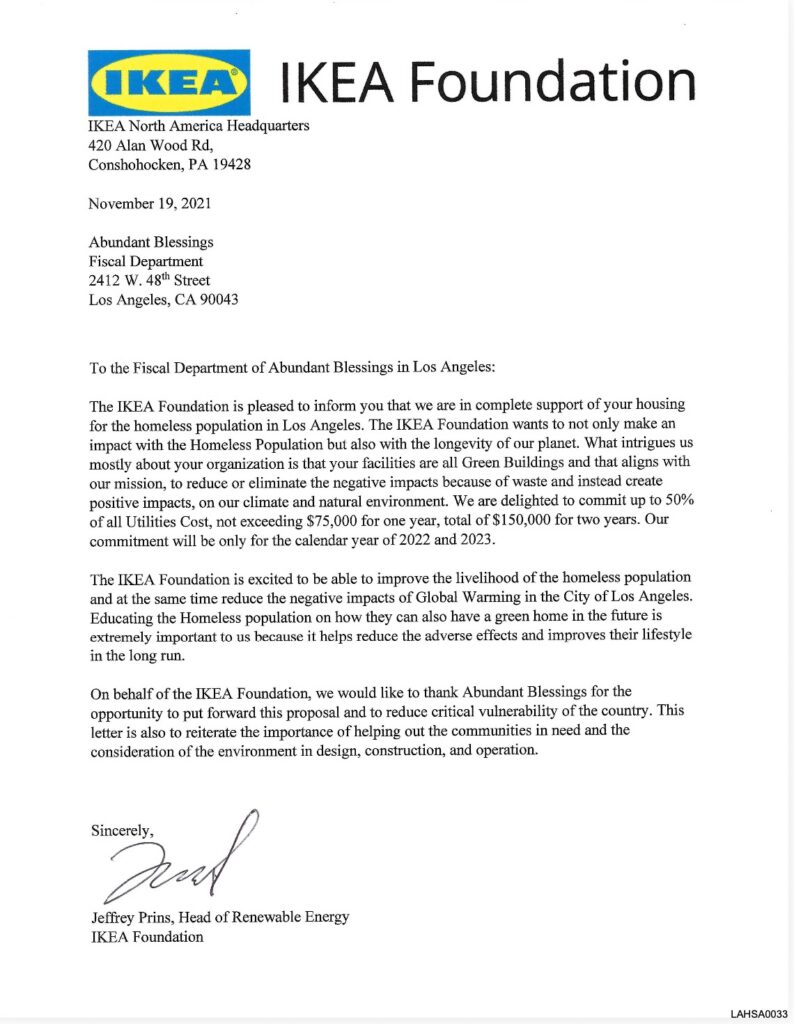
Again, the IKEA Foundation provides a searchable database of grant recipients, and again, a search for Abundant Blessings produces no results.
In some cases, more steps are required to examine the letters Soofer submitted to demonstrate his supposed corporate partnerships.
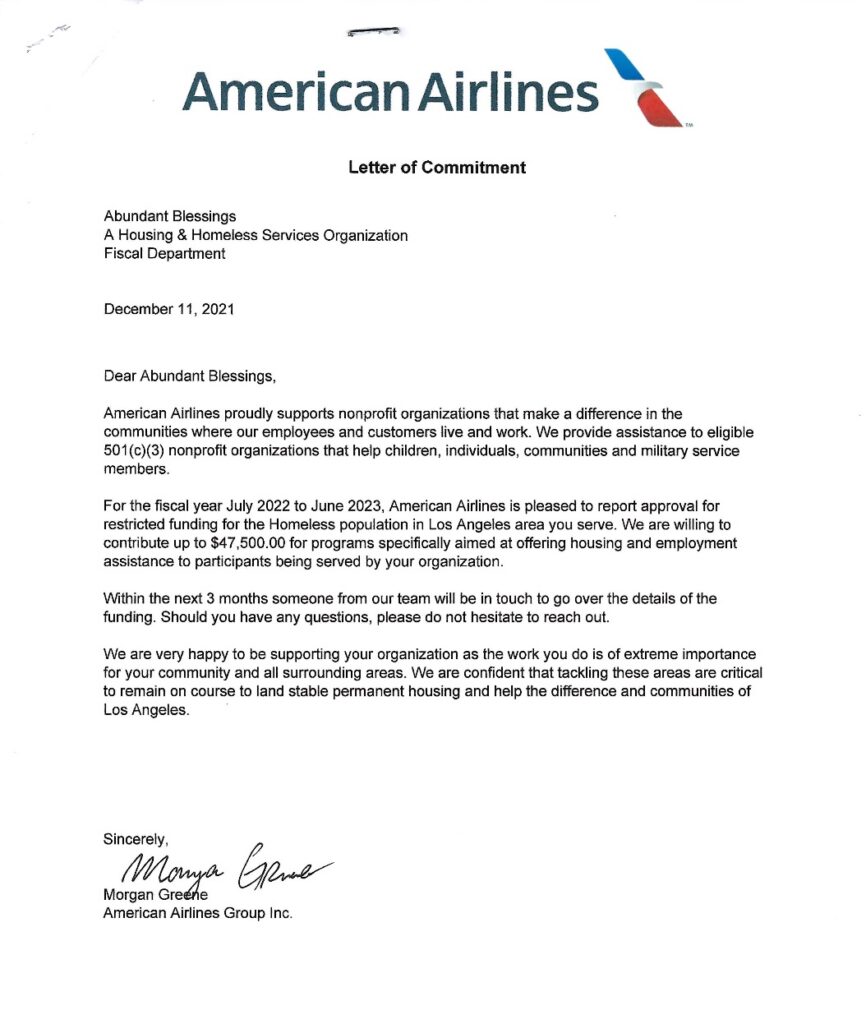
American Airlines never responded to repeated inquiries from The Federalist regarding this letter, but funding guidelines on the American Airlines website suggest at least two problems with it. First, the company focuses on giving to large and well-known organizations like the American Red Cross and UNICEF. Second, contributions from American Airlines to smaller nonprofit corporations tend to come in the form of “mileage certificates” or time volunteered by airline employees, while direct monetary support is more limited and unlikely.
The creation of a fake paper trail in the applications mirrors the allegations made by federal law enforcement regarding the operation of Abundant Blessings facilities. In a criminal complaint filed in federal court on Jan. 21, 2026, a federal agent (whose name is redacted in the public version of the complaint) alleged that Soofer hid his misappropriation of public funds by creating fake invoices: “To cover up the fraud, SOOFER fabricated fake and misleading invoices — at times stealing the names, addresses, and logos of real companies — to make it appear that the vendor and rent payments were legitimate.”
Alexander Soofer has due process rights and is entitled to a presumption of innocence. But the available evidence suggests a reasonable conclusion: Before he or someone inside his nonprofit apparently created fake invoices to cover up the alleged theft of public funds, Soofer’s nonprofit corporation submitted applications that provably contained falsified materials in order to begin receiving those funds. That conclusion about the letters of commitment is different than a declaration of criminal guilt, and Soofer is scheduled for trial in federal court on Nov. 10. (Charges in Los Angeles Superior Court haven’t advanced, with Soofer asking repeatedly to push back his preliminary hearing.)
On Saturday, a spokesman for the U.S. Attorney’s Office in Los Angeles declined to discuss questions about the case against Soofer, saying that prosecutors could not comment while Soofer is awaiting trial. Repeated inquiries with Soofer’s lawyers produced no response at all. Questions emailed to the office of the Los Angeles District Attorney on Tuesday afternoon had not produced a response as this story was published.
Finally, The Federalist asked LAHSA on Monday for a response by Tuesday at noon to a series of questions about the way the agency vets applicants and fact-checks applications for funding. An hour after that deadline on Tuesday, a spokesman for LAHSA sent an email message saying that the agency was working on a statement, but no statement followed. As this story was published, follow-up messages to LAHSA had not produced a response. We’ll add their statement if they provide one.
Update: A statement from LAHSA arrived many hours after publication: “LAHSA takes all fraud allegations seriously. Our agency actively reported suspicious activity regarding Abundant Blessings to authorities and continues to assist federal law enforcement in their ongoing prosecution. All LAHSA contracts undergo competitive evaluation, and misrepresentation at any stage of the application process is a severe breach of contract rules. We support full accountability through the judicial process and continue to strengthen our internal vetting and compliance measures.”