
Single individuals in our society face many obstacles to finding a romantic partner. Those pitfalls start with the logistics of meeting potential suitors and the myriad problems associated with dating apps (a topic for another story entirely). As someone who lives in the nation’s capital, I also recognize that many of my fellow Washingtonians (wrongly, in my view) make political compatibility a deal-breaker.
But stories suggesting that some singles have cut back on dating based largely on financial considerations reveal a troubling lack of creativity. Dating need not — and on some levels, should not — cost a fortune, and people who cut back on dating due to dollars-and-cents considerations are actually making a financial mistake.
Cost vs. Risk Considerations
A recent CNBC article summarized the trend:
Half of single Americans surveyed said they are going on fewer dates or choosing less expensive activities because of rising costs, according to BMO Financial Group’s 2026 BMO Real Financial Progress Index. … 48% of Gen Z adults and 40% of millennials surveyed said the high price of dating gets in the way of reaching their financial goals. A single date costs Gen Z adults $205 on average and millennials $252 on average, BMO found. Nearly half of singles, 47%, said dating just isn’t worth the expense, according to the survey.
You read that right: A single date costs members of younger generations more than $200 on average — a figure that sounds ridiculous for anyone not holding millions in AI-related stock options.
The article went on to quote several Gen Z 20-somethings expressing concerns about their dating expenditures. A Columbia University student observed, “There’s such a higher chance that something doesn’t click. … And then there goes your $40 dinner bill down the drain on someone that you might never talk to again.” Another 22-year-old New York City resident questioned, “Why would I spend $100 on someone I might not even vibe with?”
Low Risk, Low Cost Dates
Both interviewees raised reasonable enough concerns, but those concerns have an easy answer. If people are (understandably) worried about spending hundreds of dollars to meet someone they might not “vibe with,” then don’t spend hundreds of dollars on a first date.
In this regard, I consider myself fortunate in at least one respect. While Washington features a high percentage of “woke” individuals and other people who take their politics far too seriously, it also has numerous public art galleries and museums that make for pleasant, not to mention free, dates. I have met countless individuals at the National Gallery of Art or various branches of the Smithsonian for art, conversation, and companionship.
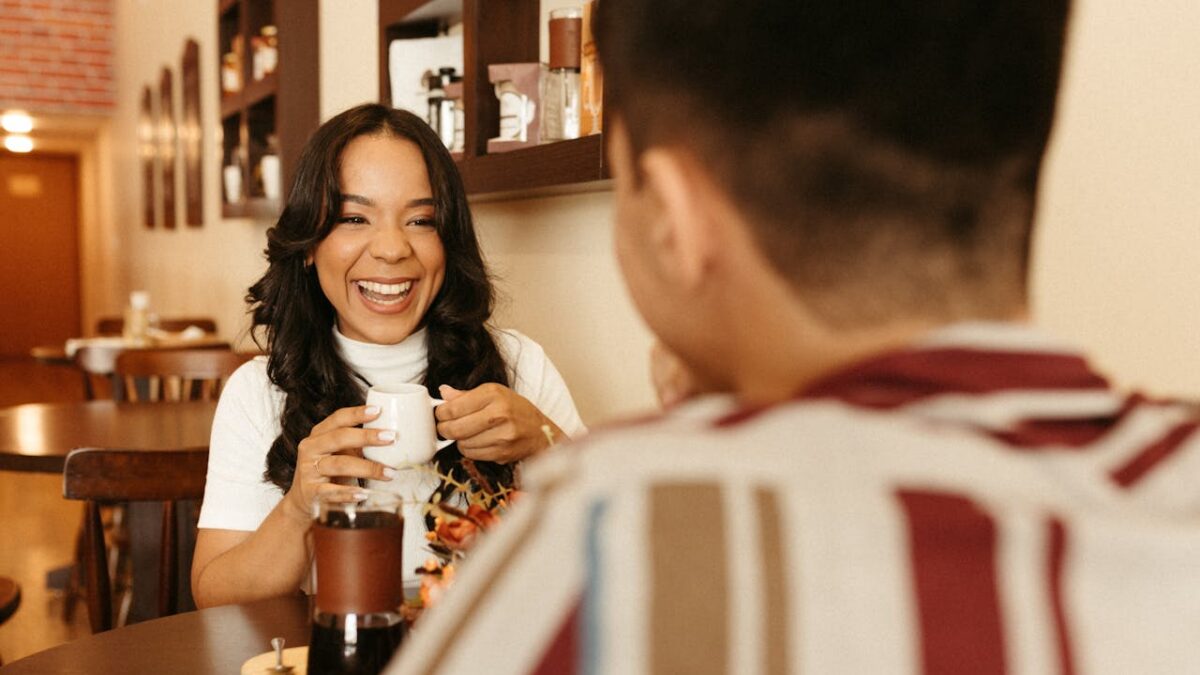
But this principle works just as well outside the nation’s capital. Whether a walk in the park, a free concert, or a quiet coffee, most areas have plentiful opportunities for couples to meet in low-cost, low-pressure venues. The strategy also has advantages that go beyond costs. If you know early on in a date that the vibes aren’t there — and let’s face it, we’ve all had those kinds of awkward first dates — it’s far better to have committed yourself only to a 45-minute coffee than a lengthy dinner.
Even committed couples don’t need to spend hundreds of dollars on dates. It’s not that I have an objection to doing so, but romantic dates don’t require big bucks, and big bucks don’t necessarily equate to romance. I find nothing more intimate than cooking a meal with and for a partner, and that costs little more than cooking at home for myself.
Poor Financial Decision
There is an inherent irony for individuals who scale back on dating to save money: Finding a compatible partner can provide significant monetary benefits. Put simply, living in a two-income household can help a couple achieve financial security much quicker than two individuals living alone.
Of course, people should not get married or combine households solely, or even primarily, for fiscal advantage. But the fact remains that people who avoid dating for financial reasons epitomize the old axiom of “penny wise, pound foolish.” Far better for them to find more economical ways to meet potential partners than to eschew dating entirely.
A former girlfriend of mine had a phrase that readily applies to dating: It’s not about the “what” — it’s about the “who.” Compatible individuals can readily enjoy each other’s company regardless of how much or how little they spend on their dates. People who understand that, and don’t unduly restrict their search just to meet preconceived notions about ritzy dates, can spend more time focused on finding their “who.”