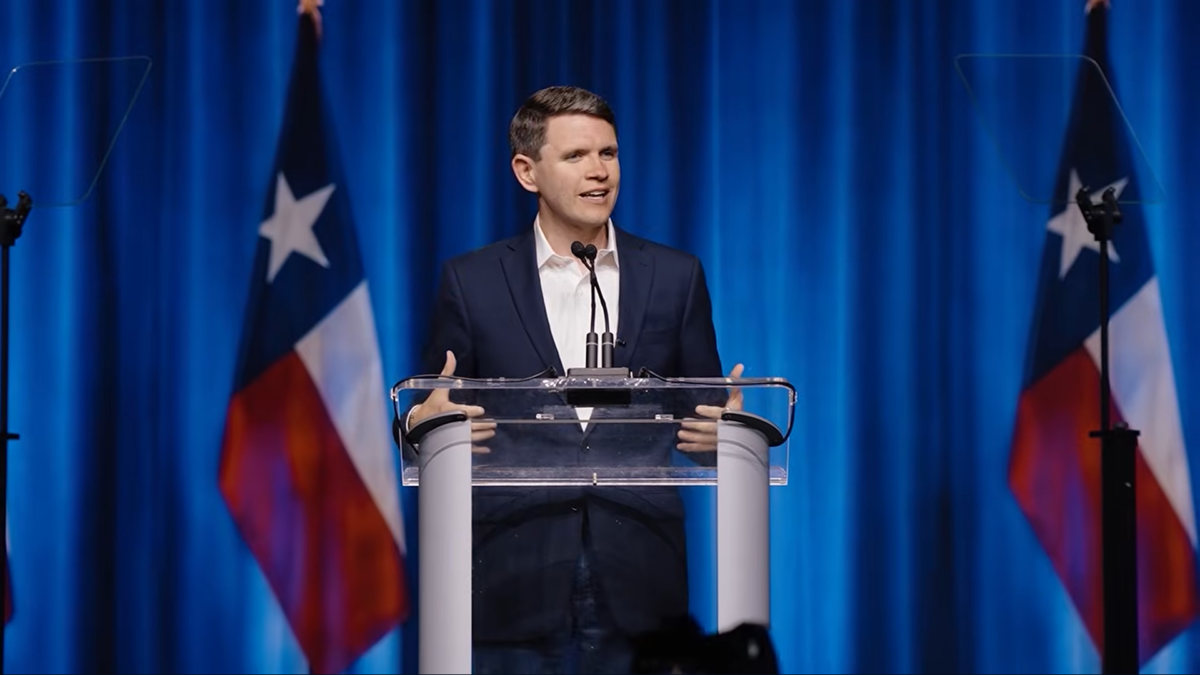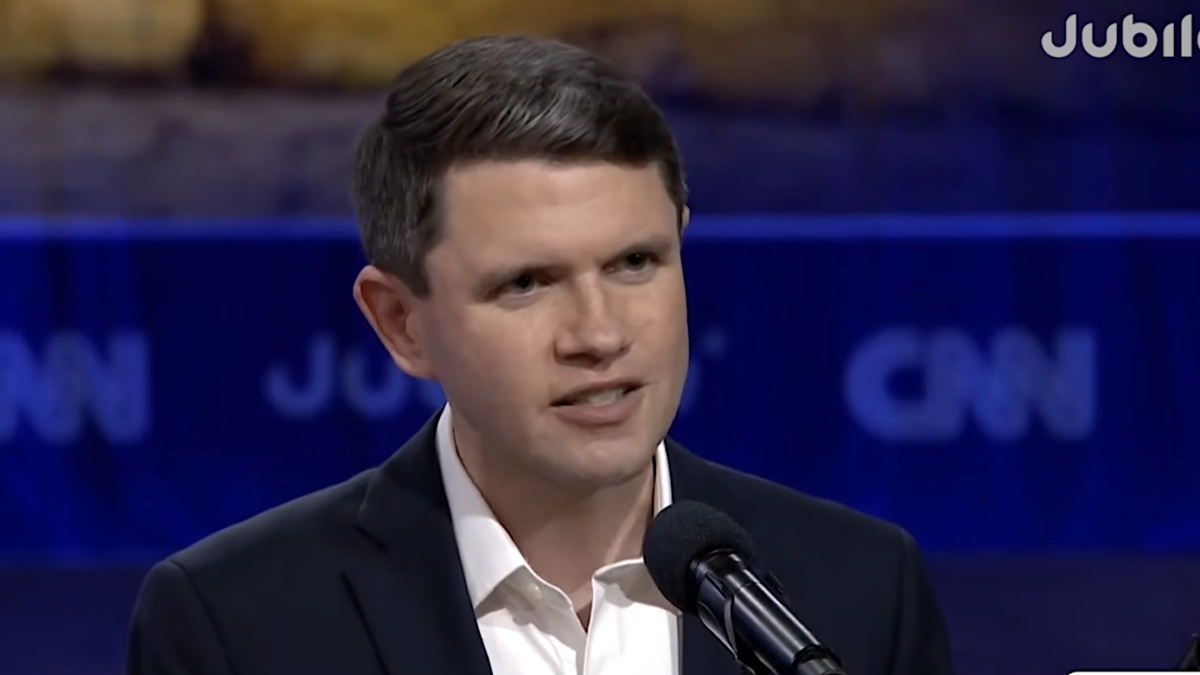

Democrat Senate hopeful James Talarico doesn’t want you to change his mind. He wants you to change yours, and he’s betting Texas Republicans are gullible enough to fall for the packaging.
Conservative commentator Steven Crowder has filed a lawsuit against CNN and Jubilee over their use of “Change My Mind,” the slogan Crowder made famous through his political debate videos.
According to Newsweek, Crowder says his trademark brand and format are being used to help Talarico ingratiate himself with conservative voters. Crowder initially threatened legal action against Talarico, CNN, and Jubilee, but the reported lawsuit names the two media companies as defendants. The Louder with Crowder host also argued in an episode of his show last week that CNN is peddling the falsehood that the format, which he created in 2017, is a “unique” concept that will “change town halls” in the future.
Whether Crowder’s lawsuit succeeds is for the courts to decide. From the trademark to the iconography of the “Change My Mind” meme, which features a photo of Crowder sitting at a folding table outside Texas Christian University in February 2018, the conservative commentator certainly has a trail of evidence to support his claims. Still, owning a trademark does not automatically establish that every similar phrase or debate format infringes it. The court will have to consider the scope of Crowder’s rights and the specific use by CNN and Jubilee.
But the political irony is even more interesting: Why does a Democrat running for Senate in Texas need to borrow the cultural packaging of conservatism?
Because Talarico needs crossover voters. He cannot simply count on Democrat enthusiasm to carry him to victory in a state where Republicans have dominated statewide elections for decades. Take Republican Sen. Ted Cruz’s 2024 third-term victory, for example. The polls and the propaganda press insisted Democrat competitor Colin Allred stood a fighting chance to unseat Cruz, but reality presented itself in the election results. Cruz, who won 53.1 percent of the vote, defeated Allred by nearly 1 million votes.
Talarico knows his uphill battle. To win over Texans who distrust his party, he needs to look less like a conventional Democrat and more like someone Republicans might invite to the barbecue. Enter a familiar slogan and a carefully controlled image of open-minded debate.
Political branding works because voters make snap judgments. A familiar logo can create a feeling of trust before a candidate has defended a single policy. It is like dressing up a tofu burger as a Texas brisket. The barbecue sauce may smell convincing, but eventually someone takes a bite.
Talarico’s claimed Christian identity deserves the same scrutiny; religious language alone does not establish shared convictions with Christian voters. Texans should examine his policy positions and record rather than mistake appeals to the Bible as proof of political agreement. Faith is not a campaign accessory, and a familiar vocabulary is no substitute for substance.
Talarico’s own statements illustrate why his religious rhetoric deserves closer examination. In a 2021 Texas House speech opposing legislation concerning transgender-identifying students’ participation on school sports teams, he said, “God is nonbinary,” and argued, “God is both masculine and feminine and everything in between.” The statement drew criticism from religious conservatives who disagree with his interpretation of Scripture. Talarico has since dismissed these comments as “provocative,” comparing himself to the late Charlie Kirk. Talarico has also argued that “the Bible is silent on the issue of abortion” and has twisted the Annunciation to be a story about “consent.”
Pennsylvania Sen. John Fetterman helps illustrate the political gamesmanship at play. His hoodies, gym shorts, and working-class persona helped distinguish him from the polished Democrat establishment. His willingness to break with Democrats on issues including immigration and Israel has generated headlines. A confrontational clip here and an unpolished appearance there often make waves on social media. In a digital news environment where stories evaporate in hours, Fetterman’s outsider image keeps him in the conversation.
Yet Fetterman still votes with Democrats most of the time — 80 percent, according to congressional voting analyses. Fetterman illustrates the distinction between looking like an independent and breaking with your party. The branding attracts attention, while the voting record tells Americans what they need to know.
Talarico’s challenge is similar. He can borrow Christian, conservative window dressing, but he cannot borrow their convictions by association. Standing beside a “Change My Mind” sign does not make him a bridge between Democrats and Republicans. Repeating Bible verses does not, by itself, establish him as a political ally of Christian Texans.
CNN, meanwhile, gets to package Talarico for a national audience as a Democrat willing to engage conservatives on their own cultural turf. That may make for compelling television, but a carefully staged conversation is no substitute for a serious examination of policy. This format can make a candidate look familiar; it cannot tell voters whether his agenda serves their interests.
This is the ultimate risk of political cosplay: mistaking the costume for the character. Texans should not assume Talarico is dishonest simply because he uses familiar branding, but neither should they confuse presentation with principle.
The sign says, “Change My Mind.” Before changing their votes, Texas Republicans should ask what Talarico wants them to believe. He seems more focused on convincing Republicans that he is their friend than on demonstrating that he will fight for the principles they hold dear. A candidate who spends more time dressing up his politics to win over skeptical voters than explaining why his policies deserve their support may be revealing just how little confidence he has in the product he is selling.